
Filter
279
Text search:
Food
and
waterborne
diseases
Featured
35
89
Language
Document type
123
75
26
17
14
10
7
5
1
1
Countries
19
10
8
7
7
6
6
6
5
5
5
5
5
5
5
4
4
4
4
3
3
3
3
3
2
2
2
2
2
1
1
1
1
1
1
1
1
1
1
1
1
1
1
1
1
1
1
1
1
1
1
Authors & Publishers
Publication Years
Category
97
36
14
12
7
5
2
Toolboxes
60
29
21
19
18
13
12
6
5
5
4
3
3
3
3
2
2
1
1
1
1
1
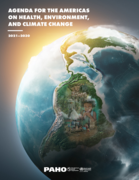
This publication presents the Agenda for the Americas on Health, Environment, and Climate Change 2021–2030 (the Agenda). The Agenda is a call to action to the health sector to lead the charge to address environmental determinants of health in the
...
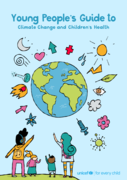
“We must not forget that no matter where we are or how old we are, we can all work for life and take action.” Francisco Vera, 15, UNICEF Child Advocate
The Young Climate Activists toolkit was created by advocates of all ages who, like you, ar
...

This policy brief presents a summary of current evidence on vulnerability to TB and proposes interventions for equitable, person-centred, and human rights-based TB prevention
...
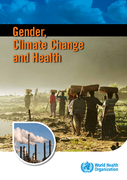
The project was developed by the International Federation of Medical Students’ Associations (IFMSA), in line with the Federation’s statement “a world in which students are equipped with knowledge, skills and value to take on
...
Cholera remains a significant public health threat in many countries worldwide. In resource-constrained settings, it disproportionately affects thousands of poor and vulnerable population
January - December 2017
The climate crisis has many consequences – among them widespread health impacts that will lead to immense societal, ecological, and economic harm.
Over the past two decades multiple large-scale reviews on climate change
...
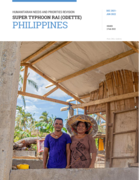

Known avoidable environmental risks to health cause at least 12.6 million deaths every year, and account for about one quarter of the global burden of disease (2016 data) (1). Air pollution alone causes about 7 million
deaths a year, placing it amo
...
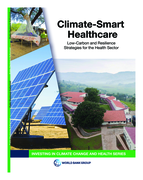
Climate change is damaging human health now and is projected to have a greater impact in the future. Low- and middle-income countries are seeing the worst effects as they are most vulnerable to clim
...
Drinking-water quality regulations and standards developed or revised in accordance with this guidance will reflect the best practices identified in the WHO Guidelines for Drinking-water Quality to most effectively protect public health. Moreover, t
...
This report presents a framework to link science, policy and practice for a comprehensive assessment of climate mitigation and adaptation investments and
...

A practical manual presenting the specific knowledge, skills and practices that First Aiders should have to act safely and effectively when caring for people caught up in armed conflicts
...
A Provisional Document. The purpose of this manual is to provide guidance to public health professionals tasked with managing a response to viral hepatitis. As every country’s needs are different with respect to its epidemiology and the current le
...

WHO Guidance for Climate Resilient and Environmentally Sustainable Health Care Facilities
recommended
The aim of this guidance is to enhance the capacity of health care facilities to protect and improve the health of their target communities in an unstable and changing climate;
...

This report summarizes the World Health Organization’s (WHO) global work on water, sanitation and hygiene (WASH) during 2022. It describes how the Organization continued to deliver its essential WASH programming as elaborated in its 2018–2025 st
...

An emerging framework for achieving synergies among the Sendai Framework, the 2030 Agenda for Sustainable Development, the New Urban Agenda and the Paris Agreement. This paper discusses the potential of the Health Emergency
...

Cholera is a diarrhoeal disease that is usually contracted when drinking water contaminated with Vibrio cholerae bacteria. The fight against this disease requires a multidisciplinary approach that combines a water, hygiene and sanitation (WaSH) resp
...
