Filter
524
Text search:
African
Union,
Africa
CDC
Featured
Recommendations
87
New Publications
87
Language
Document type
No document type
184
Studies & Reports
104
Guidelines
75
Fact sheets
57
Manuals
33
Strategic & Response Plan
28
Infographics
16
Brochures
9
Training Material
8
Situation Updates
5
Resource Platforms
5
Countries / Regions
Africa
86
West and Central Africa
71
East and Southern Africa
59
Middle East and North Africa
57
Mozambique
24
South Sudan
21
Angola
21
Sierra Leone
19
Liberia
19
Yemen
18
Kenya
17
Guinea-Bissau
16
Syria
15
Nigeria
14
Senegal
13
Global
13
Guinea
9
Uganda
9
Zambia
9
South Africa
9
Malawi
9
Rwanda
8
Ethiopia
7
Zimbabwe
7
Ghana
6
Namibia
6
Tanzania
4
Eswatini/ Swaziland
4
Botswana
4
Congo, Democratic Republic of
3
Côte d’Ivoire / Ivory Coast
3
Germany
3
Western and Central Europe
3
Burkina Faso
2
Saudi Arabia
2
Cameroon
2
Niger
2
India
2
Somalia
2
Iraq
2
Chad
2
Bangladesh
2
Sudan
2
Central African Republic
2
Brazil
2
Tunisia
2
Mali
1
Morocco
1
Nepal
1
Pakistan
1
Jordan
1
Afghanistan
1
Lebanon
1
Egypt
1
Cambodia
1
Benin
1
Latin America and the Carribbean
1
Asia
1
Eastern Europe
1
Djibouti
1
Russia
1
Gabon
1
Mauritius
1
Portugal
1
Authors & Publishers
Publication Years
Category
Countries
271
Key Resources
28
Clinical Guidelines
24
Public Health
22
Pharmacy & Technologies
11
Women & Child Health
9
Capacity Building
5
Toolboxes
COVID-19
203
TB
35
Ebola & Marburg
34
Rapid Response
28
HIV
28
AMR
23
2.0 Rapid Response
20
Mental Health
10
Health Financing Toolbox
10
Global Health Education
9
Caregiver
8
Planetary Health
8
Refugee
6
Polio
5
Specific Hazards
5
Zika
4
NCDs
4
Disability
3
Pharmacy
3
Cholera
2
NTDs
2
Natural Hazards
1
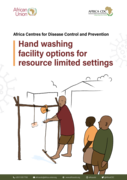
This document provides guidance to AU Member States, states/local bodies, and communities
on how to construct and maintain non-contact hand washing stations like Tippy Taps and other
alternative hand washing stations.
Key findings from a February 2021 survey from the Partnership for Evidence-Based Response to COVID-19 (PERC)
Revised COVID-19 Testing Strategy
recommended
Second edition. June 2022. This revised guidance recommends that access to COVID-19 testing is decentralized as far as possible and made available at health facilities, and through the use of self tests to enable access to care and the mitigation of transmission. Testing should be prioritized for hi
...
Accessed: 02.04.2020
Cette note politique s’appuie sur les données les plus récentes concernant l’impact de la date de début du programme de vaccination et des taux de déploiement des vaccins sur les bénéfices pour la santé. L’objectif est de soutenir les décideurs politiques dans leurs décisions d’appr
...
It is intended for use among clinicians taking care of moderate to severe COVID-19 cases.
The COVID-19 outbreak has brought with it the need for improved critical care for patients who develop severe disease. The majority of COVID-19 patients present with mild to moderate illness, 15% develop sever
...

This guidance will assist staff, students and caregivers in schools (including day care centres, pre-school, primary and secondary schools), higher educational institutions (including universities, research institutes) and other educational institutions with how to address coronavirus disease 2019 (
...
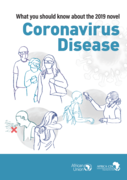
Available in English, French and Arabic
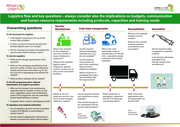
“Guide to facilitate the implementation of the WHO/UNICEF “Guidance on developing a national deployment and vaccination plan for COVID-19 vaccines” for Africa

Accessed: 01.04.2020
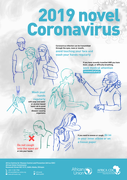
Accessed: 02.04.2020
Biosafety involves the implementation of containment principles, technologies and practices to prevent unintentional exposure to biological agents. Biosecurity involves the protection, control and accountability of biological materials and information related to these materials and dualuse research,
...
This document simplifies the WHO guidance on severe acute respiratory infection (SARI) treatment centres and is meant to be accessible to healthcare workers, policymakers and others who want
a quick overview of the key requirements for a COVID-19 isolation centre either within an existing facility
...
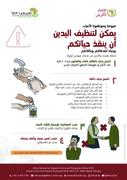
Key findings from a February 2021 survey from the Partnership for Evidence-Based Response to COVID-19 (PERC)
Accessed: 02.04.2020