
Filter
1445
Text search:
South-East
Asia
Featured
156
384
Language
Document type
657
334
206
83
63
30
24
16
16
7
4
3
1
1
Countries
119
104
76
65
37
36
34
31
19
18
16
15
15
14
14
13
13
12
12
11
10
10
10
8
8
8
7
7
7
7
6
6
6
6
5
5
5
4
4
4
4
4
3
3
3
3
3
3
3
2
2
2
2
2
2
2
2
2
1
1
1
1
1
1
1
1
1
1
1
1
1
1
1
1
1
1
1
1
1
1
1
1
1
1
1
1
1
1
1
1
1
1
1
1
1
1
Authors & Publishers
Publication Years
Category
382
166
125
112
83
44
24
Toolboxes
150
97
82
81
73
61
56
48
46
42
41
36
36
27
27
23
20
17
15
15
15
13
10
9
2
1
WHO Technical Series 971
This report has been prepared in response to informal requests by SIDS Member States and territories for WHO assistance in confronting the stark and dire situation which climate change has created in their countries and the impact it is having on their peoples
The marathon to eradicate polio is on its final lap: the world is more than 99% of the way to success. After millennia of living with poliovirus and suffering the paralysis it causes, today nearly all the world’s people live in polio-free countries; two of the three strains of wild poliovirus (WPV
...
The Committee discussed the implications for preparedness for smallpox-like events reflected by the ongoing COVID-19 pandemic. The Committee noted how quickly diagnostics and vaccines could be developed and deployed when resources and political will were abundant. This rapidity was also due to the f
...
More than three months since the start of the war in Ukraine, people globally are facing a cost-of-living crisis not seen in more than a generation, with escalating price shocks in the global food, energy and fertilizer markets - in a world already grappling with the COVID-19 pandemic and climate ch
...

Self-care interventions are among the most promising and exciting new approaches to improve health and well-being, both from a health systems perspective and for people who use these interventions.
The World Health Organization (WHO) uses the following working definition of self-care: Self-care i
...

The mhGAP community toolkit: field test version is an integral part of WHO's Mental Health Gap Action Programme (mhGAP), and aims at scaling up services for people with mental health conditions to achieve universal health coverage.
The toolkit provides guidance for programme managers on how to i
...
Fact Sheet Global Atlas of medical devices
The Global guidance framework for the responsible use of the life sciences: mitigating biorisks and governing dual-use research (the framework) aims to provide values and principles, tools and mechanisms to support Member States and key stakeholders to mitigate and prevent biorisks and govern dual-u
...
This Commission report aims to contribute to a new era of multilateral cooperation based on strong UN institutions to reduce the dangers of COVID-19, forestall the next pandemic, and enable the world to achieve the agreed goals of sustainable development, human rights, and peace that governments are
...
This document sets out, therefore, to explain the socioeconomic value of investing in the fight against NTDs and highlights priorities for global investment attention. Our work was guided by the need not only for
additional funding and funders but also for the need to understand the current funding
...
L'objectif de cette publication est de fournir une approche pratique et progressive pour la mise en œuvre des plans d'action nationaux sur la RAM dans le secteur de la santé humaine ; et de fournir un processus et une compilation des outils existants de l'OMS pour prioriser, chiffrer, mettre en œ
...
El objetivo de esta publicación es ofrecer un enfoque práctico y gradual para la aplicación de los planes de acción nacionales sobre la RAM en el sector de la salud humana; y proporcionar un proceso y una recopilación de las herramientas existentes de la OMS para priorizar, costear, aplicar, su
...
Globally, more than 3 million new cases and 10 000 deaths have been reported in the week of 26 December 2022 to 1 January 2023. This represents a reduction in weekly cases and deaths of 22% and 12%, respectively. In the last 28 days (5 December 2022 to 1 January 2023), over 14.5 million cases and ov
...
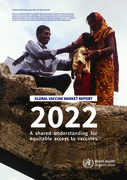
The report aims to capture lessons from the COVID-19 pandemic and to highlight the opportunity for more ambitious global action: expanding sustainable access to vaccines for all towards
the Immunization Agenda 2030 and pandemic prevention, preparedness and response efforts. The report is organized
...
The report aims to capture lessons from the COVID-19 pandemic and to highlight the opportunity for more ambitious global action: expanding sustainable access to vaccines for all towards the Immunization Agenda 2030 and pandemic prevention, preparedness and response efforts. The report is organized i
...
These guidelines provide updated evidence-based recommendations on the priority HCV-related topics from the 2018 WHO Guidelines for the care and treatment of persons diagnosed with chronic hepatitis C infection and the 2017 WHO Guidelines on hepatitis B and C testing. These priority areas are:
...

Cities are uniquely positioned to understand local needs and respond rapidly to changing conditions to safeguard health. These changes require strong city leadership to implement multisectoral, health-relevant policies and public services that engage communities. The response to malaria must be an i
...
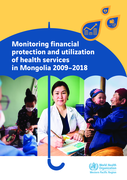
Monitoring financial protection and utilization of health services in Mongolia 2009-2018 is based on national representative household socioeconomic surveys. The study finds that between 2009 and 2018, despite ambitious health reforms, the incidence of catastrophic health spending and impoverishing
...
The harmful use of alcohol causes approximately 3 million deaths every year and the overall burden of disease and injuries attributable to alcohol consumption remains unacceptably high. The pace of development and implementation of alcohol policies has been uneven in WHO regions, and resources and c
...
