
Filter
1747
Text search:
Protocol
for
essential
workers
Featured
199
498
Language
Document type
873
333
254
154
69
35
13
11
2
1
1
Countries
85
79
68
53
48
44
44
38
36
36
35
34
33
29
25
25
23
22
20
18
18
18
17
15
14
14
13
12
11
10
10
10
8
8
8
7
7
7
6
6
6
6
5
5
5
5
5
5
5
4
4
4
4
4
4
4
4
4
3
3
3
3
3
3
3
3
2
2
2
2
2
2
2
2
2
2
2
2
2
2
2
2
1
1
1
1
1
1
1
1
1
1
1
1
1
1
1
1
1
1
1
1
1
1
1
1
1
1
1
Authors & Publishers
Publication Years
Category
681
162
142
129
104
32
24
Toolboxes
171
110
84
80
66
63
61
52
47
45
44
40
40
39
35
29
26
20
18
13
13
13
11
7
4

We have long been working to prevent and end sexual violence in armed conflicts and to ensure that the countless victims – men, women, boys and girls – receive the help they need.
In this document, we examine sexual violence specifically in relation to people deprived of their liberty. We c ...
In this document, we examine sexual violence specifically in relation to people deprived of their liberty. We c ...
PHA 2018; 8(S1): S24–S28
© 2018 The Union

Standard Treatment Guidelines
Summary of the Ethopian country office of WHO on COVID-19 activities.
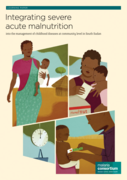
Since December 2010, Malaria Consortium has been implementing an innovative approach to community management of severe acute malnutrition, together with an existing integrated community case management (ICCM) programme in South Sudan. This learning paper considers Malaria Consortiums experience of t
...

“towards quality health and social welfare services”
Policy and Manual
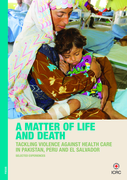
Every day, health-care providers are being attacked, patients discriminated against, ambulances held up at checkpoints, hospitals bombed, medical supplies looted and entire communities cut off from critical services around the world.
Between January 2012 and December 2014, the ICRC documented n ...
Between January 2012 and December 2014, the ICRC documented n ...
2nd Generation HIV Surveillance in Pakistan, Round 5
The Hand Hygiene Self-Assessment Framework is a systematic tool with which to obtain a situation analysis of hand hygiene promotion and practices within an individual health-care facility.
BMJ Global Health2020;5:e002786. doi:10.1136/bmjgh-2020-002786
A national faecal examination of 27 729 schoolchildren from 395 schools carried out in
2008 indicated that intestinal parasitic worms affected an estimated five million (56.8%)
children in Kenya. Existing evidence shows that worm infections lead to reduced literacy
levels due to impaired growth a
...
