
Filter
1258
Text search:
Antimicrobial
resistance
Featured
155
238
Language
Document type
320
284
275
94
80
77
30
23
22
16
13
12
9
1
Countries
58
41
34
30
29
25
24
20
14
12
11
11
10
10
10
9
8
8
7
7
7
6
6
6
6
6
6
6
5
5
5
5
4
4
4
4
4
3
3
3
3
3
3
3
3
3
3
2
2
2
2
2
2
2
2
2
2
2
2
2
2
2
2
2
1
1
1
1
1
1
1
1
1
1
1
1
1
1
1
1
1
1
1
1
1
1
1
1
1
1
1
1
1
1
1
1
1
1
1
1
1
1
1
1
1
1
1
1
1
1
1
Authors & Publishers
Publication Years
Category
298
91
86
48
36
20
16
3
Toolboxes
554
80
75
58
48
46
33
32
31
27
25
22
18
16
16
14
11
8
6
4
3
1
1
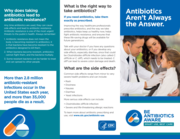
Brochure for Patients and General Public
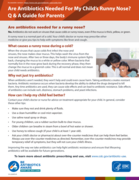
Q & A Guide for Parents - Factsheet
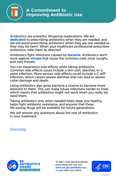
Antibiotics only fight infections caused by bacteria. Like all drugs, they can be harmful and should only be used when necessary. Taking antibiotics when you have a virus can do more harm than good: you will still feel sick and the antibiotic could give you a skin rash, diarrhea, a yeast infection,
...
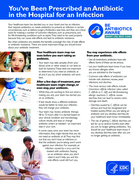
Your healthcare team has decided you or your loved one has an infection that requires antibiotics, or needs antibiotics to prevent an infection in certain circumstances, such as before surgery - Fact Sheet for Patients
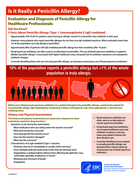
Evaluation and Diagnosis of Penicillin Allergy for Healthcare Professionals
Health care-associated infection (HCAI) places a serious disease burden and has a significant economic impact on patients and health-care systems throughout the world. Yet good hand hygiene, the simple task of cleaning hands at the right times and in the right way, can save lives. World Health O
...
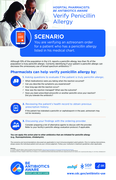
Although 10% of the population in the U.S. reports a penicillin allergy, less than 1% of the population is truly penicillin allergic. Correctly identifying if your patient is penicillin allergic can decrease the unnecessary use of broad spectrum antibiotics.
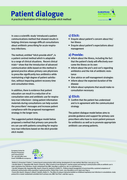
The method, entitled “elicit-provide-elicit”, is a patient centred method which is adaptable to a range of clinical situations. Recent clinical trials show that the introduction of advanced communication skills based on this method in general practice allows primary care physicians to prescribe
...
El informe anual de la vigilancia de la resistencia a los antibióticos de los países participantes de la Región de las Américas se discute y analiza con el fin de tomar medidas para el perfeccionamiento continuo de la calidad de los datos, y su utilidad en la orientación a los clínicos para el
...
Данный Национальный план в области Устойчивости к противомикробным пре- паратам (УПП) с компонентом потребления противомикробных препаратов (ППП), для секторов здÑ
...
Millennium Development Goal 8E aims for affordable access to essential medicines. Essential medicines, as defined by WHO, are those that “satisfy the health-care needs of the majority of the population” and that should therefore “be available at all times in adequate amounts”. However, there
...
The Hand Hygiene Self-Assessment Framework is a systematic tool with which to obtain a situation analysis of hand hygiene promotion and practices within an individual health-care facility.
List of available resources and courses

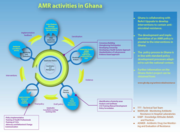
Accessed Sept.2,2015
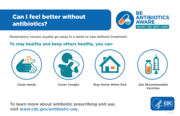
Fact Sheet for General Public
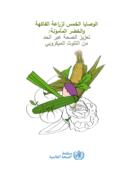
إن أهمية الفواكه والخضروات في النظم الغذائية الصحية والمغذية معروفة جيدًا ، وفي السنوات الأخيرة تم تشجيع المستهلكين على تناول المزيد من هذه المنتجات. بالنسبة للعدي
...

El uso de los antimicrobianos en seres humanos es imprescindible para combatir a los microorganismos causantes de distintas enfermedades, no obstante, el uso y abuso de estos productos farmacéuticos ha propiciado un aumento en la resistencia, desarrollo y propagación de microorganismos multirresis
...
