
Filter
543
Text search:
planetary
health
Featured
18
13
Language
Document type
328
51
26
25
20
20
16
14
14
11
8
6
2
Countries
58
9
7
5
4
4
3
3
3
2
2
2
2
2
2
2
1
1
1
1
1
1
1
1
1
1
1
1
1
1
1
1
1
1
1
1
1
Authors & Publishers
Publication Years
Category
43
32
17
4
2
2
Toolboxes
451
35
22
10
9
5
5
5
3
2
2
2
2
1
1
1
1
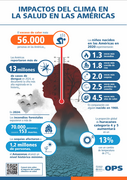
sta infografía destaca los impactos del cambio climático en la salud en las Américas, mostrando que el calor extremo causa miles de muertes y que enfermedades como el dengue han alcanzado niveles récord. También evidencia el aumento de eventos extremos como incendios forestales, sequías e inun
...
The primary objective of this curriculum is to equip health and care workers with the essential knowledge and competencies necessary for delivering safe and effective care. By doing so it aims to significantly reduce HAIs and combat antimicrobial re
...
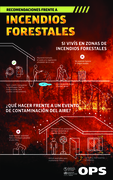
En esta sección vinculada al fenómeno climático de incendios forestales se puede acceder a las principales recomendaciones sobre: ¿qué hacer frente a un evento de contaminación del aire? y ¿qué hacer en zonas de incendios forestales?
The World Health Organization (WHO) video titled "Preventing Disease Through Healthy Environments" highlights the significant impact of environmental factors on global health. It reports that in 201
...
For the past 10 years, the EU Ambient Air Quality Directives have been an essential tool to drive
action against air pollution.
The World Health Organization (WHO) highlights the significant health risks associated with household air pollution, primarily resulting from the use of inefficient and polluting fuels and technolog
...
Background: The impacts of air pollutants on health range from short-term health impairments to hospital admissions
and deaths. Climate change is leading to an increase in air pollution.
Air pollution is the second leading cause of deaths from noncommunicable diseases (NCDs) after tobacco smoking, according to WHO.
The IHME webpage discusses alcohol use as a significant global health risk, responsible for over 1.8 million deaths annually. It highlights age-related differences in alcohol's health impacts, with
...
Beat the heat: child health amid heatwaves in Europe and Central Asia finds that half of these children died from heat-related illnesses in their first year of life. Most children died during the summer months.
"Around half of children across Eur
...
Healthy Diets From Sustainable Food Systems. Summary Report of the EAT Lancet Commission
This report was prepared by EAT and is an adapted summary of the Commission Food in The Anthropocene: the EAT-Lancet Commission on Healthy Diets From Sustainable Food Systems.
To access the EAT–Lancet Comm
...

This report aims to support countries in the necessary transition toward healthier, more sustainable diets by integrating biodiversity in food-based interventions to support nutrition and health. It is intended to help guide decision-makers in the
...
Urbanization, land use, global trade and industrialization have led to profound and negative impacts on nature, biodiversity and ecosystems across the world. The ongoing depletion of natural resources not only afects environmental conditions but also has an enormous impact on the well-being and secu
...

Left unabated, climate change will have catastrophic effects on the health of present and future generations. Such effects are already seen in Europe, through more frequent and severe extreme weather events, alterations to water and food systems, an
...
Preliminary fndings from a global survey of urban young people on the air they breathe and a child health co-benefts analysis of radical decarbonisation of 16 global cities.

Connecting global priorities: biodiversity and human health: a state of knowledge review
PlosOne https://doi.org/10.1371/journal.pone.0165797; Food production is a major driver of greenhouse gas (GHG) emissions, water and land use, and dietary risk factors are contributors to non-communicable diseases. Shifts in dietary patterns can therefore potentially provide benefits for both the en
...
The roadmap highlights and advocates for the existing and potential key role of national public health institutes (NPHIs) in climate adaptation and mitigation, and how they contribute to climate policies, research and action.
The biosphere underlies the whole sustainable development concept, as the layer on
which society and the economy rely. Nature and biodiversity fuel the natural cycles
and life-support systems of the planet, on which humanity ultimately depends.

Lancet Planet Health 2020; 4: e271–79
