
Filter
666
Text search:
World
Health
Organization.
Country
Office
for
Nepal
Featured
Recommendations
70
New Publications
197
Language
Document type
No document type
379
Studies & Reports
128
Guidelines
68
Manuals
49
Strategic & Response Plan
16
Situation Updates
8
Fact sheets
8
Training Material
7
Infographics
3
Countries / Regions
Nepal
98
Global
47
South–East Asia Region
37
Asia
29
India
23
Bangladesh
14
Myanmar / Burma
8
Haiti
6
Pakistan
6
Liberia
5
Uganda
5
Tanzania
5
Thailand
5
Indonesia
5
South Africa
5
Ethiopia
4
Ghana
4
Philippines
4
Zambia
4
Sri Lanka
4
Africa
4
Sierra Leone
3
Afghanistan
3
Syria
3
Kenya
3
Cambodia
3
Mozambique
3
North Macedonia
3
Latin America and the Carribbean
3
Western and Central Europe
3
Russia
3
Vietnam
3
Nigeria
2
Zimbabwe
2
Jordan
2
Lebanon
2
Malawi
2
East and Southern Africa
2
Western Pacific Region
2
Bhutan
2
Laos
2
Georgia
2
Guinea
1
Senegal
1
Congo, Democratic Republic of
1
Morocco
1
Rwanda
1
Central African Republic
1
Argentina
1
Namibia
1
Brazil
1
Hungary
1
Ukraine
1
Colombia
1
Ecuador
1
Mexico
1
Yemen
1
West and Central Africa
1
Middle East and North Africa
1
Eastern Europe and Central Asia
1
Other region
1
Venezuela
1
North Korea
1
Armenia
1
Timor Leste/ East Timor
1
Romania
1
Kyrgyzstan
1
Jamaica
1
Belgium
1
Norway
1
Portugal
1
Belarus
1
Authors & Publishers
Publication Years
Category
Countries
176
Key Resources
76
Clinical Guidelines
56
Women & Child Health
54
Public Health
43
Capacity Building
12
Pharmacy & Technologies
2
Toolboxes
HIV
72
Disability
52
Mental Health
46
COVID-19
32
Planetary Health
31
TB
28
NTDs
28
Global Health Education
20
Natural Hazards
18
Conflict
17
AMR
15
Caregiver
14
2.0 Rapid Response
13
Refugee
11
Pharmacy
10
NCDs
10
Rapid Response
8
Health Financing Toolbox
7
Malaria
5
Polio
4
Specific Hazards
4
Ebola & Marburg
3
Cholera
2
Typhoon
2
Zika
1

The workshop aimed to support countries in the prioritization and acceleration of NCD prevention and management with a specific focus on accelerating the prevention and control of hypertension and diabetes, identifying the most impactful NCD interventions within their context, closing the gaps in ca
...

Men lag behind women regarding use of HIV services and represent the majority of individuals living with uncontrolled HIV, advanced HIV, and who experience HIV-related mortality. Men (15+) globally are less likely than women (15+) to know their HIV status (83%
...
The Guidelines for the Diagnosis, Treatment and Prevention of Leprosy provide state-of-the-art knowledge and evidence on leprosy diagnosis, treatment and prevention based on a public health approach
...

The social protection landscape for people affected by TB in the WHO South-East Asia Region

Rreport of a WHO Consultative Meeting Kolkata India 2012
A Step-by-Step Guide.
It is intended for health planners, dengue or vector control programme managers and individuals, nongovernmental organizations (NGOs) and other agencies with interests and/or
...

Step-by-step risk management guidance for drinking-water supplies in small communities.
Pocket book of hospital care for children
recommended
Guidelines for the Management of common childhood Illness. 2nd edition
These guidelines focus on the management of the major causes of childhood mortality in most developing countries, such as newborn problems, pneumonia, diarrhoea, malaria, mening
...

The Guidance on global monitoring for diabetes prevention and control by WHO provides a comprehensive framework to support countries in tracking and managing diabetes prevention, care, and outcomes. This document outlines indicators across 4 domains
...
Just about everyone has experienced the joy that a healthy newborn child brings to parents, families and communities. But the arrival of a newborn who is small or sick often results in immediate worry and sadness. When the infant is at high risk of death or disability, these concerns can be a tremen
...

Medical devices are used for the prevention, diagnosis and treatment of illness and diseases and for rehabilitation. WHO developed guidance on medical device donation in 2011, which has been now rev
...
The frequency of infectious disease epidemics is increasing, and the role of the health sector in the management of epidemics is crucial in terms of response. In the context of infectious disease epidemics, the use of climate-informed early warning
...
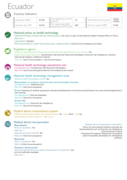
Fact Sheet Global Atlas of medical devices

The pandemic has emphasized the high risk of avoidable harm to patients, health workers, and the general public, and has identified a range of safety gaps across all core components of health system
...
Global concerns: Implications for the future
Child Mental Health Atlas

The sixteenth meeting of the Strategic and Technical Advisory Group for Neglected Tropical Diseases (STAG-NTD) was held as a hybrid meeting, 27–28 September 2022.
Dr Ren Minghui, Assistant Director-General, Universal
...
