
Filter
491
Text search:
World
Health
Organization,
South-East
Asia
Featured
Recommendations
60
New Publications
133
Language
Document type
No document type
237
Studies & Reports
104
Guidelines
71
Manuals
31
Strategic & Response Plan
21
Training Material
8
Fact sheets
6
Resource Platforms
5
Situation Updates
4
Infographics
3
Online Courses
1
Countries / Regions
Global
41
South–East Asia Region
34
India
20
Myanmar / Burma
15
Asia
15
Bangladesh
10
Nepal
7
Western and Central Europe
6
Nigeria
5
Philippines
5
Kenya
5
Cambodia
5
Syria
4
Indonesia
4
Latin America and the Carribbean
4
Congo, Democratic Republic of
3
Tanzania
3
Thailand
3
South Africa
3
Middle East and North Africa
3
Western Pacific Region
3
Ethiopia
2
Uganda
2
China
2
Rwanda
2
Brazil
2
East and Southern Africa
2
West and Central Africa
2
Eastern Europe and Central Asia
2
Africa
2
Russia
2
Cameroon
1
Ghana
1
South Sudan
1
Egypt
1
Malaysia
1
Malawi
1
Sudan
1
Benin
1
Eswatini/ Swaziland
1
Serbia
1
Croatia
1
Sri Lanka
1
Yemen
1
Other region
1
Venezuela
1
Eastern Europe
1
Timor Leste/ East Timor
1
Tajikistan
1
Kazakhstan
1
Vietnam
1
Japan
1
Maldives
1
Authors & Publishers
Publication Years
Category
Countries
94
Clinical Guidelines
71
Women & Child Health
44
Public Health
43
Key Resources
32
Capacity Building
13
Pharmacy & Technologies
10
Toolboxes
HIV
45
Mental Health
36
NTDs
34
TB
32
Planetary Health
28
COVID-19
25
AMR
21
Caregiver
20
Rapid Response
16
Global Health Education
15
Disability
14
NCDs
10
Zika
9
Pharmacy
9
Conflict
7
Natural Hazards
7
Ebola & Marburg
6
Refugee
6
2.0 Rapid Response
6
Polio
5
Malaria
4
Specific Hazards
3
Cholera
2
Typhoon
1
Social Ethics
1
Health Financing Toolbox
1
In 2005, the World Health Organization (WHO) Member States adopted the revised International
...
A collaborative project of World Health Organization and
Lifting The Burden
Training Workshop
The message contained in this publication is clear: countries need a
public health system that can respond to the deliberate release of
chemical and biological agents. Regrettable though this message may
be, the use of poison gas in the war betwe
...

The purpose of this publication is to to provide a practical, stepwise approach to the implementation of the national action plans on AMR within the human health sector; and to provide a process and collation of existing WHO tools to prioritize, cos
...
Specifically the Strategy focuses on five strategic objectives:
commitment to action on Healthy Ageing in every country;
developing age-friendly environments;
aligning health systems to the needs of older populations;
developing
...

The WHO global health sector strategy on sexually
transmitted infections, 2016–2021 (1) includes country
milestones for achievement by 2020 and global
targets for achievement by 2030. In addition, countries
were called to identify national
...
A Toolkit for Implementation. Module 5: Finalizing, monitoring and evaluating the IFC action plan
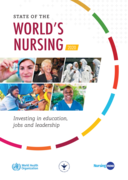
The State of the world’s nursing 2020 report provides the latest, most up-to-date evidence on and policy options for the global nursing workforce.
Mental and Social Aspects of Health of Populations Exposed to Extreme Stressors
Global concerns: Implications for the future
Child Mental Health Atlas

This Teacher’s Guide accompanies the WHO publication Management of wastes from health-care activities . It provides teaching materials and recommendations for a three day training course, designed mainly for managers of
...
The framework is to be used as a reference guide, applied according to local priorities and needs, and targeted at academic institutions, educators, accreditation bodies, regulatory agencies and other users. The ultimate aim is to ensure that all health
...

Mental Health Atlas 2024
recommended
The Mental Health Atlas 2024 is the seventh in a series that began in 2001, and draws on data from 144 countries to assess mental health policies, laws, information systems, financing, workforce an
...

This guide presents a basis for understanding how diarrhoeal diseases are currently influenced by climate and weather, and may be further exacerbated by climate change. It is a technical guide on how to conduct a Vulnerability & Adaptation assessment for diarrhoeal diseases and climate change, and p
...

To support countries in adapting their response to different COVID-19 scenarios, the World Health Organization (WHO) Department of Maternal, Newbor
...
A WHO-UNICEF joint statement encouraging greater health commodity supply chain integration for temperature-sensitive pharmaceuticals where appropriate, 19 November 2020
