Filter
216
Text search:
Ministry
of
Health,
Kingdom
of
Cambodia
Featured
Recommendations
20
New Publications
72
Language
Document type
No document type
142
Studies & Reports
32
Guidelines
30
Manuals
7
Strategic & Response Plan
2
Situation Updates
1
Infographics
1
Fact sheets
1
Countries / Regions
Cambodia
35
Global
16
Myanmar / Burma
11
Asia
8
Nepal
3
Thailand
2
South–East Asia Region
2
Western and Central Europe
2
Sierra Leone
1
Ethiopia
1
Pakistan
1
Rwanda
1
Bangladesh
1
Malawi
1
Mozambique
1
Ecuador
1
Lesotho
1
East and Southern Africa
1
West and Central Africa
1
Middle East and North Africa
1
Latin America and the Carribbean
1
Eastern Europe and Central Asia
1
Africa
1
Laos
1
Russia
1
Authors & Publishers
Publication Years
Category
Countries
58
Clinical Guidelines
19
Key Resources
13
Women & Child Health
11
Public Health
7
Capacity Building
5
Pharmacy & Technologies
4
Toolboxes
HIV
41
Disability
17
Mental Health
15
TB
12
Planetary Health
9
Global Health Education
6
AMR
6
Pharmacy
5
Rapid Response
3
Caregiver
3
Malaria
3
Natural Hazards
2
Refugee
2
Specific Hazards
2
COVID-19
2
NTDs
2
Health Financing Toolbox
2
NCDs
2
Ebola & Marburg
1
Conflict
1
2.0 Rapid Response
1

Global tuberculosis report 2025
recommended
The WHO Global tuberculosis report 2025 provides a comprehensive and up-to-date assessment of the TB epidemic and of progress in prevention, diagnosis and treatment
...
Lessons and best practices in empowering pastoralist communities to prevent HIV infection and reduce the impact of AIDS in Ethiopia. Briefing Paper

Safe sanitation is essential for health, from preventing infections to improving and maintaining mental and social
well-being. Lack of adequate sanitation contributes to diarrhoeal diseases, parasi
...

9 June 2021
Since its launch, GLASS has expanded in scope and coverage and as of May 2021, 109 countries and territories worldwide have enrolled in GLASS. A key new component in GLASS is the inclusion of
...

There is a substantial and ever-increasing unmet need for rehabilitation worldwide, which is particularly profound in low- and middle
-income countries. The availability of accessible and affordable rehabilitation is necessary for many people with
...
Updated recommendations on simplified service delivery and diagnostics for hepatitis C infection
recommended
Policy Brief. 24 June 2022. This policy brief, one of two on the updated hepatitis C (HCV) guidelines, focuses on the new recommendations on simplified service delivery for a public health approach
...

Medical devices are used for the prevention, diagnosis and treatment of illness and diseases and for rehabilitation. WHO developed guidance on medical device donation in 2011, which has been now reviewed, with new evidence, new references on conside
...

This ten year global plan for measles and rubella outlines the strategy that needs to be fully implemented to achieve the measles and rubella goals endorsed by the World Health Assembly. The plan sets out the: vision, goals and targets for the 2011-
...

Overcoming barriers in low- and middle-income countries
For the first time, this year’s report includes information on hepatitis C diagnostics. With a focus on selected countries with diverse HCV epidemics, the report provides updates on the various dimensions
...

The WHO Global Antimicrobial Resistance and Use Surveillance System (GLASS) was launched in 2015 to foster AMR surveillance and inform strategies to contain AMR. The system started with surveillance of AMR in bacteria causing common human infections
...
Using Epidemiology to Support Primary Health Care. Updated version of the WHO handbook published in the early 1990's entitled: Manual of Epidemiolo
...
Census Report Volume 4-L
Myanmar’s 2014 Census enumerated 4.5 million people aged 60 and over and by 2050 Myanmar is projected to have 13 million people in this age group.
Myanmar’s population has aged between 1973 and 2014; while the total population increased at an annual rate ...
Myanmar’s 2014 Census enumerated 4.5 million people aged 60 and over and by 2050 Myanmar is projected to have 13 million people in this age group.
Myanmar’s population has aged between 1973 and 2014; while the total population increased at an annual rate ...
Thailand is exposed to flooding, landslides, drought, earthquakes, tsunamis, heat waves, forest fires, and epidemics. Thailand is also exposed to technological hazards such as chemical accidents. Flooding is the natural hazard with the most significant impact on human life, livelihoods, and the econ
...
Myanmar has made significant progress in its disaster management policies, plans, and procedures since 2008, when Cyclone Nargis impacted the country leaving devastation in its aftermath. The Government of Myanmar (GoM) has modified the government s
...
Globally, in low-income countries, the average newborn mortality rate is 27 deaths per 1,000 births, the report says. In high-income countries, that rate is 3 deaths per 1,000. Newborns from the riskiest places to give birth are up to 50 times more likely to die than those from the safest places.
...
...
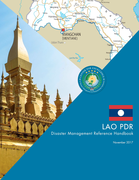
Lao People’s Democratic Republic (Lao PDR), also referred to as Laos, or Lao, is exposed to natural disasters such as flooding, typhoons, cyclones, drought, and earthquakes. The country is vulnerable to recurrent, sudden-onset and slow onset natural disasters with flooding, storms and typhoons hav
...
This study, and similar studies in Kenya, Mozambique, Swaziland, Uganda, and Zambia is the outcome of close collaborative by a team in Swaziland, with technical and financial support from the UNAIDS Regional Support Team for Eastern and Southern Afr
...