
Filter
678
Text search:
Malaria
no
more
UK
Featured
54
201
Language
Document type
390
161
53
31
16
12
9
3
2
1
Countries / Regions
40
34
22
19
19
18
16
14
13
12
12
10
10
9
9
8
8
6
6
6
6
5
5
5
4
4
4
3
3
3
3
3
2
2
2
2
2
1
1
1
1
1
1
1
1
1
1
1
1
1
1
1
1
Authors & Publishers
Publication Years
Category
222
54
50
49
34
6
5
Toolboxes
42
39
38
34
34
33
30
26
25
22
19
19
13
12
11
7
5
3
3
3
3
2
1
Climate change is a growing concern for Bangladesh because 90 percent of the country is approximately 10 feet above sea level. An evaluation was completed which discovered that high tides in Bangladesh were increasing 10 times more rapidly than the
...
The Lancet Global Health, Vol. 6, No. 10 Published: August 29, 2018
The Mtoto Mwerevu Stunting Reduction Toolkit is a resource for government and organisations involved in addressing stunting and broader nutrition issues in Tanzania. The toolkit was developed in conjunction with the Government of Tanzania (GoT) with funding from
...
PLoS Negl Trop Dis 15(8): e0009697. Chagas disease (CD), caused by the parasite Trypanosoma cruzi, affects ~6–7 million people worldwide. Significant limitations still exist in our understanding of CD. Harnessing individual participant data (IPD) from studies could support
...
Development assistance for health (DAH) has grown substantially, totaling more than $31.3 billion in 2013. However, the degree that countries with high concentrations of armed conflict, ethnic violence, inequality, debt, and corruption have received
...
The infectious disease burden in India is among the highest in the world. A large amount of antibiot-ics are consumed in fighting infections, some of them saving lives, but every use adding to antibiotic resistance in bacteria. Antibiotic use is increasing steadily (table 1), particularly
...
The scale of West Africa’s Ebola epidemic has been attributed to the weak health systems of affected countries,
their lack of resources, the mobility of communities and their inexperience in dealing with Ebola. This briefing for African Affairs argues that these explanations lack important contex
...
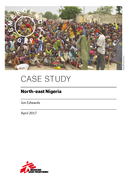
This case study examines the humanitarian response to the conflict-related crisis in the North-East of Nigeria, focusing primarily on the period from 2015 to the end of 2016. The aim is test the central hypotheses of the Emergency Gap project: that the current structure, conceptual underpinning and
...
The frequency of infectious disease epidemics is increasing, and the role of the health sector in the management of epidemics is crucial in terms of response. In the context of infectious disease epidemics, the use of climate-informed early warning systems (EWS) has the potential to increase the eff
...
The purpose of this document is to provide relevant information and guidelines on
coronavirus outbreaks – and in particular the novel coronavirus SARS-CoV-2 and the
diseases it produces, COVID-19 – for pharmacists and the pharmacy workforce, both in a
primary care context (i.e. community phar
...
Trachoma is an eye infection that for thousands of years caused many people to go blind across all continents. As the result of development and targeted interventions, trachoma is now limited to an estimated 57 countries, often affecting the poorest
populations of the world. Today,
...
In 2017, $37.4 billion of development assistance was provided to low- and middleincome countries to maintain or improve health. This amount is down slightly compared to 2016, and since 2010, development assistance for health (DAH) has grown at an annualized rate of 1.0%. While global development ass
...
As the Group of Eight (G8) world leaders meet in Saint Petersburg, Russia for this year’s G8 Summit, it is important to take stock of international efforts to finance the response to the global HIV/AIDS epidemic. Financing a sufficient and sustained response to the epidemic has emerged as one of t
...

Regional Network for Equity in Health in east and southern Africa (EQUINET): Disussion Paper 110
This report compiles evidence from published, grey literature and key informants on the UNMHCP since its introduction in Uganda’s health system, and findings were further validated during a oneda ...
This report compiles evidence from published, grey literature and key informants on the UNMHCP since its introduction in Uganda’s health system, and findings were further validated during a oneda ...

The 2012 NDRMP lays out the Disaster Risk Management (DRM) architecture of the country and provides guidance for DRM intervention at all levels. However, implementation has been slow and resource challenges exist throughout the government.
The PNG government’s policy and institutional framework ...
The PNG government’s policy and institutional framework ...

Despite improvements in recent years, the prevalence of undernutrition among women and children in Myanmar remains unacceptably high. One in three children are stunted and about 8% are acutely malnourished. Micronutrient deficiencies are common among infants, young children and pregnant women. In fa
...
Int. J. Environ. Res. Public Health 2021, 18(24), 13339; https://doi.org/10.3390/ijerph182413339
The climate crisis threatens to exacerbate numerous climate-sensitive health risks, including heatwave mortality, malnutrition from reduced crop yields, water- and vector-borne infectious diseases, and
...
This Study presents the key results of a research that analyses the implications of an ambitious agroecological transition across Europe, following the TYFA scenario. Published in 2018, what it proposes by 2050 is fully aligned with the objectives that the European Farm to Fork and Biodiversity stra
...
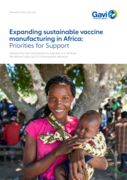
Despite high regional demand for vaccines valued at over US$ 1 billion annually, Africa’s vaccine industry provides only 0.1% of global supply. Vaccine inequity and hoarding at the start of the pandemic, which resulted in delays in obtaining COVID-19 doses, stimulated new resolve to address future
...

Africa’s health sector is facing an unprecedented financing crisis, driven by a sharp decline of 70% in Official Development Assistance (ODA) from 2021 to 2025 and deep-rooted structural vulnerabilities. This collapse is placing immense pressure on Africa’s already fragile health systems as ODA
...
