Filter
327
Text search:
HIV/AIDS
Indicator
Survey
Featured
27
157
Language
Document type
237
47
22
10
4
2
2
2
Countries
35
25
24
16
16
15
14
11
11
10
10
10
8
8
7
7
6
5
4
4
4
3
3
3
3
3
3
2
2
2
2
1
1
1
1
1
1
1
1
1
1
1
1
1
1
1
1
1
1
Authors & Publishers
Publication Years
Category
248
10
8
7
3
3
Toolboxes
43
12
3
3
2
2
2
2
2
2
1
1
1
1
1
1
1
HIV drug resistance strategies focus on prevention through adherence and treatment optimization, surveillance to monitor resistance trends, and innovation in new drugs and diagnostics. Key approaches include implementing national action plans, strengthening laboratory capacity for monitoring, and pr
...

This publication provides managers with guidance on how to create basic HIV prevention cascades as a starting point to enhance their ability to monitor and improve their programming and to facilitate comparisons of programme effectiveness across sites.

Recency assays use one or more biomarkers to identify whether HIV infection in a person is recent (usually within a year or less) or longstanding. Recency assays have been used to estimate incidence in representative cross-sectional surveys and in epidemiological studies to better understand the pat
...


UNAIDS 2017 / Reference
Generating evidence for policy and action on HIV and social protection

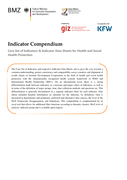
The Core Set of Indicators and respective Indicator Data Sheets aim to pave the way towards a common understanding, greater consistency and comparability across countries and alignment of results chains of German Development Cooperation in the field
...