
Filter
849
Text search:
European
Respiratory
Society
Featured
Recommendations
95
New Publications
142
Language
Document type
No document type
317
Studies & Reports
235
Guidelines
172
Manuals
59
Strategic & Response Plan
32
Fact sheets
14
Situation Updates
9
Training Material
8
Brochures
1
Resource Platforms
1
Online Courses
1
Countries / Regions
Global
72
Western and Central Europe
54
Africa
22
Eastern Europe
22
Germany
16
India
15
Ukraine
15
Sierra Leone
14
Brazil
14
Kenya
13
Latin America and the Carribbean
13
South Africa
12
Eastern Europe and Central Asia
11
Russia
11
Liberia
10
Nigeria
8
Ethiopia
8
Zambia
8
Mozambique
7
West and Central Africa
7
Guinea
6
Uganda
6
Philippines
6
Myanmar / Burma
6
Ghana
5
Thailand
5
Bangladesh
5
East and Southern Africa
5
Middle East and North Africa
5
South–East Asia Region
5
Asia
5
Senegal
4
Zimbabwe
4
Nepal
4
South Sudan
4
Syria
4
Rwanda
4
Malawi
4
Pakistan
3
Cambodia
3
Indonesia
3
Colombia
3
Lesotho
3
Albania
3
Spain
3
Congo, Democratic Republic of
2
USA
2
Jordan
2
Afghanistan
2
Turkey
2
Tanzania
2
China
2
North Macedonia
2
Ecuador
2
Botswana
2
Angola
2
Chile
2
Moldova
2
France
2
Burkina Faso
1
Guinea-Bissau
1
Haiti
1
Somalia
1
Iraq
1
Sudan
1
Benin
1
Namibia
1
Eswatini/ Swaziland
1
Bolivia
1
Libya
1
Madagascar
1
Sri Lanka
1
Yemen
1
Western Pacific Region
1
Other region
1
Paraguay
1
Bhutan
1
Venezuela
1
Laos
1
Tajikistan
1
Bulgaria
1
Estonia
1
Romania
1
Kyrgyzstan
1
Kazakhstan
1
Georgia
1
Vietnam
1
North America
1
Turkmenistan
1
Denmark
1
Mauritius
1
United Kingdom
1
Portugal
1
Azerbaijan
1
Authors & Publishers
Publication Years
Category
Countries
223
Clinical Guidelines
91
Public Health
82
Key Resources
43
Women & Child Health
28
Capacity Building
6
Pharmacy & Technologies
6
Toolboxes
COVID-19
144
TB
102
Planetary Health
70
AMR
61
NCDs
56
Mental Health
43
Global Health Education
31
HIV
30
Rapid Response
26
Ebola & Marburg
23
Caregiver
22
Conflict
20
2.0 Rapid Response
20
Refugee
13
Pharmacy
12
Disability
9
Health Financing Toolbox
9
Natural Hazards
8
NTDs
5
Polio
4
Zika
3
Specific Hazards
3
Malaria
3
Cholera
1
Working towards better COVID-19 outcomes in the WHO European Region.From the first COVID-19 cases in Europe reported on
24 January 2020, the pandemic reached 1 million cases
within 3 months, 10 million cases within 8 months, and
100 million cases
...

Epidemics and pandemics are some of the biggest threats to a safe and healthy world. But with effective preparedness and response measures, we can reduce their impacts and even stop them in their tracks.
Through the Programmatic Partnership with the Eur
...

The brief concludes that sustaining the continuity of EHS requires policies that ensure a whole-society and systems strengthening approach. This involves increased health care investment, community engagement, disease control regulations, and multis
...

Guidelines for training personnel in developing countries for prosthetics and orthotics services
recommended
1.Orthopedics - education 2.Prostheses and implants - utilization 3. Orthotic devices - utilization 4.Developing countries 5.Guidelines 6.Teaching materials I.World Health Organization II.International Society for Prosthetics and Orthotics
The biosphere underlies the whole sustainable development concept, as the layer on
which society and the economy rely. Nature and biodiversity fuel the natural cycles
and life-support systems of the planet, on which humanity ultimately depends.
Technical guidance.
This technical guidance aims to inform policy and practice development specifically related to improving the health of older refugees and migrants within the European Union and the larger WHO
...
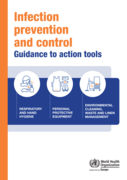
No country can claim to be free from health-care associated infections, therefore, improvement of infection prevention and control (IPC) strategies is essential. WHO recommends the use of multimodal improvement strategies to implement IPC interventions. These include each item of standard and transm
...

9 April 2020
WHO has published the guidance “Clinical management of severe acute respiratory infection (SARI) when COVID-19 disease is suspected” This document is intended for clinicians taking care of hospitalized adult and paediatric patients
...
DOI:https://doi.org/10.1016/S2213-2600(20)30316-7
The Lancet Respiratory Medicine
On 9 February 2021, a first webinar entitled “Expanding our understanding of Post COVID-19 condition” was held under the auspices of WHO and in consultation with the International Severe Acute Respiratory and Emerging Infection Consortium(ISARIC
...
This Framework offers a coherent approach for eliminating tuberculosis (TB) in low-incidence countries. It is designed to guide national policy-makers and those responsible for technical aspects of the national TB response in accelerating efforts towards elimination. The document will also be inform
...
Biodiversity and healthy natural ecosystems, including protected areas in and around cities, provide ecosystem benefits and services that support human health, including reducing flood risk, filtering air pollutants, and providing a reliable supply of clean drinking water. These services help to red
...
Unhealthy diets and excess body weight are leading risk factors for death and disability in the WHO European Region. Addressing malnutrition in all its forms is essential to ensure health and well-being for all and, consequently, sustainable develop
...
22 July 2022. This document summarizes current WHO guidance for public health surveillance of coronavirus disease 2019 (COVID-19) in humans caused by infection with severe acute respiratory syndrome coronavirus 2 (SARS-CoV-2).

Asthma is a serious global health problem affecting all age groups. Its prevalence is increasing in many countries, espacially among children. Although some countries have seen a decline in hospitalizations and deaths from asthma, asthma still imposes an unacceptable burden on health care systems, a
...
Int. J. Environ. Res. Public Health 2021, 18(24), 13339; https://doi.org/10.3390/ijerph182413339
The climate crisis threatens to exacerbate numerous climate-sensitive health risks, including heatwave mortality, malnutrition from reduced crop yields, water- and vector-borne infectious diseases, and
...

This collection of case studies on risk communication and community engagement (RCCE) from 18 different country/area level public health partners in the WHO European Region provides evidence of numerous results achieved and lessons learned sin
...
Noncommunicable diseases (NCDs) such as cancer, cardiovascular diseases, diabetes and chronic respiratory diseases and their risk factors are an increasing public health and development challenge in Turkey. This report provides evidence through thre
...
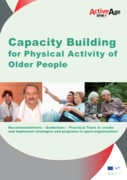
The “ActiveAge Handbook” is an outcome of the “ActiveAge Project, which was carried out from January 2013 until June 2014 in the frame of “2012 Preparatory Actions in the Field of Sport” of the European Commission Directory General Educati
...
