Filter
625
Text search:
Burial
Featured
95
234
Language
Document type
385
102
43
33
20
17
14
5
3
2
1
Countries
120
115
45
33
30
21
19
18
14
14
12
11
10
9
9
7
7
7
7
7
7
6
6
5
4
4
4
4
4
4
4
3
3
3
3
3
3
3
3
3
3
2
2
2
2
1
1
1
1
1
1
1
1
1
1
1
1
1
1
1
1
1
1
1
1
1
1
1
1
1
1
1
1
Authors & Publishers
Publication Years
Category
181
68
36
18
16
7
4
Toolboxes
280
74
34
21
18
16
15
15
14
13
8
6
5
4
4
4
3
3
2
2
1
1
As knowledge on Ebola-related safety measures accumulates, this guidance is provisional. This guide focuses on psychological first aid, which involves humane, supportive and practical help to follow human beings suffering serious crisis events. The guidance has been written for people who help othe
...
Joint WHO/ILO Briefing Note for Workers and Employers updated 5 September 2014
Updated September 2014

Morbidity and Mortality Weekly Report Suppl. Vol.63/3
Anyone planning to conduct humanitarian work in areas of Africa where outbreaks of Ebola virus disease are known to occur needs to be familiar with how Ebola virus is transmitted.
This leaflet recommends the precautions that humanitarian workers should take and provides advice on what to do if you
...

This briefing note is based on the existing WHO and ILO guides and recommendations for Ebola Virus
Disease at the time of the publication. It will be updated as new information and recommendations become
available.

Keep Safe – Keep Serving; Liberia: Updated Sept 25 2014.
This document is intended to inform infection prevention and control practices and supply needs in healthcare facilities. As the Ebola outbreak evolves, the document will need to be adapted accordingly.
The guidance provides considerations
...
Reproduced by CHAL (Chrisitan Health Association Liberia) 3 October 2014

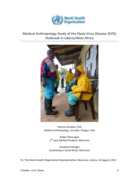
This study was carried out to better understand the local beliefs and practices likely to enhance or hinder efforts to respond to the Ebola Virus Disease outbreak in Liberia.
The messages should be used to inform, educate and engage different audience groups depending on their level of risk, vulnerability, presence in contact areas, care of patients with Ebola, or engagement or attendance of burials.

This document addresses the risk of Ebola virus disease (EVD) to household pets, including dogs, and what, if any role, they may play in EVD transmission.

Globalization and Health 2012, 8:15

Plos Current Outbreaks November 21, 2014