
Filter
8594
Text search:
Disease
Prevention
&
Control
Featured
916
2013
Language
7448
578
443
243
203
197
77
72
38
20
17
14
14
13
12
11
9
9
8
8
8
8
7
7
7
7
6
6
6
6
6
6
6
5
5
5
5
4
4
4
4
4
4
4
3
3
3
3
3
3
3
3
3
3
3
3
3
3
2
2
2
2
2
2
2
2
2
2
2
2
2
1
1
1
1
1
1
1
1
1
1
1
1
1
1
1
1
1
1
1
1
1
1
1
1
1
1
1
1
1
1
Document type
3795
1542
1399
480
399
383
162
129
107
82
40
36
21
8
8
Countries
511
347
238
208
208
199
197
170
168
168
144
138
117
106
105
104
103
99
96
94
93
88
88
85
81
79
79
75
71
71
70
70
69
64
60
56
56
55
54
54
49
46
45
43
43
38
36
36
36
35
34
30
28
26
24
22
22
21
20
20
20
19
17
16
15
15
15
15
14
14
14
13
12
11
11
11
11
10
10
9
9
9
9
9
9
8
8
7
7
6
6
5
5
5
5
5
4
4
4
4
4
4
4
4
4
4
3
3
3
3
3
3
3
3
3
3
3
3
3
3
3
3
2
2
2
2
2
2
2
2
2
2
2
2
2
2
2
1
1
1
1
1
1
1
1
1
1
1
1
1
1
1
1
1
1
1
1
1
1
1
Authors & Publishers
1263
353
297
239
230
211
171
149
124
117
87
85
83
72
62
58
55
53
52
47
47
47
46
44
40
31
31
31
31
30
29
28
28
26
26
24
24
24
24
24
22
22
21
21
21
21
20
20
20
19
19
19
19
19
18
18
18
18
17
17
17
17
17
17
16
16
16
16
16
16
16
16
16
16
15
15
15
15
15
15
14
14
14
14
14
14
14
13
13
13
13
13
13
13
13
13
12
12
12
12
12
12
12
12
12
11
11
11
11
11
11
11
10
10
10
10
10
10
10
10
10
10
9
9
9
9
9
9
9
9
9
9
9
9
9
9
9
9
9
8
8
8
8
8
8
8
8
8
8
8
8
8
7
7
7
7
7
7
7
7
7
7
7
7
7
7
7
7
7
7
7
6
6
6
6
6
6
6
6
6
6
6
6
6
6
6
6
6
6
6
6
6
6
6
6
6
6
6
6
6
6
6
6
6
6
6
6
6
6
6
5
5
5
5
5
5
5
5
5
5
5
5
5
5
5
5
5
5
5
5
5
5
5
5
5
5
5
5
5
5
5
5
5
5
5
5
5
5
5
5
5
5
5
5
5
5
5
5
4
4
4
4
4
4
4
4
4
4
4
4
4
4
4
4
4
4
4
4
4
4
4
4
4
4
4
4
4
4
4
4
4
4
4
4
4
4
4
4
4
4
4
4
4
4
4
4
4
4
4
4
4
4
4
4
4
4
4
4
4
4
4
4
4
4
4
4
4
4
4
4
4
4
4
4
4
4
4
4
4
4
3
3
3
3
3
3
3
3
3
3
3
3
3
3
3
3
3
3
3
3
3
3
3
3
3
3
3
3
3
3
3
3
3
3
3
3
3
3
3
3
3
3
3
3
3
3
3
3
3
3
3
3
3
3
3
3
3
3
3
3
3
3
3
3
3
3
3
3
3
3
3
3
3
3
3
3
3
3
3
3
3
3
3
3
3
3
3
3
3
3
3
3
3
3
3
3
3
3
3
3
3
3
3
3
3
3
3
3
3
3
3
3
3
3
3
3
3
3
3
3
3
3
3
3
3
3
3
3
3
3
3
3
3
3
3
3
3
3
3
3
3
3
3
3
3
3
2
2
2
2
2
2
2
2
2
2
2
2
2
2
2
2
2
2
2
2
2
2
2
2
2
2
2
2
2
2
2
2
2
2
2
2
2
2
2
2
2
2
2
2
2
2
2
2
2
2
2
2
2
2
2
2
2
2
2
2
2
2
2
2
2
2
2
2
2
2
2
2
2
2
2
2
2
2
2
2
2
2
2
2
2
2
2
2
2
2
2
2
2
2
2
2
2
2
2
2
2
2
2
2
2
2
2
2
2
2
2
2
2
2
2
2
2
2
2
2
2
2
2
2
2
2
2
2
2
2
2
2
2
2
2
2
2
2
2
2
2
2
2
2
2
2
2
2
2
2
2
2
2
2
2
2
2
2
2
2
2
2
2
2
2
2
2
2
2
2
2
2
2
2
2
2
2
2
2
2
2
2
2
2
2
2
2
2
2
2
2
2
2
2
2
2
2
2
2
2
2
2
2
2
2
2
2
2
2
2
2
2
2
2
2
2
2
2
2
2
2
2
2
2
2
2
2
2
2
2
2
2
2
2
2
2
2
2
2
2
2
2
2
2
2
2
2
2
2
2
2
2
2
2
2
2
2
2
2
2
2
2
2
2
2
2
2
2
2
2
2
2
2
2
2
2
2
2
2
2
2
2
2
2
2
2
2
2
2
2
2
2
2
2
2
2
2
2
2
2
2
2
2
2
2
2
2
2
2
2
2
2
2
2
2
2
2
2
2
2
2
2
2
2
2
2
2
2
2
2
2
2
2
2
2
2
2
2
2
2
2
2
2
2
2
2
2
2
2
2
2
2
2
2
2
2
2
2
2
2
2
2
2
2
2
2
2
2
2
2
2
2
2
2
2
2
2
2
1
1
1
1
1
1
1
1
1
1
1
1
1
1
1
1
1
1
1
1
1
1
1
1
1
1
1
1
1
1
1
1
1
1
1
1
1
1
1
1
1
1
1
1
1
1
1
1
1
1
1
1
1
1
1
1
1
1
1
1
1
1
1
1
1
1
1
1
1
1
1
1
1
1
1
1
1
1
1
1
1
1
1
1
1
1
1
1
1
1
1
1
1
1
1
1
1
1
1
1
1
1
1
1
1
1
1
1
1
1
1
1
1
1
1
1
1
1
1
1
1
1
1
1
1
1
1
1
1
1
1
1
1
1
1
1
1
1
1
1
1
1
1
1
1
1
1
1
1
1
1
1
1
1
1
1
1
1
1
1
1
1
1
1
1
1
1
1
1
1
1
1
1
1
1
1
1
1
1
1
1
1
1
1
1
1
1
1
1
1
1
1
1
1
1
1
1
1
1
1
1
1
1
1
1
1
1
1
1
1
1
1
1
1
1
1
1
1
1
1
1
1
1
1
1
1
1
1
1
1
1
1
1
1
1
1
1
1
1
1
1
1
1
1
1
1
1
1
1
1
1
1
1
1
1
1
1
1
1
1
1
1
1
1
1
1
1
1
1
1
1
1
1
1
1
1
1
1
1
1
1
1
1
1
1
1
1
1
1
1
1
1
1
1
1
1
1
1
1
1
1
1
1
1
1
1
1
1
1
1
1
1
1
1
1
1
1
1
1
1
1
1
1
1
1
1
1
1
1
1
1
1
1
1
1
1
1
1
1
1
1
1
1
1
1
1
1
1
1
1
1
1
1
1
1
1
1
1
1
1
1
1
1
1
1
1
1
1
1
1
1
1
1
1
1
1
1
1
1
1
1
1
1
1
1
1
1
1
1
1
1
1
1
1
1
1
1
1
1
1
1
1
1
1
1
1
1
1
1
1
1
1
1
1
1
1
1
1
1
1
1
1
1
1
1
1
1
1
1
1
1
1
1
1
1
1
1
1
1
1
1
1
1
1
1
1
1
1
1
1
1
1
1
1
1
1
1
1
1
1
1
1
1
1
1
1
1
1
1
1
1
1
1
1
1
1
1
1
1
1
1
1
1
1
1
1
1
1
1
1
1
1
1
1
1
1
1
1
1
1
1
1
1
1
1
1
1
1
1
1
1
1
1
1
1
1
1
1
1
1
1
1
1
1
1
1
1
1
1
1
1
1
1
1
1
1
1
1
1
1
1
1
1
1
1
1
1
1
1
1
1
1
1
1
1
1
1
1
1
1
1
1
1
1
1
1
1
1
1
1
1
1
1
1
1
1
1
1
1
1
1
1
1
1
1
1
1
1
1
1
1
1
1
1
1
1
1
1
1
1
1
1
1
1
1
1
1
1
1
1
1
1
1
1
1
1
1
1
1
1
1
1
1
1
1
1
1
1
1
1
1
1
1
1
1
1
1
1
1
1
1
1
1
1
1
1
1
1
1
1
1
1
1
1
1
1
1
1
1
1
1
1
1
1
1
1
1
1
1
1
1
1
1
1
1
1
1
1
1
1
1
1
1
1
1
1
1
1
1
1
1
1
1
1
1
1
1
1
1
1
1
1
1
1
1
1
1
1
1
1
1
1
1
1
1
1
1
1
1
1
1
1
1
1
1
1
1
1
1
1
1
1
1
1
1
1
1
1
1
1
1
1
1
1
1
1
1
1
1
1
1
1
1
1
1
1
1
1
1
1
1
1
1
1
1
1
1
1
1
1
1
1
1
1
1
1
1
1
1
1
1
1
1
1
1
1
1
1
1
1
1
1
1
1
1
1
1
1
1
1
1
1
1
1
1
1
1
1
1
1
1
1
1
1
1
1
1
1
1
1
1
1
1
1
1
1
1
1
1
1
1
1
1
1
1
1
1
1
1
1
1
1
1
1
1
1
1
1
1
1
1
1
1
1
1
1
1
1
1
1
1
1
1
1
1
1
1
1
1
1
1
1
1
1
1
1
1
1
1
1
1
1
1
1
1
1
1
1
1
1
1
1
1
1
1
1
1
1
1
1
1
1
1
1
1
1
1
1
1
1
1
1
1
1
1
1
1
1
1
1
1
1
1
1
1
1
1
1
1
1
1
1
1
1
1
1
1
1
1
1
1
1
1
1
1
1
1
1
1
1
1
1
1
1
1
1
1
1
1
1
1
1
1
1
1
1
1
1
1
1
1
1
1
1
1
1
1
1
1
1
1
1
1
1
1
1
1
1
1
1
1
1
1
1
1
1
1
1
1
1
1
1
1
1
1
1
1
1
1
1
1
1
1
1
1
1
1
1
1
1
1
1
1
1
1
1
1
1
1
1
1
1
1
1
1
1
1
1
1
1
1
1
1
1
1
1
1
1
1
1
1
1
1
1
1
1
1
1
1
1
1
1
1
1
1
1
1
1
1
1
1
1
1
1
1
1
1
1
1
1
1
1
1
1
1
1
1
1
1
1
1
1
1
1
1
1
1
1
1
1
1
1
1
1
1
1
1
1
1
1
1
1
1
1
1
1
1
1
1
1
1
1
1
1
1
1
1
1
1
1
1
1
1
1
1
1
1
1
1
1
1
1
1
1
1
1
1
1
1
1
1
1
1
1
1
1
1
1
1
1
1
1
1
1
1
1
1
1
1
1
1
1
1
1
1
1
1
1
1
1
1
1
1
1
1
1
1
1
1
1
1
1
1
1
1
1
1
1
1
1
1
1
1
1
1
1
1
1
1
1
1
1
1
1
1
1
1
1
1
1
1
1
1
1
1
1
1
1
1
1
1
1
1
1
1
1
1
1
1
1
1
1
1
1
1
1
1
1
1
1
1
1
1
1
1
1
1
1
1
1
1
1
1
1
1
1
1
1
1
1
1
1
1
1
1
1
1
1
1
1
1
1
1
1
1
1
1
1
1
1
1
1
1
1
1
1
1
1
1
1
1
1
1
1
1
1
1
1
1
1
1
1
1
1
1
1
1
1
1
1
1
1
1
1
1
1
1
1
1
1
1
1
1
1
1
1
1
1
1
1
1
1
1
1
1
1
1
1
1
1
1
1
1
1
1
1
1
1
1
1
1
1
1
1
1
1
1
1
1
1
1
1
1
1
1
1
1
1
1
1
1
1
1
1
1
1
1
1
1
1
1
1
1
1
1
1
1
1
1
1
1
1
1
1
1
1
1
1
1
1
1
1
1
1
1
1
1
1
1
1
1
1
1
1
1
1
1
1
1
1
1
1
1
1
1
1
1
1
1
1
1
1
1
1
1
1
1
1
1
1
1
1
1
1
1
1
1
1
1
1
1
1
1
1
1
1
1
1
1
1
1
1
1
1
1
1
1
1
1
1
1
1
1
1
1
1
1
1
1
1
1
1
1
1
1
1
1
1
1
1
1
1
1
1
1
1
1
1
1
1
1
1
1
1
1
1
1
1
1
1
1
1
1
1
1
1
1
1
1
1
1
1
1
1
1
1
1
1
1
1
1
1
1
1
1
1
1
1
1
1
1
1
1
1
1
1
1
1
1
1
1
1
1
1
1
1
1
1
1
1
1
1
1
1
1
1
1
1
1
1
1
1
1
1
1
1
1
1
1
1
1
1
1
1
1
1
1
1
1
1
1
1
1
1
1
1
1
1
1
1
1
1
1
1
1
1
1
1
1
1
1
1
1
1
1
1
1
1
1
1
1
1
1
1
1
1
1
1
1
1
1
1
1
1
1
1
1
1
1
1
1
1
1
1
1
1
1
1
1
1
1
1
1
1
1
1
1
1
1
1
1
1
1
1
1
1
1
1
1
1
1
1
1
1
1
1
1
1
1
1
1
1
1
1
1
1
1
1
1
1
1
1
1
1
1
1
1
1
1
1
1
1
1
1
1
1
1
1
1
1
1
1
1
1
1
1
1
1
1
1
1
1
1
1
1
1
1
1
1
1
1
1
1
1
1
1
1
1
1
1
1
1
1
1
1
1
1
1
1
1
1
1
1
1
1
1
1
1
1
1
1
1
1
1
1
1
1
1
1
1
1
1
1
1
1
1
1
1
1
1
1
1
1
1
1
1
1
1
1
1
1
1
1
1
1
1
1
1
1
1
1
1
1
1
1
1
1
1
1
1
1
1
1
1
1
1
1
1
1
1
1
1
1
1
1
1
1
1
1
1
1
1
1
1
1
1
1
1
1
1
1
1
1
1
1
1
1
1
1
1
1
1
1
1
1
1
1
1
1
1
1
1
1
1
1
1
1
1
1
1
1
1
1
1
1
1
1
1
1
1
1
1
1
1
1
1
1
1
1
1
1
1
1
1
1
1
1
1
1
1
1
1
1
1
1
1
1
1
1
1
1
1
1
1
1
1
1
1
1
1
1
1
1
1
1
1
1
1
1
1
1
1
1
1
1
1
1
1
1
1
1
1
1
1
1
1
1
1
1
1
1
1
1
1
1
1
1
1
1
1
1
1
1
1
1
1
1
1
1
1
1
1
1
1
1
1
1
1
1
1
1
1
1
1
1
1
1
1
1
1
1
1
1
1
1
1
1
1
1
1
1
1
1
1
1
1
1
1
1
1
1
1
1
1
1
1
1
1
1
1
1
1
1
1
1
1
1
1
1
1
1
1
1
1
1
1
1
1
1
1
1
1
1
1
1
1
1
1
1
1
1
1
1
1
1
1
1
1
1
1
1
1
1
1
1
1
1
1
1
1
1
1
1
1
1
1
1
1
1
1
1
1
1
1
1
1
1
1
1
1
1
1
1
1
1
1
1
1
1
1
1
1
1
1
1
1
1
1
1
1
1
1
1
1
1
1
1
1
1
1
1
1
1
1
1
1
1
1
1
1
1
1
1
1
1
1
1
1
1
1
1
1
1
1
1
1
1
1
1
1
1
1
1
1
1
1
1
1
1
1
1
1
1
1
1
1
1
1
1
1
1
1
1
1
1
1
1
1
1
1
1
1
1
1
1
1
1
1
1
1
1
1
1
1
1
1
1
1
1
1
1
1
1
1
1
1
1
1
1
1
1
1
1
1
1
1
1
1
1
1
1
1
1
1
1
1
1
1
1
1
1
1
1
1
1
1
1
1
1
1
1
1
1
1
1
1
1
1
1
1
1
1
1
1
1
1
1
1
1
1
1
1
1
1
1
1
1
1
1
1
1
1
1
1
1
1
1
1
1
1
1
1
1
1
1
1
1
1
1
1
1
1
1
1
1
1
1
1
1
1
1
1
1
1
1
1
1
1
1
1
1
1
1
1
1
1
1
1
1
1
1
1
1
1
1
1
1
1
1
1
1
1
1
1
1
1
1
1
1
1
1
1
1
1
1
1
1
1
1
1
1
1
1
1
1
1
1
1
1
1
1
1
1
1
1
1
1
1
1
1
1
1
1
1
1
1
1
1
1
1
1
1
1
1
1
1
1
1
1
1
1
1
1
1
1
1
1
1
1
1
1
1
1
1
1
1
1
1
1
1
1
1
1
1
1
1
1
1
1
1
1
1
1
1
1
1
1
1
1
1
1
1
1
1
1
1
1
1
1
1
1
1
1
1
1
1
1
1
1
1
1
1
1
1
1
1
1
1
1
1
1
1
1
1
1
1
1
1
1
1
1
1
1
1
1
1
1
1
1
1
1
1
1
1
1
1
1
1
1
1
1
1
1
1
1
1
1
1
1
1
1
1
1
1
1
1
1
1
1
1
1
1
1
1
1
1
1
1
1
1
1
1
1
1
1
1
1
1
1
1
1
1
1
1
1
1
1
1
1
1
1
1
1
1
1
1
1
1
1
1
1
1
1
1
1
1
1
1
1
1
1
1
1
1
1
1
1
1
1
1
1
1
1
1
1
1
1
1
1
1
1
1
1
1
1
1
1
1
1
1
1
1
1
1
1
1
1
1
1
1
1
1
1
1
1
1
1
1
1
1
1
1
1
1
1
1
1
1
1
1
1
1
1
1
1
1
1
1
1
1
1
1
1
1
1
1
1
1
1
1
1
1
1
1
1
1
1
1
1
1
1
1
1
1
1
1
1
1
1
1
1
1
1
1
1
1
1
1
1
1
1
1
1
1
1
1
1
1
1
1
1
1
1
1
1
1
1
1
1
1
1
1
1
1
1
1
1
1
1
1
1
1
1
1
1
1
1
1
1
1
1
1
1
1
1
1
1
1
1
1
1
1
1
1
1
1
1
1
1
1
1
1
1
1
1
1
1
1
1
1
1
1
1
1
1
1
1
1
1
1
1
1
1
1
1
1
1
1
1
1
1
1
1
1
1
1
1
1
1
1
1
1
1
1
1
1
1
1
1
1
1
1
1
1
1
1
1
1
1
1
1
1
1
1
1
1
1
1
1
1
1
1
1
1
1
1
1
1
1
1
1
1
1
1
1
1
1
1
1
1
1
1
1
1
1
1
1
1
1
1
1
1
1
1
1
1
1
1
1
1
1
1
1
1
1
1
1
1
1
1
1
1
1
1
1
1
1
1
1
1
1
1
1
1
1
1
1
1
1
1
1
1
1
1
1
1
1
1
1
1
1
1
1
1
1
1
1
1
1
1
1
1
1
1
1
1
1
1
1
1
1
1
1
1
1
1
1
1
1
1
1
1
1
1
1
1
1
1
1
1
1
1
1
1
1
1
1
1
1
1
1
1
1
1
1
1
1
1
1
1
1
1
1
1
1
1
1
1
1
1
1
1
1
1
1
1
1
1
1
1
1
1
1
1
1
1
1
1
1
1
1
1
1
1
1
1
1
1
1
1
1
1
1
1
1
1
1
1
1
1
1
1
1
1
1
1
1
1
1
1
1
1
1
1
1
1
1
1
1
1
1
1
1
1
1
1
1
1
1
1
1
1
1
1
1
1
1
1
1
1
1
1
1
1
1
1
1
1
1
1
1
1
1
1
1
1
1
1
1
1
1
1
1
1
1
1
1
1
1
1
1
1
1
1
1
1
1
1
1
1
1
1
1
1
1
1
1
1
1
1
1
1
1
1
1
1
1
1
1
1
1
1
1
1
1
1
1
1
1
1
1
1
1
1
1
1
1
1
1
1
1
1
1
1
1
1
1
1
1
1
1
1
1
1
1
1
1
1
1
1
1
1
1
1
1
1
1
1
1
1
1
1
1
1
1
1
1
1
1
1
1
1
1
1
1
1
1
1
1
1
1
1
1
1
1
1
1
1
1
1
1
1
1
1
1
1
1
1
1
1
1
1
1
1
1
1
1
1
1
1
1
1
1
1
1
1
1
1
1
1
1
1
1
1
1
1
1
1
1
1
1
1
1
1
1
1
1
1
1
1
1
1
1
1
1
1
1
1
1
1
1
1
1
1
1
1
1
1
1
1
1
1
1
1
1
1
1
1
1
1
1
1
1
1
1
1
1
1
1
1
1
1
1
1
1
1
1
1
1
1
1
1
1
1
1
1
1
1
1
1
1
1
1
1
1
1
1
1
1
1
1
1
1
1
1
1
1
1
1
1
1
1
1
1
1
1
1
1
1
1
1
1
1
1
1
1
1
1
1
1
1
1
1
1
1
1
1
1
1
1
1
1
1
1
1
1
1
1
1
1
1
1
1
1
1
1
1
1
1
1
1
1
1
1
1
1
1
1
1
1
1
1
1
1
1
1
1
1
1
1
1
1
1
1
1
1
1
1
1
1
1
1
1
1
1
1
1
1
1
1
1
1
1
1
1
1
1
1
1
1
1
1
1
1
1
1
1
1
1
1
1
1
1
1
1
1
1
1
1
1
1
1
1
1
1
1
1
1
1
1
1
1
1
1
1
1
1
1
1
1
1
1
1
1
1
1
1
1
1
1
1
1
1
1
1
1
1
1
1
1
1
1
1
1
1
1
1
1
1
1
1
1
1
1
1
1
1
1
1
1
1
1
1
1
1
1
1
1
1
1
1
1
1
1
1
1
1
1
1
1
1
1
1
1
1
1
1
1
1
1
1
1
1
1
1
1
1
1
1
1
1
1
1
1
1
1
1
1
1
1
1
1
1
1
1
1
1
1
1
1
1
1
1
1
1
1
1
1
1
1
1
1
1
1
1
1
1
1
1
1
1
1
1
1
1
1
1
1
1
1
1
1
1
1
1
1
1
1
1
1
1
1
1
1
1
1
1
1
1
1
1
1
1
1
1
1
1
1
1
1
1
1
1
1
1
1
1
1
1
1
1
1
1
1
1
1
1
1
1
1
1
1
1
1
1
1
1
1
1
1
1
1
1
1
1
1
1
1
1
1
1
1
1
1
1
1
1
1
1
1
1
1
1
1
1
1
1
1
1
1
1
1
1
1
1
1
1
1
1
1
1
1
1
1
1
1
1
1
1
1
1
1
1
1
1
1
1
1
1
1
1
1
1
1
1
1
1
1
1
1
1
1
1
1
1
1
1
1
1
1
1
1
1
1
1
1
1
1
1
1
1
1
1
1
1
1
1
1
1
1
1
1
1
1
1
1
1
1
1
1
1
1
1
1
1
1
1
1
1
1
1
1
1
1
1
1
1
1
1
1
1
1
1
1
1
1
1
1
1
1
1
1
1
1
1
1
1
1
1
1
1
1
1
1
1
1
1
1
1
1
1
1
1
1
1
1
1
1
1
1
1
1
1
1
1
1
1
1
1
1
1
1
1
1
1
1
1
1
1
1
1
1
1
1
1
1
1
1
1
1
1
1
1
1
1
1
1
1
1
1
1
1
1
1
1
1
1
1
1
1
1
1
1
1
1
1
1
1
1
1
1
1
1
1
1
1
1
1
1
1
1
1
1
1
1
1
1
1
1
1
1
1
1
1
1
1
1
1
1
1
1
1
1
1
1
1
1
1
1
1
1
1
1
1
1
1
1
1
1
1
1
1
1
1
1
1
1
1
1
1
1
1
1
1
1
1
1
1
1
1
1
1
1
1
1
1
1
1
1
1
1
1
1
1
1
1
1
1
1
1
1
1
1
1
1
1
1
1
1
1
1
1
1
1
1
1
1
1
1
1
1
1
1
1
1
1
1
1
1
1
1
1
1
1
1
1
1
1
1
1
1
1
1
1
1
1
1
1
1
1
1
1
1
1
1
1
1
1
1
1
1
1
1
1
1
1
1
1
1
1
1
1
1
1
1
1
1
1
1
1
1
1
1
1
1
1
1
1
1
1
1
1
1
1
1
1
1
1
1
1
1
1
1
1
1
1
1
1
1
1
1
1
1
1
1
1
1
1
1
1
1
1
1
1
1
1
1
1
1
1
1
1
1
1
1
1
1
1
1
1
1
1
1
1
1
1
1
1
1
1
1
1
1
1
1
1
1
1
1
1
1
1
1
1
1
1
1
1
1
1
1
1
1
1
1
1
1
1
1
1
1
1
1
1
1
1
1
1
1
1
1
1
1
1
1
1
1
1
1
1
1
1
1
1
1
1
1
1
1
1
1
1
1
1
1
1
1
1
1
1
1
1
1
1
1
1
1
1
1
1
1
1
1
1
1
1
1
1
1
1
1
1
1
1
1
1
1
1
1
1
1
1
1
1
1
1
1
1
1
1
1
1
1
1
1
1
1
1
1
1
1
1
1
1
1
1
1
1
1
1
1
1
1
1
1
1
1
1
1
1
1
1
1
1
1
1
1
1
1
1
1
1
1
1
1
1
1
1
1
1
1
1
1
1
1
1
1
1
1
1
1
1
1
1
1
1
1
1
1
1
1
1
1
1
1
1
1
1
1
1
1
1
1
1
1
1
1
1
1
1
1
1
1
1
1
1
1
1
1
1
1
1
1
1
1
1
1
1
1
1
1
1
1
1
1
1
1
1
1
1
1
1
1
1
1
1
1
1
1
1
1
1
1
1
1
1
1
1
1
1
1
1
1
1
1
1
1
1
1
1
1
1
1
1
1
1
1
1
1
1
1
1
1
1
1
1
1
1
1
1
1
1
1
1
1
1
1
1
1
1
1
1
1
1
1
1
1
1
1
1
1
1
1
1
1
1
1
1
1
1
1
1
1
1
1
1
1
1
1
1
1
1
1
1
1
1
1
1
1
1
1
1
1
1
1
1
1
1
1
1
1
1
1
1
1
1
1
1
1
1
1
1
1
1
1
1
1
1
1
1
1
1
1
1
1
1
1
1
1
1
1
1
1
1
1
1
1
1
1
1
1
1
1
1
1
1
1
1
1
1
1
1
1
1
1
1
1
1
1
1
1
1
1
1
1
1
1
1
1
1
1
1
1
1
1
1
1
1
1
1
1
1
1
1
1
1
1
1
1
1
1
1
1
1
1
1
1
1
1
1
1
1
1
1
1
1
1
1
1
1
1
1
1
1
1
1
1
1
1
1
1
1
1
1
1
1
1
1
1
1
1
1
1
Publication Years
3317
4607
631
37
2
Category
3058
702
579
453
333
148
110
2
Toolboxes
1232
534
510
489
397
343
286
240
230
229
213
203
173
171
166
134
128
116
107
98
85
84
56
54
14
4
2
The document, titled "Prevention and Control of Noncommunicable Diseases: Guidelines for Primary Health Care in Low-Resource Settings," provides the World Health Organization's (WHO) recommendations
...
for managing noncommunicable diseases (NCDs) such as cancer, heart disease, diabetes, and chronic respiratory illnesses in low-resource healthcare settings. It outlines cost-effective interventions for early diagnosis, treatment, and prevention within primary healthcare, focusing on accessible methods for diabetes management, blood pressure control, dietary and lifestyle guidance, and essential medication use. The guidelines aim to support healthcare professionals in delivering effective NCD care where resources are limited, ultimately improving health outcomes and reducing NCD complications.
more

As the number of transboundary pest and animal and foodborne disease outbreaks rises, so does the number of people who are chronically hungry due to these and other factors. The correlation can be explained by the link between our health and that of
...
the planet. We rely on land and sea for the production of safe and quality foods for our daily nourishment. Pests and disease epidemics negatively impact the quality, quantity and safety of our food sources, and cripple economic growth and efficiencies in production. Furthermore, the epidemic and endemic levels of the pathogens and disease vectors can be difficult to control. This is why FAO stresses and promotes the special efforts required for cost-effective preventive measures rather than the more expensive control, disinfestation, treatment and disposal measures. When preventive measures are late or difficult, preparedness and contingency plans must be in place to enable rapid response. Early warning systems, based on close monitoring, surveillance, and timely reporting are fundamental to warn and empower communities to safeguard their livelihoods and assets by enhancing disease and pest prevention measures and for government services to take immediate measures to protect communities and national economies.
more

This updated step by step guide aims to assist the ministries of health (MoHs) in developing the national action plans for noma prevention and control, with a view to sustainably reducing the incide
...
nce of noma as a public health problem through programmes that are fully integrated with national health planning, strengthening of primary health care (PHC) and attainment of universal health coverage (UHC).
more
Environmental Research Volume 151, November 2016, Pages 115-123
Dengue is the world’s most important arboviral disease in terms of number of people affected. Over the past 50 years, incidence increased 30-fold: there were approximately 390 millio
...
n infections in 2010. Globalization, trade, travel, demographic trends, and warming temperatures are associated with the recent spread of the primary vectors Aedes aegypti and Aedes albopictus and of dengue. Overall, models project that new geographic areas along the fringe of current geographic ranges for Aedes will become environmentally suitable for the mosquito’s lifecycle, and for dengue transmission. Many endemic countries where dengue is likely to spread further have underdeveloped health systems, increasing the substantial challenges of disease prevention and control. Control focuses on management of Aedes, although these efforts have typically had limited effectiveness in preventing outbreaks. New prevention and control efforts are needed to counter the potential consequences of climate change on the geographic range and incidence of dengue, including novel methods of vector control and dengue vaccines.
more
Prevention, early diagnosis, and effective treatment are essential for the control and elimination of Neisseria gonorrhoeae as a public health problem. Currently, in Latin America and the Caribbean,
...
treatment for gonorrhea infection is largely empiric and based on clinical diagnosis. In the Americas, the high burden of new N. gonorrhoeae infections (estimated at 11 million new cases a year), the complexity of the disease epidemiology, and in many countries the limited resources, make it difficult to fully understand the burden of disease and the burden of antimicrobial resistance (AMR) in N. gonorrhoeae.
PAHO has developed this document to facilitate the navigation of available guidance and recommendations for N. gonorrhoeae AMR surveillance by public health and health care professionals, at the national and subnational levels, involved in designing, implementing, and/or strengthening AMR surveillance of N. gonorrhoeae and overall surveillance of sexually transmitted infections.
more
2021 World Health Organization guideline on pharmacological treatment of hypertension: Policy implications for the region of the Americas
Campbell, N.R.C.; Burnens, M.P.; Whelton, P.K. et al.
The Lancet Regional Health - Americas
(2022)
CC
Cardiovascular disease (CVD) is the leading cause of death in the Americas and raised blood pressure accounts for over 50% of CVD. In the Americas over a quarter of adult women and four in ten adult men have hypertension and the diagnosis, treatment
...
and control are suboptimal. In 2021, the World Health Organization (WHO) released an updated guideline for the pharmacological treatment of hypertension in adults. This policy paper highlights the facilitating role of the WHO Global HEARTS initiative and the HEARTS in the Americas initiative to catalyze the implementation of this guideline, provides specific policy advice for implementation, and emphasizes that an overarching strategic approach for hypertension control is needed. The authors urge health advocates and policymakers to prioritize the prevention and control of hypertension to improve the health and wellbeing of their populations and to reduce CVD health disparities within and between populations of the Americas.
more
Diabetes mellitus is a leading cause of mortality and reduced life expectancy. We aim to estimate the burden of diabetes by type, year, regions, and socioeconomic status in 195 countries and territories over the past 28 years, which provide information to achieve the goal of World Health Organizatio
...
n Global Action Plan for the Prevention and Control of Noncommunicable Diseases in 2025. Data were obtained from the Global Burden of Disease Study 2017. Overall, the global burden of diabetes had increased significantly since 1990. Both the trend and magnitude of diabetes related diseases burden varied substantially across regions and countries. In 2017, global incidence, prevalence, death, and disability-adjusted life-years (DALYs) associated with diabetes were 22.9 million, 476.0 million, 1.37 million, and 67.9 million, with a projection to 26.6 million, 570.9 million, 1.59 million, and 79.3 million in 2025, respectively. The trend of global type 2 diabetes burden was similar to that of total diabetes (including type 1 diabetes and type 2 diabetes), while global age-standardized rate of mortality and DALYs for type 1 diabetes declined. Globally, metabolic risks (high BMI) and behavioral factors (inappropriate diet, smoking, and low physical activity) contributed the most attributable death and DALYs of diabetes. These estimations could be useful in policy-making, priority setting, and resource allocation in diabetes prevention and treatment.
more
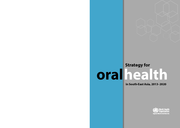
Oral diseases are among the most common chronic diseases worldwide and constitute a major public health problem due to the huge health and economic burden on individuals, families, societies, and health care systems. The recent emphasis on the role of determinants of health, common risk factors and
...
their recognition in the context of the growing burden of noncommunicable diseases (NCDs) provides good opportunities for integrating oral health into NCD prevention and control efforts. This Strategy for oral health in South-East Asia, 2013-2020, presents guidance to Member States in developing national policy and action plans to improve oral health within existing socioeconomic, cultural, political and health system contexts. It expresses the consensus on major strategies in the area of oral health promotion as well as oral disease prevention and control for the South-East Asia Region aiming at reducing the health and socioeconomic burden resulting from oral diseases, reducing oral health inequities, and improving the quality of life of the population.
more

The article "Non-communicable diseases, injuries, and mental ill-health in Africa: the role of the Africa Centres for Disease Control and Prevention
...
" examines the role of the Africa CDC in addressing non-communicable diseases (NCDs), injuries, and mental health across the continent. It highlights how Africa CDC, originally focused on communicable disease response, has expanded its mandate to include NCDs and mental health, driven by the high mortality and morbidity associated with these conditions.
more
Dengue is the fastest spreading, mosquito-borne viral infectious disease worldwide, with remarkable morbidity and mortality. In the past decades, profound contributions have been made towards understanding its epidemiology, including
...
disease burden and distributions, risk factors, and control and prevention practices. Dengue continues to disseminate to new areas, including high latitude regions, and a new serotype (dengue virus serotype 5) has been identified. Vaccine research has made new progress, in which the licensed yellow fever and dengue virus quadrivalent chimeric vaccine is now under further safety assessment. In disease surveillance, because of its operational simplicity, rapidity, capability, and utility as an indicator of disease severity, dengue virus NS1 antigen detection has great promotion and application value among primary health care institutions. Vector control progress has driven new breakthroughs in biotechnology, including Wolbachia-infected Aedes and genetically modified Aedes. Both Aedes variants have been used to block transmission of the dengue virus through population replacement and suppression. In the future, vector control should still be pursued as a key measure to prevent transmission, along with anti-viral drug and vaccine research.
more
Congenital transmission of Chagas disease has not been extensively studied in Colombia, and there are no standardized processes in the health system regarding
the specific diagnosis, treatment and follow-up of this
...
disease. To generate recommendations on congenital Chagas disease and Chagas in women of childbearing
age in Colombia, a consensus of experts was developed. An extensive literature search through the Medline database was carried out using the MeSH terms:
«Chagas disease/congenital», «prevention and control», «diagnosis», «therapeutics» and «pregnancy». Appropriate abstracts were selected and the full texts were
analyzed. The relevant information was synthesized, classified, and organized into tables and figures and was presented to a panel of experts, which was composed
of 30 professionals from various fields. Based on the Delphi methodology, three rounds of consultation were conducted. The first and second rounds were based
on electronic questionnaires that measured the level of consensus of each question among the participants. The third round was based on a face-to-face discussion focusing on those questions without consensus in the previous consultations. The evidence was adapted to national circumstances on a case-by-case basis,
and the content the final document was approved. These recommendations are proposed for use in routine medical practice by health professionals in Colombia.
more

Belgian Antibiotic Policy Coordination Committee Policy paper for the 2014-2019 term
Erica Balligand, Michiel Costers and Evelyne Van Gastel
Belgian Antibiotic Policy Coordination Committee
(2014)
C2
Antimicrobial resistance represents a big threat to public health. The Centers for Disease Control and Prevention (CDC) estimate that every year tw
...
o million Americans are infected with a (multi-)drug resistant bacterium, resulting in 23,000 deaths. The WHO has repeatedly drawn attention to this major health issue. In the worst-case scenario, we will shortly run out of effective antibiotics. Surgery and cancer therapy will then become very dangerous due to the risk of infection associated with such treatments. (Organ) transplantation will become close to impossible as the immunosuppression necessary for transplant patients makes them highly vulnerable to infections. Some infections we can easily treat today could turn deadly. It is therefore conceivable that infectious diseases once again become the leading cause of death as in early 20th century.
more
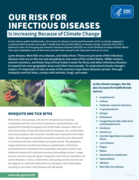
As the nation’s public health leader, the Centers for Disease Control and Prevention (CDC) is actively engaged in a national effort to protect th
...
e public’s health from the harmful effects of climate change. Scientists from CDC’s National Center for Emerging and Zoonotic Infectious Diseases (NCEZID) are at the forefront of many of these efforts. This report highlights some of that work and also looks ahead to the important work yet to come.
more
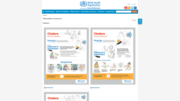
The WHO Eastern Mediterranean Regional Office's webpage on cholera information resources provides a comprehensive collection of materials to support understanding and management of cholera outbreaks. It includes posters for public education, recent publications such as Global Defence Against the Inf
...
ectious Disease Threat (with a chapter on cholera), Cholera Outbreak: Assessing the Outbreak Response and Improving Preparedness, and First Steps for Managing an Outbreak of Acute Diarrhoea. Additionally, it features policy documents like the WHO statement on international travel and trade during cholera outbreaks and the World Health Assembly resolution WHA 64.15 on cholera control and prevention. The page also links to the Global Task Force on Cholera Control and provides cholera country profiles, offering valuable insights into global and regional efforts to combat cholera.
more
The document “Hospital Preparedness for Epidemics” published by the World Health Organization (WHO) provides guidance on how hospitals and healthcare facilities can prepare for and respond effectively to infectious disease outbreaks. It outlines
...
key components of epidemic preparedness, including planning and management structures, infection prevention and control, communication systems, human resource management, logistics, laboratory capacity, and the continuity of essential health services. The guide emphasizes the importance of coordination within hospitals and with public health authorities, as well as training staff and ensuring adequate supplies and infrastructure. Overall, the document serves as a practical framework to help hospitals strengthen their readiness, maintain critical healthcare services, and respond efficiently during epidemics or other health emergencies.
more
Global Development: Where Are We Now?
Today, we are facing a vital opportunity to change the profile of cardiovascular disease around the world.
The Millennium Development Goals (MDGs) are due to expire at the end of 2015, placing the cardiovascul
...
ar health community in a unique position to shape the priorities for the next development agenda, and save millions of lives.
Despite its devastating impact on people of all ages, genders and ethnicities, cardiovascular disease was excluded from the Millennium Development Goals (MDGs), which were announced by the United Nations in 2000. That oversight was far-reaching;
for well over a decade, non-communicable diseases were omitted from the global funding agenda and deprioritized by other mechanisms. During that period of muted government action, the prevalence and burden of non-communicable diseases increased in every region of the world.
Fifteen years later, as the successors to the MDGs are being negotiated, we are in a position to call for the prioritization of cardiovascular disease on the forthcoming global development agenda. Once we have ensured that CVD is recognised at the global policy level, our efforts will turn to encouraging governments to honour their commitments on
the prevention and control of CVD.
more
The World Health Organization's cholera fact sheet provides essential information about cholera, an acute diarrheal infection caused by ingesting food or water contaminated with Vibrio cholerae bacteria. The disease remains a global public health th
...
reat, particularly in areas lacking safe water and adequate sanitation. While many infected individuals exhibit mild or no symptoms, severe cases can lead to rapid dehydration and death if untreated. Prevention focuses on ensuring access to clean water, proper sanitation, and hygiene practices. Effective treatment primarily involves prompt administration of oral rehydration solutions. The fact sheet also highlights the importance of surveillance, preparedness, and response strategies to control outbreaks.
more
The World Health Organization's cholera fact sheet provides essential information about cholera, an acute diarrheal infection caused by ingesting food or water contaminated with Vibrio cholerae bacteria. The disease remains a global public health th
...
reat, particularly in areas lacking safe water and adequate sanitation. While many infected individuals exhibit mild or no symptoms, severe cases can lead to rapid dehydration and death if untreated. Prevention focuses on ensuring access to clean water, proper sanitation, and hygiene practices. Effective treatment primarily involves prompt administration of oral rehydration solutions. The fact sheet also highlights the importance of surveillance, preparedness, and response strategies to control outbreaks.
more
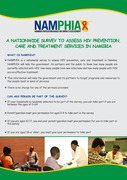
The Namibia Population-based HIV Impact Assessment (NAMPHIA) 2017 | The Ministry of Health and Services is leading the NAMPHIA survey in collaboration with the Namibia Statistics Agency (NSA) and the Namibia Institute of Pathology (NIP). The survey is supported by the United States President’s Eme
...
rgency Plan for AIDS Relief (PEPFAR), through the U.S. Centers for Disease Control and Prevention (CDC). | The goal of NAMPHIA is to examine the current distribution of the HIV epidemic and assess the impact of Namibia’s prevention, care and treatment response across all 14 regions of Namibia.
more
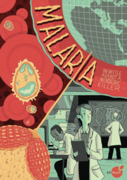
This malaria comic provides an engaging and educational overview of the disease, covering topics such as transmission, symptoms, prevention and treatment. It uses illustrations and storytelling to s
...
implify complex scientific information and raise awareness, promoting malaria control efforts and making the topic accessible to a broad audience, including students, health workers, and the general public.
more
