
Filter
2250
Text search:
eye
health
Featured
314
585
Language
2170
54
48
40
28
24
13
9
8
6
6
6
5
5
4
4
4
4
3
3
3
3
3
2
2
2
2
2
2
2
2
1
1
1
1
1
1
1
1
1
1
1
1
1
1
1
1
1
1
1
1
1
Document type
1208
401
260
163
87
48
42
16
12
8
3
1
1
Countries
188
73
68
64
61
57
54
49
49
45
38
38
32
31
26
25
25
24
24
22
22
19
19
14
13
12
12
11
11
10
10
9
9
9
8
8
8
8
7
7
7
6
6
6
6
5
5
5
5
5
5
4
4
4
4
4
3
3
3
3
3
3
3
3
3
2
2
2
2
2
2
2
2
2
2
2
2
2
2
2
2
1
1
1
1
1
1
1
1
1
1
1
1
1
1
1
1
1
1
1
1
1
1
1
1
1
1
1
1
1
1
1
1
Authors & Publishers
262
94
64
59
53
46
46
35
28
22
20
19
17
17
15
14
14
14
14
14
13
13
12
11
10
10
10
9
9
9
9
9
9
8
8
8
8
8
8
8
7
7
7
7
7
7
6
6
6
6
6
6
6
6
6
6
6
6
5
5
5
5
5
5
5
5
5
5
5
4
4
4
4
4
4
4
4
4
4
4
4
4
4
4
4
4
4
4
4
4
4
4
4
4
4
4
4
4
4
4
4
4
4
4
4
4
3
3
3
3
3
3
3
3
3
3
3
3
3
3
3
3
3
3
3
3
3
3
3
3
3
3
3
3
3
3
3
3
3
3
3
3
3
3
3
3
3
3
2
2
2
2
2
2
2
2
2
2
2
2
2
2
2
2
2
2
2
2
2
2
2
2
2
2
2
2
2
2
2
2
2
2
2
2
2
2
2
2
2
2
2
2
2
2
2
2
2
2
2
2
2
2
2
2
2
2
2
2
2
2
2
2
2
2
2
2
2
2
2
2
2
2
2
2
2
2
2
2
2
2
2
2
2
2
2
2
2
2
2
2
2
2
2
2
2
2
2
2
2
2
2
2
2
2
2
2
2
2
2
2
2
2
2
2
2
2
2
2
2
2
2
2
2
2
2
2
2
2
2
2
2
1
1
1
1
1
1
1
1
1
1
1
1
1
1
1
1
1
1
1
1
1
1
1
1
1
1
1
1
1
1
1
1
1
1
1
1
1
1
1
1
1
1
1
1
1
1
1
1
1
1
1
1
1
1
1
1
1
1
1
1
1
1
1
1
1
1
1
1
1
1
1
1
1
1
1
1
1
1
1
1
1
1
1
1
1
1
1
1
1
1
1
1
1
1
1
1
1
1
1
1
1
1
1
1
1
1
1
1
1
1
1
1
1
1
1
1
1
1
1
1
1
1
1
1
1
1
1
1
1
1
1
1
1
1
1
1
1
1
1
1
1
1
1
1
1
1
1
1
1
1
1
1
1
1
1
1
1
1
1
1
1
1
1
1
1
1
1
1
1
1
1
1
1
1
1
1
1
1
1
1
1
1
1
1
1
1
1
1
1
1
1
1
1
1
1
1
1
1
1
1
1
1
1
1
1
1
1
1
1
1
1
1
1
1
1
1
1
1
1
1
1
1
1
1
1
1
1
1
1
1
1
1
1
1
1
1
1
1
1
1
1
1
1
1
1
1
1
1
1
1
1
1
1
1
1
1
1
1
1
1
1
1
1
1
1
1
1
1
1
1
1
1
1
1
1
1
1
1
1
1
1
1
1
1
1
1
1
1
1
1
1
1
1
1
1
1
1
1
1
1
1
1
1
1
1
1
1
1
1
1
1
1
1
1
1
1
1
1
1
1
1
1
1
1
1
1
1
1
1
1
1
1
1
1
1
1
1
1
1
1
1
1
1
1
1
1
1
1
1
1
1
1
1
1
1
1
1
1
1
1
1
1
1
1
1
1
1
1
1
1
1
1
1
1
1
1
1
1
1
1
1
1
1
1
1
1
1
1
1
1
1
1
1
1
1
1
1
1
1
1
1
1
1
1
1
1
1
1
1
1
1
1
1
1
1
1
1
1
1
1
1
1
1
1
1
1
1
1
1
1
1
1
1
1
1
1
1
1
1
1
1
1
1
1
1
1
1
1
1
1
1
1
1
1
1
1
1
1
1
1
1
1
1
1
1
1
1
1
1
1
1
1
1
1
1
1
1
1
1
1
1
1
1
1
1
1
1
1
1
1
1
1
1
1
1
1
1
1
1
1
1
1
1
1
1
1
1
1
1
1
1
1
1
1
1
1
1
1
1
1
1
1
1
1
1
1
1
1
1
1
1
1
1
1
1
1
1
1
1
1
1
1
1
1
1
1
1
1
1
1
1
1
1
1
1
1
1
1
1
1
1
1
1
1
1
1
1
1
1
1
1
1
1
1
1
1
1
1
1
1
1
1
1
1
1
1
1
1
1
1
1
1
1
1
1
1
1
1
1
1
1
1
1
1
1
1
1
1
1
1
1
1
1
1
1
1
1
1
1
1
1
1
1
1
1
1
1
1
1
1
1
1
1
1
1
1
1
1
1
1
1
1
1
1
1
1
1
1
1
1
1
1
1
1
1
1
1
1
1
1
1
1
1
1
1
1
1
1
1
1
1
1
1
1
1
1
1
1
1
1
1
1
1
1
1
1
1
1
1
1
1
1
1
1
1
1
1
1
1
1
1
1
1
1
1
1
1
1
1
1
1
1
1
1
1
1
1
1
1
1
1
1
1
1
1
1
1
1
1
1
1
1
1
1
1
1
1
1
1
1
1
1
1
1
1
1
1
1
1
1
1
1
1
1
1
1
1
1
1
1
1
1
1
1
1
1
1
1
1
1
1
1
1
1
1
1
1
1
1
1
1
1
1
1
1
1
1
1
1
1
1
1
1
1
1
1
1
1
1
1
1
1
1
1
1
1
1
1
1
1
1
1
1
1
1
1
1
1
1
1
1
1
1
1
1
1
1
1
1
1
1
1
1
1
1
1
1
1
1
1
1
1
1
1
1
1
1
1
1
1
1
1
1
1
1
1
1
1
1
1
1
1
1
1
1
1
1
1
1
1
1
1
1
1
1
1
1
1
1
1
1
1
1
1
1
1
1
1
1
1
1
1
1
1
1
1
1
1
1
1
1
1
1
1
1
1
1
1
1
1
1
1
1
1
1
1
1
1
1
1
1
1
1
1
1
1
1
1
1
1
1
1
1
1
1
1
1
1
1
1
1
1
1
1
1
1
1
1
1
1
1
1
1
1
1
1
1
1
1
1
1
1
1
1
1
1
1
1
1
1
1
1
1
1
1
1
1
1
1
1
1
1
1
1
1
1
1
1
1
1
1
1
1
1
1
1
1
1
1
1
1
1
1
1
1
1
1
1
1
1
1
1
1
1
1
1
1
1
1
1
1
1
1
1
1
1
1
1
1
1
1
1
1
1
1
1
1
1
1
1
1
1
1
1
1
1
1
1
1
1
1
1
1
1
1
1
1
1
1
1
1
1
1
1
1
1
1
1
1
1
1
1
1
1
1
1
1
1
1
1
1
1
1
1
1
1
1
1
1
1
1
1
1
1
1
1
1
1
1
1
1
1
1
1
1
1
1
1
1
1
1
1
1
1
1
1
1
1
1
1
1
1
1
1
1
1
1
1
1
1
1
1
1
1
1
1
1
1
1
1
1
1
1
1
1
1
1
1
1
1
1
1
1
1
1
1
1
1
1
1
1
1
1
1
1
1
1
1
1
1
1
1
1
1
1
1
1
1
1
1
1
1
1
1
1
1
1
1
1
1
1
1
1
1
1
1
1
1
1
1
1
1
1
1
1
1
1
1
1
1
1
1
1
1
1
1
1
1
1
1
1
1
1
1
1
1
1
1
1
1
1
1
1
1
1
1
1
1
1
1
1
1
1
1
1
1
1
1
1
1
1
1
1
1
1
1
1
1
1
1
1
1
1
1
1
1
1
1
1
1
1
1
1
1
1
1
1
1
1
1
1
1
1
1
1
1
1
1
1
1
1
1
1
1
1
1
1
1
1
1
1
1
1
1
1
1
1
1
1
1
1
1
1
1
1
1
1
1
1
1
1
1
1
1
1
1
1
1
1
1
1
1
1
1
1
1
1
1
1
1
1
1
1
1
1
1
1
1
1
1
1
1
1
1
1
1
1
1
1
1
1
1
1
1
1
1
1
1
1
1
1
1
1
1
1
1
1
1
1
1
1
1
1
1
1
1
1
1
1
1
1
1
1
1
1
1
1
1
1
1
1
1
1
1
1
1
1
1
1
1
1
1
1
1
1
1
1
1
1
1
1
1
1
1
1
1
1
1
1
1
1
1
1
1
1
1
1
1
1
1
1
1
1
1
1
1
1
1
1
1
1
1
1
1
1
1
1
1
1
1
1
1
1
1
1
1
1
1
1
1
1
1
1
1
1
1
1
1
1
1
1
1
1
1
1
1
1
1
1
1
1
1
1
1
1
1
1
1
1
1
1
1
1
1
1
1
1
1
1
1
1
1
1
1
1
1
1
1
1
1
1
1
1
1
1
1
1
1
1
1
1
1
1
1
1
1
1
1
1
1
1
1
1
1
1
Publication Years
590
1321
313
26
Category
890
262
144
119
102
87
25
Toolboxes
183
179
148
115
98
91
62
54
48
45
42
41
36
35
33
31
29
26
25
22
12
11
11
10
3
1

Trachoma is the leading infectious cause of blindness worldwide. In April 2023, it was a public health problem
in approximately 40 countries, with an estimated 116 million people at risk and 1.5 million people affected
by the late blinding stage o
...
f the disease (1). About 84% of those at risk of trachoma are in the World Health
Organization (WHO)’s African Region; about 52% of those at risk of trachoma live in Ethiopia
more

This document is for public health specialists, health emergency responders, clinicians, health facility managers,
...
health and care workers and IPC practitioners including but not limited to those working in primary care clinics, sexual health clinics, emergency departments, dental practices, infectious diseases clinics, genitourinary clinics, maternity services, paediatrics, obstetrics and gynaecology and acute care facilities that provide care for patients with suspected or confirmed mpox.
more
Relapsing malaria caused by Plasmodium vivax parasites poses a significant challenge to global malaria elimination efforts. About one third of the population remains at risk of contracting P. vivax malaria, and 85% of P. vivax infections stem from reactivated latent parasites, leading to chronic ana
...
emia and increased morbidity and mortality. In addition to diagnostic tools that can detect the acute, blood-stage of P. vivax, new tools are needed to detect the dormant infections before they reactivate and contribute to morbidity and onwards transmission
more

This toolkit is a comprehensive set of practical tools and resources designed to support country-level risk communication and community engagement (RCCE) practitioners, decision-makers and partners to plan and implement readiness and response activities for Ebola disease outbreaks. The toolkit conta
...
ins: information about Ebola disease; RCCE considerations on how to approach key issues during Ebola disease outbreaks; tools for understanding the context in which Ebola disease outbreaks occur; methods for collecting data to inform strategy development and bring evidence into the planning and implementation of activities; guidance to support prevention and response interventions; and links to existing RCCE tools and training. It is one of a suite of toolkits on RCCE readiness and response to a range of disease and response areas.
more

This toolkit is a comprehensive set of practical tools and resources designed to support country-level risk communication and community engagement (RCCE) practitioners, decision-makers, and partners to plan and implement readiness and response activities for yellow fever outbreaks. The toolkit conta
...
ins: information about yellow fever; RCCE considerations for how to approach key issues during yellow fever outbreaks; tools for understanding the context in which yellow fever outbreaks occur; methods for collecting data to inform strategy development and bring evidence into planning and implementation of activities; guidance to support vector control and immunization campaigns; and links to existing RCCE tools and training. It is one of a suite of toolkits on RCCE readiness and response to a range of disease and response areas.
more

WHO guidelines for clinical management of arboviral diseases: dengue, chikungunya, Zika and yellow fever
recommended
The new WHO guidelines provide clinical management recommendations for four of the most widespread arboviruses affecting humans: dengue, chikungunya, Zika, and yellow fever.
An integrated approach is vital, as these four diseases often present with similar symptoms, especially in the early stages
...
of infection, and multiple arboviruses may circulate simultaneously in certain regions. This makes clinical differentiation challenging, particularly where diagnostic testing is not readily available.
This guideline is available in online format on the MAGICapp platform
more

This document, with a focus on the built environment and health care facilities, intends to guide the audience in preparing for and responding to SARI pandemics caused by existing and novel pathogens. It provides technical guidance on designing, est
...
ablishing, and managing health care facilities for severe acute respiratory infections (SARI), covering point of entry, treatment centers, entry to health system facilities, quarantine and community facilities, and home care and quarantine.
more
Measles is one of the most contagious diseases for humans. It is caused by a paramyxovirus virus, manifesting as a febrile rash illness. The incubation period for measles usually is 10–14 days (range 7–23 days) from exposure to symptom onset. Initial symptoms (prodrome) generally consist of feve
...
r, malaise, cough, conjunctivitis, and coryza. The characteristic maculopapular rash appears two to four days after onset of the prodrome. Patients are usually contagious from about four days before rash onset until four days after its appearance.
more

This report examines how clinical trials contribute to environmental impacts and outlines key considerations for integrating environmental sustainability into trial design, conduct and oversight. It explores the carbon footprint and resource use associated with clinical research activities – inclu
...
ding site operations, participant travel, supply chains, data management and waste – and highlights how these impacts intersect with climate change risks to health systems and research infrastructure.
more

World Health Organization (2018). A practical guide for developing and conducting simulation exercises to test and validate pandemic influenza preparedness plans.

Preparedness and response to bacterial meningitis outbreaks: toolkit for frontline healthcare workers
recommended
Designed as a suite of job aids on acute bacterial meningitis, this document serves as a resource for frontline healthcare professionals globally, including in settings where the risk of outbreaks and excess mortality is highest. With a primary focus on acute bacterial meningitis in children aged ov
...
er 1 month, adolescents and adults, the toolkit provides clinical guidance on the causative pathogens, clinical manifestations, diagnostic investigations, antibiotic therapy, adjunctive treatment, supportive care, post-exposure antibiotic prophylaxis, and infection prevention and control in healthcare settings.
more
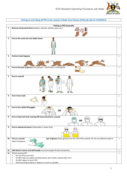
This document is a detailed step-by-step procedure for putting on and taking off PPE in the context of Ebola Virus Disease (EVD).
Screening, Holding, Notification at a Healthcare Facility during an EVD outbreak presentation is an EVD IPC training material describing how to observe all persons entering the facility by taking non- contact temperature, and asking relevant questions. The key outcome is to determine if patient is s
...
uspected EVD case.
more
Abridged version. In this abridged version of the Evidence-based Clinical Practice Guidelines for the Follow-Up of at-risk neonates, we provide recommendations for the care of newborns up to 2 years of age, corresponding to the first phase of their follow-up. The recommendations are intended for all
...
health sector staff responsible for the primary care of these neonates: general practitioners, family practitioners, pediatricians, neonatologists, pediatric ophthalmologists, pediatric otolaryngologists, nursing professionals, specialists in other fields, and multidisciplinary staff involved in the care process. The purpose of these guidelines is to facilitate policy implementation processes carried out by decision-makers and members of government bodies, and will also be useful for parents, mothers, and caregivers. The main topics covered by this document include the hospital discharge criteria, including screening tests; information and support for parents, mothers, and caregivers; screening at the follow-up visit, and the frequency of follow-ups until the infant is 2 years of age. These guidelines do not address matters related to nursing or comorbidities.
more
This manual provides a framework for morbidity management and disability prevention of patients affected by NIDs and gives specific guidance for the proper care of patients suffering from chronic conditions caused by lymphatic filariasis, leprosy, trachoma, and Chagas disease. It is intended to be u
...
sed mainly by health care workers at the primary health care level, but health workers at more complex and specialized levels may also find it useful.
more

Management of Dead Bodies After Disasters: A Field Manual For First Responders. Second Edition
recommended
Proper and dignified management of the dead in disasters is one of the three key pillars of humanitarian response and a fundamental factor in facilitating identification of the deceased and helping families discover the fate of their loved ones. This second and updated edition of this hugely success
...
ful manual provides practical and easy-to-follow guidelines on the recovery, documentation and storage of the remains of individuals who have died in disasters, helping first responders ensure that the dead are treated with respect and that information crucial for their subsequent identification is recorded. This revised edition incorporates experience gained in recent catastrophes, such as the 2013 Typhoon Haiyan in the Philippines, the 2014/15 Ebola epidemic in West Africa and the 2015 earthquake in Nepal.
more
Multidrug-resistant tuberculosis (MDR-TB) and extensively drug-resistant
tuberculosis (XDR-TB) increasingly occur in resource-constrained settings.
In the context of a national response to MDR- and XDR-TB, health workers in
TB clinics (in distric
...
t hospitals and some accredited health centres) will need
to diagnose MDR-TB, initiate second-line anti-TB drugs, and monitor MDRTB
treatment.
Management of MDR-TB: a field guide was created to help health workers
carry out these tasks. It is a job aid that medical officers and TB nurses
are meant use frequently during the day for quick reference. This module
is closely related to other clinical guideline modules in the Integrated
Management of Adolescent and Adult Illness (IMAI) series. In particular, the
approach to chronic disease management is taken from General principles
of good chronic care in the IMAI series.
more

Essential Medicines are those that satisfy the priority health care needs of the population. They are selected with due regard to public health relevance, evidence on efficacy, safety and comparativ
...
e cost-effectiveness. This edition of the Essential Medicines List (EML) 2017 for Ghana has been derived from its companion Standard Treatment Guidelines 2017 to ensure harmony in treatment, procurement and re-imbursements. The medicines listed have been coded according to the Health Commodity
Codes Catalogue of the Ministry of Health (2008) and their levels of use, based on the type of health facility, including midwifery practice, have been indicated.
more
