
Filter
4211
Text search:
The
World
Bank
Featured
Recommendations
263
New Publications
1156
Language
Document type
No document type
2380
Studies & Reports
986
Guidelines
301
Manuals
176
Strategic & Response Plan
174
Fact sheets
72
Training Material
48
Situation Updates
45
Resource Platforms
14
Infographics
10
Brochures
3
Online Courses
1
Videos
1
Countries / Regions
Global
250
India
159
Kenya
116
Nepal
113
Sierra Leone
110
Ethiopia
101
Myanmar / Burma
99
Liberia
92
Malawi
85
Nigeria
83
Zambia
79
Uganda
74
Africa
67
Bangladesh
65
Rwanda
60
Latin America and the Carribbean
60
Syria
58
Ukraine
51
Ghana
50
Congo, Democratic Republic of
49
South Africa
47
Namibia
46
Tanzania
45
Lesotho
40
Western and Central Europe
40
South Sudan
38
Mozambique
38
Yemen
38
Cambodia
35
Indonesia
35
Guinea
34
Haiti
34
Asia
33
Eastern Europe
30
Philippines
29
West and Central Africa
29
Senegal
28
Zimbabwe
28
South–East Asia Region
25
Burkina Faso
24
East and Southern Africa
24
Middle East and North Africa
23
Afghanistan
19
Pakistan
18
Botswana
18
Venezuela
18
Cameroon
17
Sudan
17
Russia
17
Central African Republic
16
Benin
15
Eswatini/ Swaziland
14
Brazil
14
Colombia
13
Somalia
12
Lebanon
12
Thailand
12
Moldova
12
China
11
Madagascar
11
Eastern Europe and Central Asia
11
Jordan
10
Mali
9
Palestine
9
Albania
9
Vietnam
9
Paraguay
8
Sri Lanka
7
Tajikistan
7
Côte d’Ivoire / Ivory Coast
6
Ecuador
6
Western Pacific Region
6
Laos
6
Kyrgyzstan
6
Papua New Guinea
5
Peru
5
Bolivia
5
Mexico
5
Southern Africa
5
Niger
4
Iraq
4
Germany
4
Argentina
4
Libya
4
Angola
4
Timor Leste/ East Timor
4
Jamaica
4
USA
3
Turkey
3
Gambia
3
El Salvador
3
Guatemala
3
Chile
3
Iran
3
Georgia
3
Turkmenistan
3
Bosnia and Herzegovina
3
Egypt
2
Chad
2
Serbia
2
Hungary
2
Burundi
2
Honduras
2
Bhutan
2
Poland
2
Armenia
2
Romania
2
Lithuania
2
Kazakhstan
2
North America
2
Japan
2
Guinea-Bissau
1
Saudi Arabia
1
Malaysia
1
Mauritania
1
Singapore
1
Dominican Republic
1
North Macedonia
1
Croatia
1
Greece
1
Nicaragua
1
Other region
1
Fiji
1
Italy
1
Mongolia
1
Congo-Brazzaville
1
Bulgaria
1
Slovakia
1
Uzbekistan
1
Mauritius
1
Tunisia
1
Portugal
1
Spain
1
Azerbaijan
1
Belarus
1
Belize
1
Costa Rica
1
Panama
1
Authors & Publishers
Publication Years
Category
Countries
1752
Key Resources
294
Public Health
229
Women & Child Health
228
Clinical Guidelines
175
Capacity Building
48
Pharmacy & Technologies
25
Toolboxes
COVID-19
314
Disability
271
HIV
254
Planetary Health
230
Mental Health
221
Health Financing Toolbox
156
Conflict
149
Global Health Education
136
Ebola & Marburg
113
TB
107
Caregiver
103
AMR
90
Natural Hazards
73
NTDs
71
NCDs
61
Refugee
55
Pharmacy
51
Rapid Response
49
Malaria
36
2.0 Rapid Response
28
Social Ethics
17
Cholera
12
Polio
11
Zika
10
Specific Hazards
8
South Sudan
2
Typhoon
2
Manual for step-by-step risk management for safely managed sanitation systems. 2nd edition.
This Sanitation safety planning (SSP) manual provides practical, step-by-step guidance to assist in the implementation of
...

This report includes six case studies from 12 individuals with lived experience of diverse health conditions. These case studies explore the topics of power dynamics and power reorientation towards individuals with lived experience; informed decisio
...
Cancer centres are a major resource in ensuring a comprehensive approach to cancer treatment and its planning. As part of a new roadmap developed by WHO and IAEA to help countries design national cancer control programmes, this publication proposes a framework to develop a cancer centre and/or to st
...
WHO recommends interpersonal therapy (IPT) as a possible first line treatment for depression. With this new manual, the World Health Organization (WHO) gives guidance on
...

External quality assessment (EQA) is an important component of quality systems for blood transfusion services. Establishing external quality assessment programmes for screening of donated blood for transfusion-transmissible infections (TTI): implementation guide aims to support WHO member States in
...
This document is intended for a wide audience including national and local policymakers, implementers and managers of national and local maternal and child health programmes, non-governmental and other organizations and professional societies involved in t
...
This Framework offers a coherent approach for eliminating tuberculosis (TB) in low-incidence countries. It is designed to guide national policy-makers and those responsible for technical aspects of the national TB response in accelerating efforts to
...
Pandemics and outbreaks have differential impacts on women and men. From risk of exposure and biological susceptibility to infection to the social and economic implications, individuals’ experiences are likely to vary according to
...

Implementation reference guide. This Malaria Surveillance Assessment Toolkit implementation reference guide is a comprehensive reference document, as well as a step by-step guide. It aligns and adapts available tools into a single set of standardized tools, which can be used to conduct malaria surve
...
Mothers and healthcare workers who support them have many questions and concerns about whether it is safe for mothers with confirmed or suspected COVID-19 to be close to and breastfeed their babies during the pandemic.
To address their questions, W
...
Training on handling, storing and transporting Pfizer BioNTech COVID-19 Vaccine COMIRNATY® (Tozinameran)
recommended
4 August 2021. Currently, Pfizer BioNTech COVID-19 Vaccine COMIRNATY® (Tozinameran) is the only COVID-19 vaccine that should be stored and transported at -60ºC to -86ºC ultra-low temperature (ULT) conditions. Prior to use
...

These guidelines deal specifically with water, sanitation and hygiene, and are designed to be used in schools in low-cost settings in low- and medium-resource countries to:
• assess prevailing situations and plan for required improvements;
• develop and reach essential safety standards as a f
...

Every year, an estimated 15 million babies are born preterm – before 37 weeks of pregnancy. That is more than 1 in 10 live births. Approximately 1 million children die each year worldwide due to complications from their early birth. Those that survive often face a lifetime of ill-health including
...
Lessons from three African Countries.
Achieving Health for All, and in particular universal health coverage (UHC), will not happen without fully functioning basic water, sanitation and hygiene (WASH) services in all health care facilities. Such services are needed to provide quality care, ensure ad
...

On Global Handwashing Day, WHO and UNICEF have released the first-ever global Guidelines on Hand Hygiene in Community Settings to support governments and practitioners in promoting effective hand hygiene outside health care – across households, pu
...
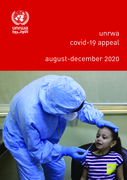
COVID-19 has resulted in an unprecedented global crisis. As the pandemic spreads and countries around the world continue to struggle to contain its
...
Cervical intraepithelial neoplasia (CIN) is a premalignant lesion that may exist at any one of three stages: CIN1, CIN2, or CIN3. If left untreated, CIN2 or CIN3 (collectively referred to as CIN2+) can progress to cervical cancer. Instead of screening and diagnosis by
...
Six months in, the indirect impacts of COVID-19 take a toll on health, social and economic outcomes.
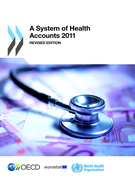
A System of Health Accounts 2011: Revised Edition provides an updated and systematic description of the financial flows related to the consumption of health care goods and services. As demands for i
...

Fully functioning water, sanitation, hygiene (WASH) and health care waste management services are a critical aspect of infection prevention and control (IPC) practices, and ensuring patient safety and quality of care. Such services are also essential for creating an environment that supports
...
