
Filter
1591
Text search:
Government
of
Nigeria
Featured
Recommendations
112
New Publications
438
Language
Document type
No document type
858
Studies & Reports
430
Guidelines
103
Manuals
63
Strategic & Response Plan
62
Fact sheets
31
Training Material
19
Situation Updates
15
Resource Platforms
6
Brochures
2
Infographics
1
Online Courses
1
Countries / Regions
Nigeria
219
Global
113
Africa
80
Sierra Leone
60
Liberia
56
Kenya
43
Ethiopia
39
Uganda
33
Congo, Democratic Republic of
30
Guinea
27
Ghana
25
Malawi
25
South Africa
24
Tanzania
22
West and Central Africa
20
Cameroon
18
Rwanda
18
India
17
Zambia
17
Senegal
16
Zimbabwe
15
East and Southern Africa
15
South Sudan
14
Syria
14
Namibia
14
Mozambique
13
Central African Republic
13
Burkina Faso
12
Mali
12
Afghanistan
11
Myanmar / Burma
11
Yemen
11
Nepal
10
Ukraine
10
Western and Central Europe
10
Bangladesh
9
Pakistan
8
Somalia
7
Indonesia
7
Benin
7
Middle East and North Africa
7
Niger
6
Cambodia
6
China
6
Colombia
6
Latin America and the Carribbean
6
Côte d’Ivoire / Ivory Coast
5
Togo
5
Chad
5
Sudan
5
Eswatini/ Swaziland
5
Asia
5
Philippines
4
Germany
4
Gambia
4
Botswana
4
South–East Asia Region
4
Russia
4
Angola
3
Lesotho
3
Mexico
3
Palestine
3
Guinea-Bissau
2
Haiti
2
Iraq
2
Mauritania
2
Libya
2
Venezuela
2
Eastern Europe
2
Vietnam
2
Gabon
2
Japan
2
Tunisia
2
Morocco
1
Jordan
1
Lebanon
1
Thailand
1
Malaysia
1
Argentina
1
Peru
1
Brazil
1
Switzerland
1
Burundi
1
Ecuador
1
Bolivia
1
Madagascar
1
Sri Lanka
1
Chile
1
Eastern Europe and Central Asia
1
Poland
1
Armenia
1
Southern Africa
1
Laos
1
Congo-Brazzaville
1
Tajikistan
1
Estonia
1
Romania
1
Moldova
1
Iran
1
Mauritius
1
Morocco
1
Authors & Publishers
Publication Years
Category
Countries
510
Women & Child Health
98
Key Resources
91
Clinical Guidelines
79
Public Health
76
Capacity Building
17
Pharmacy & Technologies
6
Toolboxes
COVID-19
140
HIV
137
Mental Health
125
Ebola & Marburg
92
TB
82
Planetary Health
61
Disability
57
NTDs
52
Health Financing Toolbox
51
Global Health Education
46
AMR
46
Refugee
41
Caregiver
36
Conflict
32
Rapid Response
31
Polio
28
Malaria
25
Pharmacy
23
NCDs
20
2.0 Rapid Response
17
Natural Hazards
6
Specific Hazards
6
Social Ethics
6
Cholera
5
Zika
1

Africa’s health sector is facing an unprecedented financing crisis, driven by a sharp decline of 70% in Official Development Assistance (ODA) from 2021 to 2025 and deep-rooted structural vulnerabilities. This collapse is placing immense pressure o
...
9 June 2021
Since its launch, GLASS has expanded in scope and coverage and as of May 2021, 109 countries and territories worldwide have enrolled in GLASS. A key new component in GLASS is the inclusion of
...

WASH and Health working together: a ‘how-to’ guide for neglected tropical disease programmes
recommended
2nd edition. This toolkit provides step-by-step guidance to NTD programme managers and partners on how to engage and work collaboratively with the WASH community to improve delivery of water, sanitation and hygiene services to underserved population
...
There is a substantial and ever-increasing unmet need for rehabilitation worldwide, which is particularly profound in low- and middle
-income countries. The availability of accessible and affordable rehabilitation is necessary for many people with
...
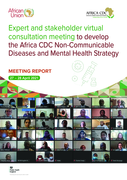
Executive summary On 27th and 28th April 2021, the division of Disease Control and Prevention in collaboration with Public Health England, organized a virtual consultative meeting as part of the con
...
The World Drug Report 2022 is aimed not only at fostering greater international cooperation to counter the impact of the world drug problem on health, governance and security, but also, with its special insights, at assisting Member States in antici
...
A Public Health EOC (PHEOC) serves as a hub for coordinating the preparation for, response to, and recovery from public health emergencies. The preparation includes planning, such as risk and resource mapping, development of plans and procedures, an
...

The marathon to eradicate polio is on its final lap: the world is more than 99% of the way to success. After millennia of living with poliovirus and suffering the paralysis it causes, today nearly a
...
Infectious disease outbreaks are frequently characterized by scientific uncertainty, social and institutional disruption, and an overall climate of fear and distrust. Policy makers and public health professionals may be forced to weigh and prioritiz
...

WHO today released its first roadmap to tackle postpartum haemorrhage (PPH) – defined as excessive bleeding after childbirth - which affects millions of women annually and is the world’s leading cause
...

This learning report attempts to understand the drivers for, and barriers to, effective implementation as well as review the experiences of Start Fund members in responding to these outbreaks to support evidence-based decision-making within the Star
...
The Perinatal Mental Health Project (PMHP) provides training to health
workers and community-based workers involved in caring for mothers. This
handbook is intended as a supplement to this training programme and as a
resource to anyone involved with mothers and mothers-to-be.
The handbook should
...

Asthma is the most common noncommunicable disease in children, and among the most common in adults. According to the most recent estimates from the Global Asthma Network Phase I study, around one in 10 children and adults have symptoms of asthma and
...
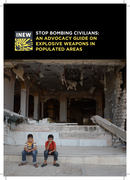
This guide has been produced by the International
Network on Explosive Weapons (INEW) to introduce the
humanitarian advocacy agenda on the use of explosive
weapons in populated areas and to provide ideas for actions
at the national level. It
...
Surgical site infection (SSI) is the most common postoperative complication worldwide. WHO guidelines to prevent SSI recommend alcoholic chlorhexidine skin preparation and fascial closure using triclosan-coated sutures, but called for assessment of
...

This document adopts a health determinants framework for examining the evidence related to women’s poor mental health. From this perspective, public policy including economic policy, socio-cultural and environmental factors, community and social support, stressors and life events, personal behavio
...
Induced abortion is permitted in Burkina Faso only to save the life and protect the health of a
pregnant woman, or in cases of rape, incest, and severe fetal impairment. As a result, the vast
majo
...
A Technical Brief for Breakthrough ACTION Field Teams
Social media can be used to collect and address rumors or popular beliefs among target audiences, share evidence-based and timely health information, receive instant feedback on materials, conduct remote trainings, promote awareness
...
Primary Surgery Vol. One: Non-Trauma
recommended
This comprehensive book has established itself as the most useful text for the medical practitioner in poor-resource settings who is obliged to manage surgical cases. It is particularly adapted for those whose surgical experience is basic or minimal. Importantly, it has extensive advice about pitfal
...
Security Risk Management and Religion: Faith and secularism in humanitarian assistance examines the impact that religion has on security risk management for humanitarian agencies, and considers whether a better understanding of religion can improve
...
