Filter
1547
Text search:
WHO,
Ministry
of
Health
Uganda
Featured
Recommendations
135
New Publications
427
Language
Document type
No document type
891
Studies & Reports
312
Guidelines
148
Manuals
75
Strategic & Response Plan
54
Training Material
36
Situation Updates
15
Fact sheets
11
Brochures
2
Infographics
2
App
1
Countries / Regions
Uganda
222
Kenya
86
Global
73
Rwanda
56
Africa
51
Ethiopia
42
Sierra Leone
39
South Sudan
39
Zambia
39
Congo, Democratic Republic of
36
Tanzania
35
Liberia
32
Nigeria
29
Malawi
26
South Africa
18
Ghana
17
East and Southern Africa
17
Zimbabwe
16
Namibia
15
Guinea
14
Mozambique
13
Senegal
12
India
11
Nepal
11
Lesotho
11
Bangladesh
10
Cameroon
9
West and Central Africa
9
Botswana
8
Eswatini/ Swaziland
7
Burkina Faso
6
Syria
6
Latin America and the Carribbean
6
Somalia
5
Jordan
5
Burundi
5
Western and Central Europe
5
Mali
4
Haiti
4
Pakistan
4
Sudan
4
Central African Republic
4
Colombia
4
Angola
4
Myanmar / Burma
4
South–East Asia Region
4
Togo
3
Afghanistan
3
Germany
3
Lebanon
3
Chad
3
Cambodia
3
Brazil
3
Ukraine
3
Eastern Europe
3
Iran
3
Côte d’Ivoire / Ivory Coast
2
Philippines
2
Iraq
2
Thailand
2
China
2
Indonesia
2
Argentina
2
Peru
2
Madagascar
2
Yemen
2
Eastern Europe and Central Asia
2
Southern Africa
2
Laos
2
Russia
2
Vietnam
2
Morocco
1
Saudi Arabia
1
Egypt
1
Papua New Guinea
1
Vanuatu
1
Ecuador
1
Bolivia
1
Greece
1
Sri Lanka
1
Chile
1
Middle East and North Africa
1
Asia
1
Solomon Islands
1
Venezuela
1
North Korea
1
Albania
1
Djibouti
1
Estonia
1
Romania
1
Georgia
1
North America
1
Gabon
1
Turkmenistan
1
Mauritius
1
Tunisia
1
Morocco
1
Authors & Publishers
Publication Years
Category
Countries
595
Clinical Guidelines
100
Women & Child Health
86
Public Health
81
Key Resources
68
Capacity Building
36
Pharmacy & Technologies
10
Annual Report MEDBOX
1
Toolboxes
HIV
194
Mental Health
86
Ebola & Marburg
82
COVID-19
78
TB
77
Disability
70
AMR
50
NTDs
49
Caregiver
39
Planetary Health
35
Conflict
33
Malaria
28
Rapid Response
26
Health Financing Toolbox
25
Pharmacy
24
Refugee
23
Global Health Education
18
Zika
14
NCDs
13
2.0 Rapid Response
10
Natural Hazards
5
Cholera
4
Social Ethics
4
Polio
3
Specific Hazards
3
South Sudan
2
The curriculum, which complements the national pediatric ART training, was finalized in 2011 and was subsequently implemented nationally. The training curriculum includes a 15-module Trainer Manual, a Participant Manual, and accompanying PowerPoint slides.

The report provides the much-needed evidence to design interventions for children in Kenya and as such we urge partners to use this report as a document for planning for children.
The coronavirus disease 2019 (COVID-19) pandemic has created a global and gendered crisis that is compounding existing inequalities and disproportionately affecting girls and women. Emerging evidence from the COVID-19 crisis in 2020 shows school closures, disruptions in essential services and rising
...
BMC Medicine 2014, 12:196
http://www.biomedcentral.com/1741-7015/12/196
Each year since 2007, G-FINDER has provided policy-makers, donors, researchers and industry with a comprehensive analysis of global investment into research and development of new products to
preve
...
The Look Back Study (LBS) focuses on the water and sanitation and hygiene (WASH) component of the project but some additional information was collected along side the WASH data. This data has been compared to the baseline survey data that was report
...
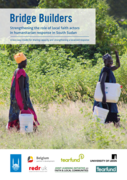
This report outlines and analyses the implementation of the Bridge Builder Model. This is a two-way, capacity-sharing model aimed at bringing together local faith actors (LFAs) and international humanitarian actors to increase understanding, trust,
...
This report alerts responders to the importance of language in building trust and effective communication with people facing Ebola and other epidemics.
DHS Working Papers No. 108 | Zimbabwe Working Papers
No. 9
Health Bulletin No.3
Supported decision-making and advance planning: WHO QualityRights Specialized training: course guide
Les modules de formation et d’orientation QualityRights ont été élaborés pour renforcer les connaissances, les compétences et la compréhension des principales parties prenantes sur la manière de promouvoir les droits des personnes en situation de handicap psychosocial, intellectuel ou cogni
...