
Filter
1384
Text search:
pandemic
Preparedness
Featured
176
121
Language
Document type
399
314
212
178
123
67
37
25
13
10
2
2
2
Countries
146
42
35
34
30
27
26
26
22
22
21
21
20
18
18
17
17
16
15
14
14
13
12
12
10
10
10
10
9
9
9
8
8
8
8
8
7
7
6
6
6
6
5
5
5
5
5
4
4
4
4
4
4
4
4
4
4
4
4
3
3
3
3
3
3
3
3
3
3
3
3
3
2
2
2
2
2
2
2
2
2
2
2
2
2
2
2
2
2
2
2
1
1
1
1
1
1
1
1
1
1
1
1
1
1
1
1
1
1
1
1
Authors & Publishers
Publication Years
Category
468
113
71
54
37
21
14
Toolboxes
523
134
81
71
69
59
58
40
35
34
29
26
21
17
16
15
15
13
13
12
12
9
8
7

Epidemics of infectious diseases are occurring more often, and spreading faster and further than ever, in many different regions of the world. The background factors of this threat are biological, environmental and lifestyle changes, among others. A potentially fatal combination of newly-discovered
...

Lancet 2022; 399: 1155–200 Published Online March 15, 2022 https://doi.org/10.1016/
S0140-6736(21)02488-0
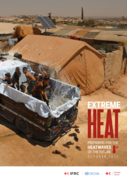
Climate change is already having severe impacts across our planet, bringing new and previously unimaginable challenges to the people least responsible for greenhouse gas emissions.
This report, the first we’ve released jointly in the history of our organizations, provides a sobering review of h
...

The Quadripartite Organizations – the Food and Agriculture Organization of the United Nations (FAO), the United Nations Environment Programme (UNEP), the World Organisation for Animal Health (WOAH, founded as OIE), and the World Health Organization (WHO) – collaborate to drive the change and tra
...

The brief concludes that sustaining the continuity of EHS requires policies that ensure a whole-society and systems strengthening approach. This involves increased health care investment, community engagement, disease control regulations, and multisector approaches to improve resilience, EHS quality
...
Les notes d’orientation décrivent les mesures essentielles que les décideurs aux niveaux national et infranational peuvent mettre en place concernant les aspects suivants : les tests de diagnostic de la COVID19, la prise en charge clinique de la COVID-19, la réalisation des cibles en matière
...
The Strategy aims to protect and improve the well-being
of society and of the individual, to protect and promote
public health, to offer a high level of security and well-being
for the general public and to increase health literacy. The
Strategy takes an evidence-based, integrated, balanced and
...
The Strategic Advisory Group of Experts (SAGE) on Immunization held a meeting on 3-6 October 2022. This report summarizes the discussions, conclusions and recommendations.
It covers the following items:
Global Reports
Immunization Agenda 2030 and Regional reports
Monkeypox
RSV
COVID-19 vacci
...
The World Health Organization (WHO) and the global community of countries, partners, donors, technical experts, scientists and field implementation teams continue to work towards the ultimate goal of a world free of the burden of neglected tropical diseases (NTDs).

Conflicts and disasters, including pandemics, affect women and men in all their diversity differently, and women and girls often suffer the most. Crisis-related hardships combine and compound pre-existing disadvantages, for example, they often cause women’s working conditions to worsen while incre
...

Food security, human health and wellbeing largely depend on biodiversity. Biodiversity supports agriculture through ecosystem services such as pollination and water purification, and provides access to natural medicines,
which are the primary source of health care for 4 billion people worldwide

The desired impact of the OH JPA is a world better able to prevent, predict, detect and
respond to health threats and improve the health of humans, animals, plants and the
environment while contributing to sustainable development. The OH JPA aims to work
towards this vision in the following way:
...
This publication is a compendium of 49 country examples highlighting efforts in improving refugees’ and migrants’ health following the adoption of the WHO Global Action Plan on Promoting the health of refugees and migrants at the seventy-second World Health Assembly, in May 2019.

Rebuilding Liberia’s health system is crucial for improving the country’s overall health outcomes. This annual report highlights key achievements, challenges,and lessons learned in implementing programmes of technical cooperation with the Government of Liberia from January to December 2022. T
...
The overall objective of the framework is to support WHO and Members States in meaningful engagement of people living with NCDs, and mental health and neurological conditions to co-create and enhance related policies, programmes and services. This framework will contribute to advancing understanding
...
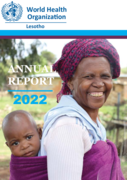
This annual report gives an overview of WHO lesotho Country office's undertakings and achievements in the context of an extraordinary health emergency. As we walk another mile this year, may we embrace all lessonst leanred in the previous year, learn from what did not work so well and take on new op
...

The Regional Action Framework for Noncommunicable Disease Prevention and Control provides a unified vision of objectives and recommended actions to combat the noncommunicable disease (NCD) epidemic in the Western Pacific Region. Implementation should be supported by cross-sectoral coordination
...
The Africa Centres for Disease Control and Prevention (Africa CDC) Biosafety and Biosecurity Initiative was launched by the Africa CDC in April 2019 with the aim of strengthening the African Union (AU) Member States’ biosafety and biosecurity systems and enabling them to comply with national and i
...
COVID-19 has altered health sector capacity in low-income and middle-income countries (LMICs). Cost data to inform evidence-based priority setting are urgently needed. Consequently, in this paper, we calculate the full economic health sector costs of COVID-19 clinical management in 79 LMICs under di
...
The Mapping Antimicrobial Resistance and Antimicrobial Use Partnership (MAAP) project has conducted a multi-year, multi-country study that provides stark insights on the under-reported depth of the antimicrobial resistance (AMR) crisis across Africa and lays out urgent policy recommendations to addr
...
