
Filter
1172
Text search:
sustained
epidemic
control
Featured
132
390
Language
Document type
621
214
168
88
56
12
6
3
2
1
1
Countries
79
60
43
43
36
35
31
29
28
26
26
25
23
21
21
17
16
16
14
14
13
12
11
11
10
10
9
9
8
8
7
7
7
6
6
5
5
5
5
5
5
4
4
4
4
3
3
3
3
3
3
3
3
3
2
2
2
2
2
2
2
2
2
2
2
2
2
2
1
1
1
1
1
1
1
1
1
1
1
1
1
1
1
1
1
1
1
1
1
Authors & Publishers
Publication Years
Category
503
96
90
54
33
7
5
Toolboxes
108
106
67
61
47
37
33
31
31
30
26
22
21
17
17
17
16
15
13
10
10
5
4
2
1
Cholera is an acute diarrhoeal disease caused by the ingestion of food or water contaminated with the bacterium V.
cholerae. It has a short incubation period of a few hours to 5 days. It is endemic in some countries, frequently
showing seasonal variations in the number of reported cases. Cholera a
...
Tobacco control legislation: an introductory guide
BMJ Global Health2019;4:e001504. doi:10.1136/bmjgh-2019-00150
This document provides advice on personal protective measures on publictransport(e.g. bus, metro, train, commuter boats).

Health care-associated infections (HAIs) affect patients and health systems every day, causing immense suffering, driving higher health-care costs and hampering efforts to achieve high-quality care for all. HAIs are often difficult to treat, are the major driver of antimicrobial resistance (AMR) and
...
The main purpose of the meeting was to review tsetse control tools, activities and their contribution to the elimination of gHAT and the monitoring thereof. Seven endemic countries provided reports on recent and ongoing vector
...

Despite the significant role of vector control in national leishmaniasis control programmes, the programmatic community perceives vector control as
...

This technical report presents the epidemiology of human and animal leishmaniases in the EU and its neighbouring countries and concludes that the disease remains widespread and underreported in many countries of southern Europe, northern Africa, and the Middle East and that there is a need to improv
...

Ebola disease and Marburg disease outbreaks continue to occur in Africa, with increased frequency. In addition to resulting in high mortality and morbidity, the outbreaks generate fear and mistrust about the response activities within the communities affected.
Infection prevention and
...

The Infection prevention and control in the context of coronavirus disease 2019 (COVID-19): a living guideline consolidates technical guidance developed and published during the COVID-19 pandemic into evidence-informed recommendations for infection
...
Tsetse traps and targets (insecticide-impregnated screens) function by attracting the flies to a device that collects and/or kills them. Traps can be used for entomological surveillance, and also for control. Targets are simpler than traps, but are
...
Vector control, alongside case management, remains the most effective approach to controlling and eliminating malaria. Key interventions, such as indoor residual spraying (IRS) and long-lasting insecticidal nets (LLINs), have significantly reduced m
...

Growing emergencies and displacements across the world demand increasingly complex interventions and responses. The World Health Organization (WHO) has developed Malaria control in emergencies: a field manual to provide technical guidance to help pa
...
Towards Universal Access to Prevention, Diagnosis and Treatment
This report reviews the current situation in relation to national capacity to address NCDs and the progress made at country level over the past decade. It highlights that, while progress is being made, there is still much work to be done to create the infrastructure, policies, surveillance and healt
...
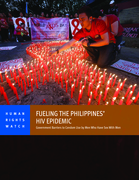
Government Barriers to Condom Use by Men Who Have Sex With Men
UGANDA NATIONAL TUBERCULOSIS AND LEPROSY CONTROL PROGRAMME
