
Filter
1861
Text search:
psychological
intervention
Featured
204
407
Language
1729
59
52
41
25
19
19
11
7
5
5
5
4
4
3
3
3
3
3
3
3
2
2
2
2
2
2
2
2
2
2
2
1
1
1
1
1
1
1
1
1
1
1
1
1
1
1
1
1
1
1
1
1
Document type
1130
235
222
139
44
41
27
11
5
4
1
1
Countries
75
68
56
42
38
35
32
31
29
28
27
26
25
21
20
19
18
17
17
17
15
14
14
13
13
12
12
12
11
11
9
9
8
8
8
8
8
7
7
7
6
6
5
5
5
5
4
4
4
3
3
3
3
3
3
3
3
3
2
2
2
2
2
2
2
2
2
2
2
2
2
2
2
2
2
2
1
1
1
1
1
1
1
1
1
1
1
1
1
1
1
1
1
1
1
1
1
1
1
1
1
1
Authors & Publishers
232
88
87
81
41
40
40
30
17
17
16
13
13
11
11
11
10
10
9
9
8
8
8
7
7
7
7
7
6
6
6
6
6
6
6
6
6
6
6
6
5
5
5
5
5
5
5
5
5
5
5
5
5
5
5
5
5
5
5
4
4
4
4
4
4
4
4
4
4
4
4
4
4
4
4
3
3
3
3
3
3
3
3
3
3
3
3
3
3
3
3
3
3
3
3
3
3
3
3
3
3
3
3
3
3
3
3
3
3
3
3
3
3
3
3
2
2
2
2
2
2
2
2
2
2
2
2
2
2
2
2
2
2
2
2
2
2
2
2
2
2
2
2
2
2
2
2
2
2
2
2
2
2
2
2
2
2
2
2
2
2
2
2
2
2
2
2
2
2
2
2
2
2
2
2
2
2
2
2
2
2
2
2
2
2
2
2
2
2
2
2
2
2
2
2
2
2
2
2
2
2
2
2
2
2
2
2
2
2
2
2
2
2
2
2
2
2
2
2
2
2
2
2
2
2
2
2
2
2
2
2
2
2
2
2
2
2
2
2
2
2
2
2
2
2
2
2
2
2
2
2
2
2
1
1
1
1
1
1
1
1
1
1
1
1
1
1
1
1
1
1
1
1
1
1
1
1
1
1
1
1
1
1
1
1
1
1
1
1
1
1
1
1
1
1
1
1
1
1
1
1
1
1
1
1
1
1
1
1
1
1
1
1
1
1
1
1
1
1
1
1
1
1
1
1
1
1
1
1
1
1
1
1
1
1
1
1
1
1
1
1
1
1
1
1
1
1
1
1
1
1
1
1
1
1
1
1
1
1
1
1
1
1
1
1
1
1
1
1
1
1
1
1
1
1
1
1
1
1
1
1
1
1
1
1
1
1
1
1
1
1
1
1
1
1
1
1
1
1
1
1
1
1
1
1
1
1
1
1
1
1
1
1
1
1
1
1
1
1
1
1
1
1
1
1
1
1
1
1
1
1
1
1
1
1
1
1
1
1
1
1
1
1
1
1
1
1
1
1
1
1
1
1
1
1
1
1
1
1
1
1
1
1
1
1
1
1
1
1
1
1
1
1
1
1
1
1
1
1
1
1
1
1
1
1
1
1
1
1
1
1
1
1
1
1
1
1
1
1
1
1
1
1
1
1
1
1
1
1
1
1
1
1
1
1
1
1
1
1
1
1
1
1
1
1
1
1
1
1
1
1
1
1
1
1
1
1
1
1
1
1
1
1
1
1
1
1
1
1
1
1
1
1
1
1
1
1
1
1
1
1
1
1
1
1
1
1
1
1
1
1
1
1
1
1
1
1
1
1
1
1
1
1
1
1
1
1
1
1
1
1
1
1
1
1
1
1
1
1
1
1
1
1
1
1
1
1
1
1
1
1
1
1
1
1
1
1
1
1
1
1
1
1
1
1
1
1
1
1
1
1
1
1
1
1
1
1
1
1
1
1
1
1
1
1
1
1
1
1
1
1
1
1
1
1
1
1
1
1
1
1
1
1
1
1
1
1
1
1
1
1
1
1
1
1
1
1
1
1
1
1
1
1
1
1
1
1
1
1
1
1
1
1
1
1
1
1
1
1
1
1
1
1
1
1
1
1
1
1
1
1
1
1
1
1
1
1
1
1
1
1
1
1
1
1
1
1
1
1
1
1
1
1
1
1
1
1
1
1
1
1
1
1
1
1
1
1
1
1
1
1
1
1
1
1
1
1
1
1
1
1
1
1
1
1
1
1
1
1
1
1
1
1
1
1
1
1
1
1
1
1
1
1
1
1
1
1
1
1
1
1
1
1
1
1
1
1
1
1
1
1
1
1
1
1
1
1
1
1
1
1
1
1
1
1
1
1
1
1
1
1
1
1
1
1
1
1
1
1
1
1
1
1
1
1
1
1
1
1
1
1
1
1
1
1
1
1
1
1
1
1
1
1
1
1
1
1
1
1
1
1
1
1
1
1
1
1
1
1
1
1
1
1
1
1
1
1
1
1
1
1
1
1
1
1
1
1
1
1
1
1
1
1
1
1
1
1
1
1
1
1
1
1
1
1
1
1
1
1
1
1
1
1
1
1
1
1
1
1
1
1
1
1
1
1
1
1
1
1
1
1
1
1
1
1
1
1
1
1
1
1
1
1
1
1
1
1
1
1
1
1
1
1
1
1
1
1
1
1
1
1
1
1
1
1
1
1
1
1
1
1
1
1
1
1
1
1
1
1
1
1
1
1
1
1
1
1
1
1
1
1
1
1
1
1
1
1
1
1
1
1
1
1
1
1
1
1
1
1
1
1
1
1
1
1
1
1
1
1
1
1
1
1
1
1
1
1
1
1
1
1
1
1
1
1
1
1
1
1
1
1
1
1
1
1
1
1
1
1
1
1
1
1
1
1
1
1
1
1
1
1
1
1
1
1
1
1
1
1
1
1
1
1
1
1
1
1
1
1
1
1
1
1
1
1
1
1
1
1
1
1
1
1
1
1
1
1
1
1
1
1
1
1
1
1
1
1
1
1
1
1
1
1
1
1
1
1
1
1
1
1
1
1
1
1
1
1
1
1
1
1
1
1
1
1
1
1
1
1
1
1
1
1
1
1
1
1
1
1
1
1
1
1
1
1
1
1
1
1
1
1
1
1
1
1
1
1
1
1
1
1
1
1
1
1
1
1
1
1
1
1
1
1
1
1
1
1
1
1
1
1
1
1
1
1
1
1
1
1
1
1
1
1
1
1
1
1
1
1
1
1
1
1
1
1
1
1
1
1
1
1
1
1
1
1
1
1
1
1
1
1
1
1
1
1
1
1
1
1
1
1
1
1
1
1
1
1
1
1
1
1
1
1
1
1
1
1
1
1
1
1
1
1
1
1
1
1
1
1
1
1
1
1
1
1
1
1
1
1
1
1
1
1
1
1
1
1
1
1
1
1
1
1
1
1
1
1
1
1
1
1
1
1
1
1
1
1
1
1
1
1
1
1
1
1
1
1
1
1
1
1
1
1
1
1
1
1
1
1
1
1
1
1
1
1
1
1
1
1
1
1
1
1
1
1
1
1
1
1
1
1
1
1
1
1
1
1
1
1
1
1
1
1
1
1
1
1
1
1
1
1
1
1
1
1
1
1
1
1
1
1
1
1
1
1
1
1
1
1
1
1
1
1
1
1
1
1
1
1
1
1
1
1
1
1
1
1
1
1
1
1
1
1
1
1
1
1
1
1
1
1
1
1
1
1
1
1
1
1
1
1
1
1
1
1
1
1
1
1
1
1
1
1
1
1
1
1
1
1
1
1
1
1
1
1
1
1
1
1
1
1
1
1
1
1
1
1
1
1
1
1
1
1
1
1
1
1
1
1
1
1
1
1
1
1
1
1
1
1
1
1
1
1
1
1
1
1
1
1
1
1
1
1
1
1
1
1
1
1
1
1
1
1
1
1
1
1
1
1
1
1
1
1
1
1
1
1
1
1
1
1
1
1
1
1
1
1
1
1
1
1
1
1
1
1
1
1
1
1
1
1
1
1
1
1
1
1
1
1
1
1
1
1
1
1
1
1
1
1
1
1
1
1
1
1
1
1
1
1
1
1
1
1
1
1
1
1
1
1
1
1
1
1
1
1
1
1
1
1
1
1
1
1
1
1
1
1
1
1
1
1
1
1
1
1
1
1
1
1
1
1
1
1
1
1
1
1
1
1
1
1
1
1
1
1
1
1
1
1
1
1
1
1
1
1
1
1
1
1
1
1
1
1
1
1
1
1
1
1
1
1
1
1
1
1
1
1
1
1
1
1
1
1
1
1
1
1
1
1
1
1
1
1
1
1
1
1
1
1
1
1
1
1
1
1
1
1
1
1
1
1
1
1
1
1
1
1
1
1
1
1
1
1
1
1
1
1
1
1
1
1
1
1
1
1
1
1
1
1
1
1
1
1
1
1
1
1
1
1
1
1
1
1
1
1
1
1
1
1
1
1
1
1
1
1
1
1
1
1
1
1
1
1
1
1
1
1
1
1
1
1
1
1
1
1
1
1
1
1
1
1
1
1
1
1
1
1
1
1
1
1
1
1
1
1
1
1
1
1
1
1
1
1
1
1
1
1
1
1
1
1
1
1
1
1
1
1
1
1
1
1
1
Publication Years
446
1212
198
4
1
Category
520
127
117
104
101
31
1
Toolboxes
552
115
111
86
67
62
56
55
48
32
29
29
29
20
17
14
13
11
10
6
3
3
3
2
A broad range of UNHCR’s key priorities overlap with MHPSS issues – for example, child protection and sexual and gender-based violence [SGBV] prevention and response.
Despite all these existent synergies, UNHCR’s current policies and guidelines do not sufficiently link with MHPSS principles.
...
For example, the Community Services section, which is closely aligned to the principles of MHPSS and could be well-positioned to guide the implementation of related programs, has not adopted the MHPSS language or approach.
There are opportunities for UNHCR to engage more strongly and clearly in this field. However, this requires a vision for how the organisation as a whole, and particular sectors within the organisation, will engage within the field of MHPSS activities. For a start, UNHCR can work to improve its understanding and framing of mental health and psychosocial issues, and how these issues fit within its broader mandate.
While the majority of MHPSS activities are delivered by implementing partners, UNHCR staff require familiarity with core principles in the field, such as the Intervention Pyramid contained in the IASC Guidelines, in order to support and monitor quality MHPSS activities.
more
Community Based Rehabilitation for Children with Disabilities: Good Practices and Lessons from Save the Children Norway Ethiopia Programme Intervention

Prevention, early identification, assessment and intervention in low- and middle-income countries | A Review | CHILD AND ADOLESCENT HEALTH AND DEVELOPMENT
The 2012 NDRMP lays out the Disaster Risk Management (DRM) architecture of the country and provides guidance for DRM intervention at all levels. However, implementation has been slow and resource challenges exist throughout the government.
The PN ... G government’s policy and institutional framework for DRM still faces numerous obstacles. The main challenges in moving towards a more proactive and systematic approach to manage risks and build resilience include 1.) the limited coordination between DRM and Climate Change Adaptation agencies; 2.) the slow migration from emphasis on response to risk reduction and management; 3.) the limited institutional capacity for planning and design of risk informed investments; and 4.) the lack of available historic natural hazard data, which hinders the assessment of risks. more
The PN ... G government’s policy and institutional framework for DRM still faces numerous obstacles. The main challenges in moving towards a more proactive and systematic approach to manage risks and build resilience include 1.) the limited coordination between DRM and Climate Change Adaptation agencies; 2.) the slow migration from emphasis on response to risk reduction and management; 3.) the limited institutional capacity for planning and design of risk informed investments; and 4.) the lack of available historic natural hazard data, which hinders the assessment of risks. more

War Child put forward a specific request for comparative study, addressing the following questions: •What are the key types of intervention for psychosocial assistance that are being applied to children in war-affected areas? •What are the resu
...
lts of (scientific) research into the effects of the most relevant programmes? •Which NGOs operate in this sector and what is their practical experience with specific methods? •How does the War Child methodology relate to developments in the sector; what is known about the effects of War Child’s programme and how can these be measured? How will War Child work towards the development of additional evidence?
more
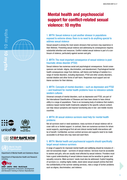
1. MYTH: Sexual violence is just another stressor in populations exposed to extreme stress: there is no need to do anything special to address sexual violence | 2. MYTH: The most important consequence of sexual violence is posttraumatic stress disorder (PTSD) | 3. MYTH. Concepts of mental disorders
...
– such as depression and PTSD – and treatment for mental health problems have no relevance outside western cultures | 4. MYTH: All sexual violence survivors need help for mental health problems | 5. MYTH: Mental health and psychosocial supports should specifically target sexual violence survivors | 6. MYTH: Vertical (stand-alone) specialized services are a priority to meet the needs of sexual violence survivors | 7. MYTH: The most important support is specialized mental health care | 8. Only psychologists and psychiatrists can deliver services for sexual violence survivors | 9. MYTH: Any intervention is better than nothing | 10. MYTH: Only the victim/survivor suffers as a result of sexual violence
more
mhGAP is based on evidence-based technical guidelines (4) and provides a set of tools and
training packages to extend service provision. The mhGAP Intervention Guide (mhGAP-IG)
for MNS disorders in non-specialized health settings (8) is a clinical
...
decision-making tool
for assessing and managing priority MNS conditions (depression, psychoses, epilepsy, child
and adolescent mental and behavioural disorders, dementia, disorders due to substance
use, self-harm and suicide).
more
Manual for use in primary care.
There is substantial evidence for the benefits of screening and brief intervention in primary health care for alcohol problems. However, there is a need for screening and brief interventions with cross-cultural rele
...
vance for substances other than alcohol or tobacco, such as cannabis, amphetamines, cocaine and opiates.
The Alcohol, Smoking and Substance Involvement Screening Test (ASSIST) was developed for the World Health Organization (WHO) by an international group of substance abuse researchers to detect and manage substance use and related problems in primary and general medical care settings. Primary health care professionals are well-positioned to provide interventions targeted to all substances irrespective of their legal status.
The ASSIST screening test version 3.0 is available in English and in 10 other languages (Arabic, Chinese, Farsi, French, German, Hindi, Portugüse, Russian, Spanish and Ukrainian).
more

The 2014-2015 outbreak of Ebola virus disease (EVD) in Liberia resulted in over 10,000 cases and 5,000 deaths. Recognizing the importance of addressing children’s trauma, the Ebola recovery and restoration trust fund (EERTF) funded the implementation of a Comfort for kids (C4K) program which encou
...
rages psychological healing, and promotes resilience in children who have experienced a crisis or disaster. The C4K program in Liberia was implemented between January 2015 and December 2016 in fifteen townships in Montserrado County through a collaboration between Mercy Corps Liberia, the World Bank’s Liberian health task team, and the government of Liberia. C4K primarily centers on the My Story workbook and associated classroom activities, which provide children with the opportunity to express their emotions about their experiences through drawing, writing, and facilitated discussion. C4K also provides capacity building for parents, teachers, and other caretakers on how to identify and more effectively respond to children’s trauma responses and to support their recovery
more
Treatment of Posttraumatic Stress Disorder in Children and Adolescents
Patrick, S., Perrin, S., Tim, D., Richard, M-S., David M, C., & William, Y.
Current Opinion in Psychiatry
(2013)
C1
Purpose of review: We review recent evidence regarding risk factors for childhood posttraumatic stress disorder (PTSD) and treatment outcome studies from 2010 to 2012 including dissemination studies, early intervention studies and studies involving
...
preschool children.
more

Vol 5 No 27 | ISSN 2039-2117 (online) | ISSN 2039-9340 (print) | The rate of sexual victimization of mentally retarded children is alarming and it goes unnoticed because the perpetrators could be parents, step- parents, relatives, well-respected individuals by family members, neighbours and educator
...
s. Drawing from labelling theory that the mentally retarded have low IQ, majority of perpetrators tend not to get arrested because of lack of evidence. Research indicates that educators struggle to identify the psychological, behavioural and physical symptoms of sexual abuse owing to their limited training. Having employed systematic review as methodology, this research study found that mentally retarded children are prone to HIV/AIDS, PTSD and feelings of helplessness owing to uninvolvement of parents, dysfunctional communities, poverty and their inability to differentiate between abuse and affection. Based on the findings, the recommendations are that: (1) extensive training for professionals, families and community members be executed to protect children with intellectual disability. Furthermore, the rights of the mentally retarded children must be respected in the court of law when reporting sexual abuse.
more
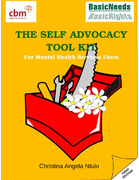
First Edition~ This self advocacy toolkit for persons with mental, neurological and substance abuse disorders, developed by Basic Needs and CBM, is the end product of an action research intervention that tracked and documented processes for Self
...
Advocacy in low resourced communities of Uganda. This toolkit presents simple and easy to apply principals and is a replica of good practices identified in the Consumer empowerment project implemented by BasicNeeds UK in Uganda between April 2005 and March 2008.
more
Overview
Learning objectives
• Understand the mental health treatment gap in low-, middle- and high-income countries.
• Understand the principles and aims of the Mental Health Gap Action Programme.
• Acquire an introduction to mhGAP Intervention
...
Guide (mhGAP-IG).
• Learn about mhGAP ToHP training methodology and what to expect from mhGAP ToHP
training.
• Prepare group training ground rules.
• Know the common presentations of mental, neurological and substance abuse (MNS)
conditions.
more
This guidance document provides basic broad principles for a spokesperson
of any health authority on how to respond to vocal vaccine deniers.
The suggestions are based on psychological research on persuasion,
on research in public health, communi
...
cation studies and on WHO risk
communication guidelines.
more
Long-lasting insecticide-treated nets and/or indoor residual spraying, associated with case
management, are key interventions in the control of malaria in Africa. The objective of this
study is to comment on the role of social and behavior change communication as a potential
key
...
intervention in the control of malaria in Mozambique.
more
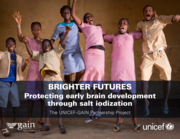
The UNICEF-GAIN Partnership Project
The report notes that iodine deficiency is a leading cause of preventable brain damage worldwide. Insufficient iodine during pregnancy and infancy results in neurological and psychological deficits, reducing ... a child’s IQ by 8 to 10 points. This translates into major losses in the cognitive capital of entire nations and thus their socio-economic development.
The report outlines urgent steps to reduce the risk of mental impairment to babies’ growing brains:
• Integrate salt iodization into national plans to support children’s nutrition and brain development in early childhood;
• Align salt iodization and salt reduction agendas; • Establish surveillance systems to identify unreached populations;
• Strengthen regulatory systems to enforce existing legislation on salt iodization;
• Recognize the growing importance of fortified foods as potential sources of iodized salt. more
The report notes that iodine deficiency is a leading cause of preventable brain damage worldwide. Insufficient iodine during pregnancy and infancy results in neurological and psychological deficits, reducing ... a child’s IQ by 8 to 10 points. This translates into major losses in the cognitive capital of entire nations and thus their socio-economic development.
The report outlines urgent steps to reduce the risk of mental impairment to babies’ growing brains:
• Integrate salt iodization into national plans to support children’s nutrition and brain development in early childhood;
• Align salt iodization and salt reduction agendas; • Establish surveillance systems to identify unreached populations;
• Strengthen regulatory systems to enforce existing legislation on salt iodization;
• Recognize the growing importance of fortified foods as potential sources of iodized salt. more
Humanitarian emergencies and crises (Humanitarian emergencies and crises) are large-scale events that may result in the breakdown of health care systems and society, forced displacement, death, and physical, psychological, social and spiritual suffe
...
ring on a massive scale. Current responses to Humanitarian emergencies and crises rightfully focus on saving lives, but for both ethical and medical reasons, the prevention and relief of pain, as well as other physical and psychological symptoms, social and spiritual distress, also are imperative. Therefore, palliative care, should be integrated into responses to Humanitarian emergencies and crises. The principles of humanitarianism and impartiality require that all patients receive care and should never be abandoned for any reason, even if they are dying. Thus, there is significant overlap in the principles and mission of palliative care and humanitarianism: relief of suffering; respect for the dignity of all people; support for basic needs; and accompaniment during the most difficult of times
more
Interpersonal violence – in all its forms – has a grave effect on children: Violence undermines children’s future potential; damages their physical, psychological and emotional well-being; and in many cases, ends their lives. The report sheds
...
light on the prevalence of different forms of violence against children, with global figures and data from 190 countries. Where relevant, data are disaggregated by age and sex, to provide insights into risk and protective factors.
more

The aim of this study is to research deeply on the post-traumatic stress disorder in sexually abused children. Proving the presence of forms of the disorder in children and the their treatment mode will be in the center of the study. The methods used to conduct this study will be a literature review
...
on the focused issue referring to reviews of articles which focus on the defined peer group. For the purpose we have selected only articles focusing on sexually abused children treated for post-traumatic stress disorder. The results of the study reveal that all forms of abuse could bring consequences on children, even more, posttraumatic stress is the language with which the victims communicate their sorrow in the most typical mode. Sexual abuse as one of the major forms of abuse, is among the most severe which cause irreversible consequences over a category of children. In conclusion we can assume that post-traumatic stress in sexually abused children might appear through the most severe forms of psychiatric and psychological symptoms and for the recovery and rehabilitation of the child in many cases the pharmacological treatment seems as the best choice for the child.
more
National guidelines for the provision of psychosocial support for gender based violence victims/survivors
recommended
Ministry of gender, labour and social development
Ministry of gender, labour and social development
(2011)
CC
Psychosocial support is a very important component in Gender Based Violence response that provide appropriate care, protection and social integration. Psychological aspects affect thoughts, emotions, behavior, memory, learning ability, perceptions
...
and understanding. While the social aspects have effects on relationships, often shaped by traditions, culture ,values, family and community, but also include one’s status in the community and economic wellbeing. These have different effects on the women, men, boys and girls as victims /survivors and perpetuators.
more
