Filter
815
Text search:
patient
insights
Featured
88
147
Language
Document type
303
217
136
80
46
12
10
4
3
1
1
1
Countries
58
24
23
23
22
19
19
16
16
12
11
10
9
9
9
9
8
8
8
8
8
8
7
7
7
7
6
6
6
6
6
6
5
4
4
4
4
3
3
3
3
3
3
3
3
3
3
3
3
2
2
2
2
2
2
2
2
2
2
2
2
2
2
2
2
2
1
1
1
1
1
1
1
1
1
1
1
1
1
1
1
1
1
1
1
1
1
1
1
1
1
1
1
1
1
Authors & Publishers
Publication Years
Category
238
69
63
50
32
20
10
Toolboxes
100
84
47
41
39
36
36
35
32
31
20
18
18
15
14
13
12
10
9
6
5
3
3
2
1

The Infection Prevention and Control (IPC) Guidelines aim to support healthcare workers improve quality and safety health care. The Guidelines further aim to promote and facilitate the overall goal of IPC by providing evidence-based recommendations on the critical aspects of IPC, focusing on the fun
...
The Lancet Regional Health Americas Volume 37100832 September 2024
Infection https://doi.org/10.1007/s15010-024-02408-5
Exciting new treatment approaches make the management of hepatitic C one of the most rapidly developing areas of medicine. The Flying Publisher short Guide to Hepatitis C is an up-to-date source of information for physicians, residents and advanced medical students.
Revision for Field Review
Online version of the manual: https://iawgfieldmanual.com/manual
Content has been developed based on the WHO Wheelchair Guidelines and the Wheelchair Service Training Package—Basic Level. Adult Education
BMC Medicine 2014, 12:196
http://www.biomedcentral.com/1741-7015/12/196
This learning paper describes Malaria Consortium’s experience with Integrated Community Case Management (ICCM) in malaria prevention and treatment in Mozambique and Uganda. ICCM is an approach where community-based health workers are trained to identify, treat, and refer complex cases malaria (an
...
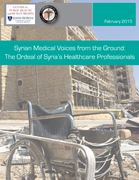
This report recounts the experiences of 27 physicians and other health workers in Syria (all but two of them Syrian) who struggle to provide trauma care and health services to a population under assault.
Transforming the Quality of Health Care in Ethiopia
This report describes the work done by WHO from January 2015 up to the end of December 2016 to address the long-term issues of survivor care, health-systems strengthening and research.