Filter
598
Text search:
child
friendly
spaces
Featured
57
167
Language
Document type
310
102
81
31
28
16
12
12
2
2
1
Countries
28
26
24
22
19
19
17
16
14
14
13
13
13
11
11
10
10
9
9
7
7
7
6
6
6
5
5
5
5
5
4
4
4
4
4
4
4
4
4
4
3
3
3
3
3
3
3
2
2
2
2
2
2
2
2
2
2
2
2
1
1
1
1
1
1
1
1
1
1
1
1
1
1
1
1
1
Authors & Publishers
Publication Years
Category
207
60
39
23
18
16
1
Toolboxes
69
63
60
52
41
33
31
20
11
10
9
8
3
2
2
2
2
2
1
1
1
1
UNICEF CHILD ALERT May 2018
As part of a UNICEF series highlighting the challenges faced by children in current crisis situations, this Child Alert examines the situation of children affected b ...
As part of a UNICEF series highlighting the challenges faced by children in current crisis situations, this Child Alert examines the situation of children affected b ...
The global COVID-19 pandemic has led to unprecedented levels of disruption to education, impacting over 90% of the world’s student population: 1.54 billion children, including 743 million girls. School closures and the wider socio-economic impacts of COVID-19 on communities and society also disrup
...

UNFPA supports the Youth Health Line (YHL), launched in 2012, as a nationwide, youth friendly health service to provide information and counseling for adolescents and youth on issues related to their health and reproductive health. The YHL is provid
...
A broad range of UNHCR’s key priorities overlap with MHPSS issues – for example, child protection and sexual and gender-based violence [SGBV] prevention and response.
Despite all these existent synergies, UNHCR’s current policies and guideli
...

Education in emergencies is a young area; the evidence of its impact is often anecdotal, and although its status as a humanitarian concern has gained legitimacy in recent years, it has yet to be accepted across the humanitarian community. Much more needs to be done to enhance our understanding of t
...
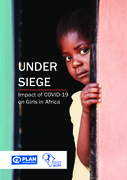
The COVID-19 pandemic has exacerbated and added yet another layer of vulnerability to an already dire web of vulnerabilities of girls in the African continent, which constitute about 49% of the total child population. Critically, gender equality and
...
Designed for trainers of health workers, this manual offers skills-building sessions on developing more “male-friendly” health services. Utilizing participatory and experiential activities, the manual examines attitudinal and structural barriers
...
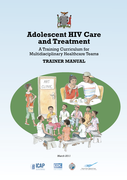
A Training Curriculum for Multidisciplinary Healthcare Teams. This innovative training package aims to empower multidisciplinary health workers to have the confidence and skills to provide comprehensive, youth-friendly HIV services that support adol
...
- Twenty-two joint integrated rapid response mechanism (IRRM) missions were conducted in 11 counties and reached 305,887 people including 65,432 children under 5 years of age.
- UNICEF’s Integrated Community Mobilization Network reached 345,219 households (total population 2.1 million) advoca ...
- UNICEF’s Integrated Community Mobilization Network reached 345,219 households (total population 2.1 million) advoca ...
Listening to what children in crisis have to say is not only a moral and ethical responsibility for donor and humanitarian actors, it is also a humanitarian obligation. Children’s right to participation is recognised in the United Nations Convention on the Rights of the
...
This brief document compiles existing material related to mental health and psychosocial support (MHPSS) for the COVID-19 crisis, as well as other resources that can be applicable to the context. Documents are divided into different sections, based on the ‘’
...

The United Nations Children's Fund (UNICEF), the International Organization for Migration (IOM), Georgetown University, and the United Nations University have today launched new guidelines to provide the first-ever global policy framework that will help protect, include, and empower children on the
...

This selected material from Hesperian's Community Guide to Environmental Health offers 48 pages of information on basic sanitation and hygiene, including instructions on building safe, affordable, environmentally-friendly sanitation systems, as well
...
A publication about girls escaping natural disasters and violent conflict in Eastern Africa
Children are on the move. In East Africa region, it is estimated that over 5 million children have migrated across borders or been forcibly displaced in their own country.
Forcable displacement is p ...
Children are on the move. In East Africa region, it is estimated that over 5 million children have migrated across borders or been forcibly displaced in their own country.
Forcable displacement is p ...
The update of the ESTC was conducted as a joint endeavour with ERS, consulting experts from international societies and organisations, national TB programmes, civil society and affected communities. The second edition of the ESTC includes 21 standards in the areas of diagnosis, treatment, HIV and co
...

Current evidence that the climate is changing is overwhelming. Impacts of climate change and variability are being observed: more intense heat-waves, fires and floods; and increased prevalence of food- water- and vector-borne diseases. Climate change will put pressure on environmental and health det
...

Patient safety standards are critical for the establishment and assessment of patient safety programmes within hospitals. This third edition of the Patient safety assessment manual provides an updated set of standards and assessment criteria that reflect current best practice and WHO guidance. The m
...

Women, girls and marginalized groups who are largely dependent on natural resources for livelihoods are among the hardest hit by extreme weather patterns. These weather patterns limit their access to food, water, shelter, education and access to essential health services, including those that addres
...

Despite gains in childhood survival, more effort is needed to improve the well-being of children with developmental delays and disabilities. All children, including children with developmental delays and disabilities, need nurturing care. Nurturing care can contribute to preventing developmental del
...