Filter
1399
Text search:
UN
Childrens
Fund
UNICEF
Featured
Recommendations
115
New Publications
468
Language
Document type
No document type
875
Studies & Reports
246
Guidelines
105
Manuals
68
Strategic & Response Plan
53
Fact sheets
20
Situation Updates
19
Training Material
8
Infographics
2
Brochures
1
Resource Platforms
1
Online Courses
1
Countries / Regions
Global
77
Sierra Leone
49
Liberia
40
Myanmar / Burma
40
Syria
37
Nepal
36
Ethiopia
28
Nigeria
27
Bangladesh
26
South Sudan
25
Kenya
25
Malawi
25
Uganda
23
India
23
Zambia
23
Namibia
23
Rwanda
22
Ukraine
18
Congo, Democratic Republic of
16
Latin America and the Carribbean
15
Guinea
14
Ghana
14
Zimbabwe
14
Africa
14
Lesotho
13
Western and Central Europe
13
Tanzania
12
Jordan
11
Indonesia
11
South Africa
11
Mozambique
11
Yemen
11
Venezuela
11
Senegal
10
Haiti
10
Pakistan
10
Lebanon
10
Philippines
9
Cambodia
9
South–East Asia Region
9
Middle East and North Africa
8
West and Central Africa
7
Asia
7
Central African Republic
6
Colombia
6
Botswana
6
East and Southern Africa
6
Afghanistan
5
Sudan
5
Brazil
5
Eastern Europe
5
Laos
5
Burkina Faso
4
Cameroon
4
Somalia
4
Germany
4
Madagascar
4
Mali
3
Papua New Guinea
3
Benin
3
Argentina
3
Sri Lanka
3
Iraq
2
Turkey
2
Egypt
2
Peru
2
Eswatini/ Swaziland
2
Greece
2
Chile
2
Palestine
2
Albania
2
Timor Leste/ East Timor
2
Russia
2
Moldova
2
Vietnam
2
Guinea-Bissau
1
Côte d’Ivoire / Ivory Coast
1
Saudi Arabia
1
Niger
1
Togo
1
Chad
1
Thailand
1
China
1
Malaysia
1
Croatia
1
Burundi
1
Ecuador
1
Bolivia
1
Libya
1
Mexico
1
Eastern Europe and Central Asia
1
Paraguay
1
Bhutan
1
Italy
1
Kazakhstan
1
Georgia
1
Turkmenistan
1
Japan
1
Authors & Publishers
Publication Years
Category
Countries
574
Women & Child Health
173
Key Resources
120
Public Health
57
Clinical Guidelines
56
Capacity Building
20
Pharmacy & Technologies
7
Toolboxes
Disability
121
HIV
101
COVID-19
100
Conflict
86
Mental Health
84
Refugee
44
Ebola & Marburg
41
Planetary Health
39
Health Financing Toolbox
23
Global Health Education
22
Caregiver
19
AMR
16
Natural Hazards
14
TB
14
Rapid Response
13
Cholera
10
Polio
8
Pharmacy
8
Zika
7
Specific Hazards
7
2.0 Rapid Response
7
NTDs
6
Malaria
5
NCDs
4
South Sudan
1
The coronavirus disease 2019 (COVID-19) pandemic has created a global and gendered crisis that is compounding existing inequalities and disproportionately affecting girls and women. Emerging evidence from the COVID-19 crisis in 2020 shows school closures, disruptions in essential services and rising
...
UNICEF Syria’s series of think pieces. Every day counts. An outlook on child protection for the most vulnerable children in Syria.To navigate the complex and continuously changing context and attain sustainable results for children,
...
UNICEF Syria’s series of think pieces. Every day counts. An outlook on child protection for the most vulnerable children in Syria.To navigate the complex and continuously changing context and attain sustainable results for children,
...

The article focuses on "The State of the World’s Children 2023" report published by UNICEF. It highlights the critical role of vaccines in saving lives and the challenges in global immunization efforts, especially for marginalized and underserved
...
Beat the heat: child health amid heatwaves in Europe and Central Asia finds that half of these children died from heat-related illnesses in their first year of life. Most children died during the summer months.
"Around half of children across Europe and Central Asia – or 92 million children –
...
Female genital mutilation (FGM), a violation of girls’ and women’s human rights, is becoming less common, and opposition to the practice is growing — in the last two decades, the proportion of girls and women who want the practice to stop has doubled.
However, progress is not universal. In s
...
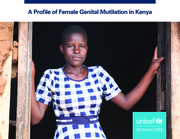
Kenya is home to 4 million girls and women who have experienced FGM. Overall, 21 per cent of girls and women aged 15 to 49 years have undergone the practice, varying from 98 per cent in the North Eastern region to 1 per cent in the Western region
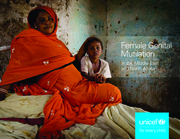
Almost 50 million girls and women have undergone FGM in five countries in the Middle East and North Africa, accounting for one quarter of the global total
The coronavirus disease 2019 (COVID-19) pandemic has created a global and gendered crisis that is compounding existing inequalities and disproportionately affecting girls and women. Emerging evidence from the COVID-19 crisis in 2020 shows school closures, disruptions in essential services and rising
...
Child marriage and female genital mutilation (FGM) threaten the well-being of millions of girls around the world. Both have existed for generations, as manifestations of gender inequality, and have been propagated by discriminatory norms that devalue girls. In many countries where both child marriag
...
UNICEF Syria’s series of think pieces. Every day counts. An outlook on child protection for the most vulnerable children in Syria.To navigate the complex and continuously changing context and attain sustainable results for children,
...
- Module 1: Understanding modelling approaches for sexual, reproductive, maternal, newborn, child and adolescent health, and nutrition
Coronavirus disease 2019 (COVID-19) has a wide range of documented effects. It directly causes death and disability for some people infected. However, disruption to
...
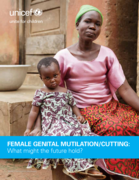
By 2050, nearly 1 in 3 births worldwide will occur in the
29 countries in Africa and the Middle East where FGM/C
is concentrated, and nearly 500 million more girls and
women will be living in these countries than there are today.
In Somalia alone, where FGM/C prevalence stands at 98
per cent, t
...

Adolescence is a critical stage in life for physical, cognitive and emotional development, shaping future health and well-being. Comprehensive measurement of adolescent health is essential to prioritize health issues, guide interventions and track progress. However, global, regional and national ado
...
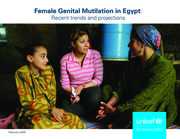
The prevalence of FGM is high across many population groups in Egypt, but the practice is somewhat more common in rural areas, in less wealthy households and among girls and women with less education