
Filter
223
Text search:
Oxfam
International,
et
al.
Featured
Recommendations
23
New Publications
71
Language
Document type
No document type
137
Studies & Reports
44
Manuals
19
Guidelines
12
Strategic & Response Plan
5
Situation Updates
2
Training Material
1
Brochures
1
Infographics
1
Fact sheets
1
Countries / Regions
Global
11
Liberia
7
Sierra Leone
6
Nepal
6
Syria
6
Zimbabwe
5
Kenya
5
Myanmar / Burma
5
Guinea
4
Congo, Democratic Republic of
4
Haiti
4
Bangladesh
3
Ukraine
3
Yemen
3
Nigeria
2
Philippines
2
Somalia
2
South Sudan
2
Thailand
2
Latin America and the Carribbean
2
Western and Central Europe
2
Senegal
1
Ethiopia
1
Uganda
1
Niger
1
India
1
Pakistan
1
Jordan
1
Afghanistan
1
Lebanon
1
Turkey
1
Chad
1
Cambodia
1
Rwanda
1
Indonesia
1
Malawi
1
Mozambique
1
Sudan
1
Central African Republic
1
Botswana
1
Middle East and North Africa
1
Western Pacific Region
1
Eastern Europe and Central Asia
1
Asia
1
Venezuela
1
Eastern Europe
1
Armenia
1
Laos
1
Georgia
1
Authors & Publishers
Publication Years
Category
Key Resources
78
Countries
44
Women & Child Health
12
Capacity Building
4
Public Health
4
Clinical Guidelines
2
Pharmacy & Technologies
1
Toolboxes
COVID-19
18
Natural Hazards
17
Planetary Health
16
Conflict
15
Ebola & Marburg
11
HIV
10
Mental Health
10
Global Health Education
10
Health Financing Toolbox
8
Cholera
7
Refugee
6
Disability
5
Caregiver
5
AMR
4
Rapid Response
2
TB
2
Specific Hazards
2
Pharmacy
2
2.0 Rapid Response
2
NCDs
1
English Analysis on World about Disaster Management and Protection and Human Rights; published on 12 Jan 2021 by IFRC
DHS Further Analysis Reports No 102
The roadmap highlights and advocates for the existing and potential key role of national public health institutes (NPHIs) in climate adaptation and mitigation, and how they contribute to climate policies, research and action.
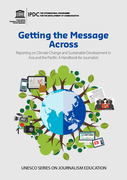
Reporting on Climate Change and Sustainable Development in Asia and the Pacific: A Handbook for Journalists.
UNESCO Series on Journalism education.
It explores the essential aspects of climate change, including its injustices to vulnerable communities, especially women and girls and least develope
...
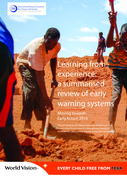
With the increase in frequency of disasters, there is a need to improve early warning systems (EWS) for EA to reduce the risks faced by children and their families. As a consequence, the term early warning, early action (EWEA) has become increasingly common among those responding to slow-onset disas
...

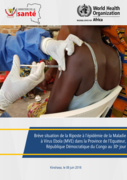
Avec une population estimée à 1 626 606 habitants et une densité de 16 habitants/km2, elle a pour chef-lieu Mbandaka qui est la plus grande ville. L'Équateur est depuis 2015 l’une des 26 provinces de la République démocratique du Congo (RDC)
...
Réduction des risques, promotion de la résilience et aide au relèvement
Annex I to: To stay and deliver, good practice for humanitarians in complex security environments
The principal findings of the report include that despite overall improvements in aid agencies’ security risk management, national aid workers perceive continued inequities in security suppor ...
The principal findings of the report include that despite overall improvements in aid agencies’ security risk management, national aid workers perceive continued inequities in security suppor ...
This is the first guidance note in a four-part series of notes produced by InterAction to support management,
program and M&E staff in international NGOs to plan, design, manage, conduct and use impact evaluations. This first guidance note, Introdu
...
Bulletin of the World Health Organization 2007;85:637–643
Une traduction en français de ce résumé figure à la fin de l’article.
Al final del artículo se facilita una traducción al esp
...
Le Plan Stratégique Multisectoriel d’Élimination du Choléra en République Démocratique du Congo (2013-2017) vise à réduire l’incidence du choléra à moins d’un cas pour 100 000 habitants. Ce plan repose sur une approche multisectorielle, combinant santé, eau, hygiène
...
Governments have dedicated a pivotal role to the private sector in the implementation and financing of the 2030 Agenda and the SDGs. This has pushed a turn towards the private sector, the promotion of multi-stakeholder partnerships between public and private actors. However, far too often there is a
...

A year ago, the second Special Session of the World Health Assembly (WHASS) unanimously agreed to start a diplomatic process for a new binding instrument aimed at ensuring the international community is better prepared for the next health emergencie
...
The Sphere standards in national humanitarian response discussion paper sets out to understand and describe opportunities for adapting international humanitarian standards to a regional, national or local level in preparing for, or responding to a d
...
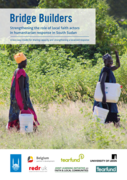
This report outlines and analyses the implementation of the Bridge Builder Model. This is a two-way, capacity-sharing model aimed at bringing together local faith actors (LFAs) and international humanitarian actors to increase understanding, trust,
...

The annual Development Co-operation Report brings new evidence, analysis and ideas on
sustainable development to members of the OECD Development Assistance Committee (DAC) and the international community more broadly. The objectives are to promote
...

The aim of the present paper is to review capacity building in public health nutrition (PHN), the need for which has been stressed for many years by a range of academics, national and international organisations. Although great strides have been mad
...
