Filter
442
Text search:
Microbiology
Society
Featured
Recommendations
45
New Publications
94
Language
Document type
No document type
179
Studies & Reports
105
Guidelines
98
Manuals
29
Strategic & Response Plan
11
Fact sheets
6
Training Material
5
Situation Updates
5
Online Courses
2
Resource Platforms
1
Videos
1
Countries / Regions
India
28
South Africa
18
Nigeria
14
Western and Central Europe
13
Africa
13
Zimbabwe
11
Kenya
11
Global
10
Philippines
9
Zambia
9
Tanzania
8
Bangladesh
8
Sierra Leone
7
Ethiopia
6
Ghana
6
Uganda
6
Nepal
6
Malawi
6
Burkina Faso
5
Senegal
5
Congo, Democratic Republic of
5
Germany
5
Mozambique
4
Eastern Europe
4
Cameroon
3
Indonesia
3
Namibia
3
East and Southern Africa
3
Latin America and the Carribbean
3
Asia
3
Russia
3
Guinea
2
Liberia
2
Mali
2
Côte d’Ivoire / Ivory Coast
2
Pakistan
2
Afghanistan
2
Thailand
2
China
2
Argentina
2
Brazil
2
Colombia
2
Ecuador
2
West and Central Africa
2
Eastern Europe and Central Asia
2
Venezuela
2
Saudi Arabia
1
Niger
1
Haiti
1
South Sudan
1
Jordan
1
Lebanon
1
Syria
1
Cambodia
1
Eswatini/ Swaziland
1
Burundi
1
Ukraine
1
Angola
1
Madagascar
1
Lesotho
1
Myanmar / Burma
1
Sri Lanka
1
Yemen
1
Middle East and North Africa
1
South–East Asia Region
1
Western Pacific Region
1
Paraguay
1
Bhutan
1
Albania
1
Laos
1
Tajikistan
1
Qatar
1
Bulgaria
1
Moldova
1
Vietnam
1
Gabon
1
Turkmenistan
1
Japan
1
Denmark
1
Belgium
1
Maldives
1
United Kingdom
1
Authors & Publishers
Publication Years
Category
Countries
154
Clinical Guidelines
48
Key Resources
23
Pharmacy & Technologies
16
Public Health
11
Women & Child Health
10
Capacity Building
3
Toolboxes
AMR
127
TB
43
COVID-19
32
HIV
19
Rapid Response
17
Planetary Health
17
NTDs
17
Ebola & Marburg
13
2.0 Rapid Response
13
Caregiver
10
Cholera
9
Pharmacy
8
Mental Health
6
Global Health Education
5
Conflict
4
Polio
3
Natural Hazards
3
NCDs
3
Zika
2
Health Financing Toolbox
2
Malaria
2
Disability
1
Refugee
1
Specific Hazards
1

In Kenya, the bacterial infections that contribute most to human disease are often those in which re-‐sistance is most evident. Examples are multidrug-‐resistant enteric bacterial pathogens such as typhoid,
...

The report offers 20 top recommendations for getting ahead of future outbreaks in Yemen and similarly complex humanitarian settings.
In 2015, Yemen was declared a Level 3 emergency by the UN, kicking into gear the highest level of humanitarian support. A massive cholera outbreak followed, leading t
...
The Ministry of Health has developed the first version of the Service Standards and Service Delivery Standards for the health sector in Uganda. The main objective is to provide a common understanding of what is expected by the public, service users and service providers in ensuring provision of cons
...

Nepal has only recently started its journey on the path to an integrated response to the challenge of antimicrobial resistance (AMR). Despite this, it is notable that the Nepal Health Sector Strategy Plan (HSSP)-2 mentions growing antibiotic resistanceas a public health challenge.
The Government of Malawi, in fulfilling its primary role of protecting the lives of its vulnerable citizens during disasters and reducing their exposure to risk through preparedness, led the development of a National Coronavirus Disease (COVID-19) Preparedness and Response Plan.
The authors conduct an integrated survey of Antimicrobial Resistant Organisms (AMR) in drinking water, wastewater and surface water in three settings in Bangladesh: rural households, rural poultry farms, and urban food markets. Results show that untreated water discharged from rural households, poul
...
Member States have requested WHO policy guidance on how to facilitate the implementation of national AMS activities in an integrated and programmatic approach. This policy guidance responds to that demand from Member States and is anchored in public health guiding principles in the human health sect
...
The document provides a detailed overview of cholera, including its clinical features, diagnosis, treatment, and prevention. It explains the causes of cholera, its symptoms such as severe diarrhea and dehydration, and the importance of rehydration therapy (oral or intravenous) to reduce mortality. T
...
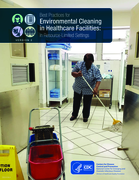
Healthcare-associated infections (HAI) are a significant burden globally, with millions of patients affected each year. These infections affect both high- and limited-resource healthcare settings, but in limited-resource settings, rates are approximately twice as high as high-resource settings (15 o
...
This National Action Plan addresses actions needed to be taken in order to combat antimicrobial resistance (AMR) in the country. It is obligatory to raise awareness of antimicrobial resistance and promote behavioral change through public communication
programmes that targets human, animal and plant
...

A Situational Assessment and Five-YearAction Plan for the Africa CDC Strengthening Regional Public Health Institutions and Capacity for Surveillance and Response Program
Ethiopia Antimicrobial Resistance Surveillance Plan
Cureus 16(2): e53933. DOI 10.7759/cureus.53933

Guidelines for Therapy and Management of Urinary Tract Infection

Spread of resistance to antimicrobial agents (AMR) does not know national borders and has reached dimensions, which require immediate actions at the national, regional and global levels.
Antibiotic resistance is a natural biological response to improper use of antimicrobial agents (AMA); increasing
...
Antimicrobial resistance (AMR) has become a global public health concern and Lebanon is of no exception to this issue. The spread of antimicrobial-resistant bacteria is considered an alarming public health threat, with a potential extent similar to global warming and other social and environmental t
...