Filter
332
Text search:
Jamaica
Featured
17
59
Language
Document type
169
96
31
16
8
7
3
1
Countries
65
23
6
4
4
4
3
2
2
2
2
2
1
1
1
1
1
1
1
1
1
1
1
1
1
1
1
1
1
1
1
1
1
1
1
1
1
1
1
1
1
1
1
1
1
1
1
Authors & Publishers
Publication Years
Category
69
29
19
19
17
2
Toolboxes
78
35
28
24
22
17
12
9
8
8
8
8
6
5
3
3
3
2
2
2
2
2
2
1
Six maladies évitables par la vaccination ont été incluses dès le
début dans le PEV : la diphtérie, la rougeole, la coqueluche, la
poliomyélite, le tétanos et la tuberculose.
Available in: English, French, Chinese, Spanish, Russian, Arabic, Thai, Korean, Tajik, Vietnamese, Uzbek
http://www.who.int/disabilities/cbr/guidelines/en/

Esta publicación hace eco de la obra titulada Administración sanitaria de emergencia
con posterioridad a los desastres naturales (Publicación Científica No. 407) editada en
1981, pero es un libro totalmente nuevo, de organización reciente y con mucho material original. Esboza la función que
...
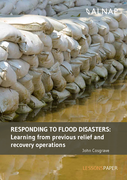
This paper presents lessons learned from previous flood responses in developing countries, based on a structured review of the literature. It is intended for people working in relief and recovery operations who have to decide if, when and how to intervene after a flood.

These guidelines – an update to the World Health Organization’s 2015 publication Consolidated strategic information guidelines – present a set of essential aggregate indicators and guidance on choosing, collecting and systematically analysing strategic information to manage and monitor the nat
...

The Global status report on violence prevention 2014, which reflects data from 133 countries, is the first report of its kind to assess national efforts to address interpersonal violence, namely child maltreatment, youth violence, intimate partner and sexual violence, and elder abuse. Jointly publis
...
The Primary Care Innovator’s Handbook
recommended
Voices from Leaders in the Field
Core Knowledge for Emergency Preparedness and Response
GFDRR Knowledge Notes
The report provides a global knowledge base on suicide and suicide attempts as well as actionable steps for countries based on their current resources and context to move forward in suicide prevention.
The strategy focuses on mobilizing and coordinating partners, experts and resources to help countries enhance surveillance of the Zika virus and disorders that could be linked to it, improve vector control, effectively communicate risks, guidance and protection measures, provide medical care to thos
...
Bulletin of the World Health Organization 2016. doi: http://dx.doi.org/10.2471/BLT.16.171082
Objective: To describe the temporal and geographical distribution of Zika virus infection, and associated neurological disorders, from 1947 to February 2016.
3ie Impact Evaluation Report 39