
Filter
106
Text search:
Beer,
J.
de
Featured
Recommendations
5
New Publications
23
Language
Document type
No document type
55
Studies & Reports
29
Guidelines
12
Manuals
5
Fact sheets
3
Training Material
1
Strategic & Response Plan
1
Countries / Regions
Western and Central Europe
5
South Africa
4
Eastern Europe
4
Uganda
3
India
3
Russia
3
Guinea
2
Ethiopia
2
Rwanda
2
Namibia
2
Ukraine
2
Latin America and the Carribbean
2
Global
2
Sierra Leone
1
Liberia
1
Nigeria
1
Congo, Democratic Republic of
1
Côte d’Ivoire / Ivory Coast
1
USA
1
Cameroon
1
Ghana
1
Germany
1
Chad
1
Kenya
1
Malawi
1
Mozambique
1
Angola
1
Madagascar
1
Lesotho
1
Myanmar / Burma
1
South–East Asia Region
1
Eastern Europe and Central Asia
1
Africa
1
Estonia
1
Romania
1
Kazakhstan
1
Israel
1
Bosnia and Herzegovina
1
Authors & Publishers
Publication Years
Category
Countries
29
Public Health
15
Clinical Guidelines
13
Women & Child Health
2
Key Resources
2
Toolboxes
HIV
14
Mental Health
14
TB
10
Social Ethics
4
NTDs
4
Global Health Education
3
Planetary Health
3
NCDs
3
Refugee
2
Caregiver
2
Pharmacy
2
Disability
1
Rapid Response
1
AMR
1
COVID-19
1
Health Financing Toolbox
1
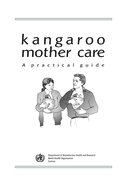
Kangaroo mother care: a practical guide
recommended
Kangaroo mother care is a method of care of preterm infants. The method involves infants being carried, usually by the mother, with skin-to-skin contact. This guide is intended for health professionals responsible for the care of low-birth-weight and preterm infants. Designed to be adapted to local
...
Non-Wood Forest Products 11
Traditional medicine and its use of medicinal plants is dependent on reliable supply of plant materials. The book focuses on the interface between medicinal plant use and conservation of medicinal plants.
Куріння, вживання алкоголю та наркотичних речовин серед підлітків, які навчаються: поширення й тенденції в Україні : За результатами дослідження 2015 року в рамках мÑ
...

Cardiovascular diseases (CVDs) are a growing public health problem in Ghana and other African countries. Strokes and other CVDs have become a leading cause of death due to increasing risk factors such as hypertension. According to the Global Burden of Disease study (GBD), ischaemic heart disease was
...

Mohamed et al. BMC Public Health 2018, 18(Suppl 3):1215
https://doi.org/10.1186/s12889-018-6053-xpre-
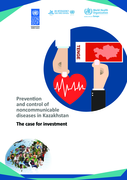
Noncommunicable diseases (NCDs) such as cancer, cardiovascular disease, diabetes and chronic respiratory diseases and their risk factors are an increasing public health and development challenge in Kazakhstan. This report provides evidence through three analyses that NCDs reduce economic output and
...

In 2016, the risk of premature mortality1 from noncommunicable diseases (NCDs) in Ethiopia was 18.3%. The economic costs of NCDs are significant and are due principally to their impact on the non-health sector (reduced workforce and productivity). In this study, it is estimated that NCDs cost Ethiop
...
Background paper 8
The Independent Panel for Pandemic Preparedness and Response
May 2021
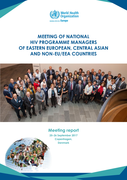
Meeting report, 25-26 September 2017 Copenhagen, Denmark
WHO TRS N°1012.
Key updates include: (i) surveillance strategies, including cross-sectoral linking of systems and suitable diagnostics; (ii) the latest recommendations on human and animal immunization; (iii) palliative care in lowresource settings; (iv) risk assessment to guide management of bite
...
A tool for measuring alcohol policy implementation
Introduction
Chapter A.3
This technical report presents the results of a cross-sectional survey conducted in Banja Luka, the Republika Srpska, Bosnia and Herzegovina, between July and August 2017, as part of the FEEDcities Project (Food Environment Description in cities – eastern Europe and central Asia). The aim of the r
...
There is an expanding market of no- and low-alcohol beverages (NoLos). However, their effects on global ethanol consumption and public health are still questioned. Policies and regulations about NoLos’ availability, acceptability and affordability are lacking and evidence about their benefits is l
...

The environment in which young people live, learn and play significantly affects their decisions about whether to consume alcohol. Environmental factors are the main risk factors driving alcohol consumption and related harm among young people. Environments that normalize alcohol consumption – term
...
WHO Western Pacific Regional Strategy to Reduce Alcohol-Related Harm
