
Filter
1669
Filtered Results: 1669
Text search:
The
Lancet
Series
Featured
Recommendations
130
New Publications
292
Language
Document type
No document type
730
Studies & Reports
454
Guidelines
261
Manuals
76
Fact sheets
48
Strategic & Response Plan
44
Training Material
39
Situation Updates
9
Infographics
4
Resource Platforms
2
Brochures
1
Online Courses
1
Countries / Regions
Global
104
Latin America and the Carribbean
44
India
38
Kenya
33
South Africa
33
Ethiopia
32
Western and Central Europe
30
Africa
29
Brazil
26
Nigeria
24
Nepal
20
Russia
20
Ukraine
16
Germany
16
Uganda
16
Zambia
16
Colombia
14
Congo, Democratic Republic of
14
Ghana
13
Sierra Leone
13
Rwanda
13
Syria
13
Malawi
13
Tanzania
13
Bangladesh
12
Liberia
12
Senegal
11
Zimbabwe
11
Philippines
11
Cambodia
11
South–East Asia Region
11
Eastern Europe
11
Mozambique
10
Asia
9
Ecuador
9
Cameroon
8
Peru
8
Venezuela
8
Argentina
8
Myanmar / Burma
8
Mexico
7
Chile
7
Guinea
7
Spain
7
East and Southern Africa
7
Yemen
7
Burkina Faso
6
Eastern Europe and Central Asia
6
Sudan
6
Somalia
6
Eswatini/ Swaziland
6
Lesotho
5
China
5
Afghanistan
5
USA
5
West and Central Africa
5
Middle East and North Africa
5
Western Pacific Region
5
Bolivia
5
Vietnam
5
Namibia
5
South Sudan
5
Haiti
4
Paraguay
4
North America
4
Angola
4
Botswana
4
Indonesia
4
Pakistan
4
Thailand
3
Burundi
3
Portugal
3
Mali
3
Madagascar
3
El Salvador
2
Kyrgyzstan
2
Jordan
2
Uruguay
2
Jamaica
2
United Kingdom
2
Belarus
2
Israel
2
Côte d’Ivoire / Ivory Coast
2
Nicaragua
2
Sri Lanka
2
Palestine
2
Honduras
2
Guatemala
2
Tajikistan
1
Turkey
1
Benin
1
Kazakhstan
1
Albania
1
Singapore
1
Laos
1
Niger
1
Qatar
1
Italy
1
Dominican Republic
1
France
1
Southern Africa
1
Papua New Guinea
1
Moldova
1
Greece
1
Chad
1
Cuba
1
Authors & Publishers
Publication Years
Category
Countries
487
Clinical Guidelines
163
Women & Child Health
127
Public Health
106
Key Resources
72
Capacity Building
25
Pharmacy & Technologies
21
Toolboxes
COVID-19
216
Mental Health
162
HIV
116
Planetary Health
106
TB
88
NTDs
88
AMR
55
Caregiver
52
NCDs
51
Global Health Education
42
Disability
41
Health Financing Toolbox
30
Refugee
29
Ebola & Marburg
29
Conflict
24
Rapid Response
20
Pharmacy
20
Malaria
20
Zika
12
Natural Hazards
11
2.0 Rapid Response
8
Polio
8
Cholera
6
Social Ethics
5

Diabetes is a serious, chronic disease that occurs either when the pancreas does not produce enough insulin (a hormone that regulates blood sugar, or glucose), or when the body cannot effectively use the insulin it produces. Diabetes is an important public health problem, one of four priority noncom...
Module 5
Monitoring and Evaluation
October 2018
Module 5: Monitoring and evaluation. This module is for people responsible for monitoring PrEP programmes at the national and site levels. It provides information on how to monitor PrEP for safety and effectiveness, suggesting core and additiona...

This resource was written to support persons who seek to initiate a support group for suicide loss survivors. Suicide bereavement support groups offer a wide range of benefits that can help individuals to navigate the difficult time following a loss. First and foremost, a support group provides a ch...
BMJ 2020; 370 doi: https://doi.org/10.1136/bmj.m3026 (Published 11 August 2020)
The BMJ "practice pointer" inlcudes a one-page visual summary of assessment and initial management of patients with persistant symptoms following acute SARS-CoV-2 infection
Nosocomial or health-facility-acquired infections are a serious issue, representing one of the most significant causes of morbidity and mortality in healthcare systems and consuming many scarce resources, especially in developing countries. Although much has been done, particularly in the hospital s...
Vitamin A deficiency is a risk factor for blindness and for mortality from measles and diarrhoea in children aged 6–59 months. We aimed to estimate trends in the prevalence of vitamin A defi ciency between 1991 and 2013 and its mortality burden in low-income and middle-income countries.

Background:Neonatal mortality accounts for 43% of global under-five deaths and is decreasing more slowly than maternal or child mortality. Donor funding has increased for maternal, newborn, and child health (MNCH), but no analysis to date has disaggregated aid for newborns. We evaluated if and how a...
Enabling young children to achieve their full developmental potential is a human right and an essential requisite for sustainable development. Given the critical importance of enabling children to make the best start in life, the health sector, among other sectors, has an important role and responsi...
he WHO Guidelines on Integrated Care for Older People (ICOPE) propose evidence-based recommendations for health care professionals to prevent, slow or reverse declines in the physical and mental capacities of older people. These recommendations require countries to place the needs and preferences of...

This publication offers practical advice on implementing HIV and STI programmes for transgender people, with a focus on transgender women, aligned with the 2011 Recommendations and the 2014 Key Populations Consolidated Guidelines. It contains examples of good practice from around the world that may ...
Key Considerations
This brief focuses on cross-border movement in Eastern and Southern Africa (ESA) and its implications for development of risk communication and community engagement (RCCE) strategies aimed at preventing transmission of COVID-19 in the ESA region. Given the extensive risk of cross...
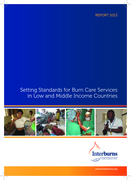
Burns are a global public health problem, accounting for close to 200,000 deaths annually. The majority of these occur in low- and middle-income countries, where a number of constraints complicate the public health task of addressing burns. While the primary prevention of burns in low- and middle-in...
On 9 February 2021, a first webinar entitled “Expanding our understanding of Post COVID-19 condition” was held under the auspices of WHO and in consultation with the International Severe Acute Respiratory and Emerging Infection Consortium(ISARIC), Global Research Collaboration for Infectious Dis...
Health Policy and Planning, Volume 35, Issue 1, February 2020, Pages 47–57, https://doi.org/10.1093/heapol/czz122
Colombia has an underreporting of 30% of the total cases, according to World Health Organization (WHO) estimations. In 2016, successful tuberculosis (TB) treatment rate was 70%, and t...
A clinical case definition of post COVID-19 condition by a Delphi consensus, 6 October 2021
recommended
WHO has developed a clinical case definition of post COVID-19 condition by Delphi methodology that includes 12 domains, available for use in all settings. This first version was developed by patients, researchers and others, representing all WHO regions, with the understanding that the definition ma...
Current and expected problems such as ageing, increased prevalence of chronic conditions and multi-morbidity, increased emphasison healthy lifestyle and prevention, and substitution for care from hospitals by care provided in the community encourage countries worldwide to develop new models of prima...
WHO and UNITAID
in collaboration with IMPAACT (International Maternal Pediatric Adolescent AIDS Clinical Trials) network, PENTA (Paediatric European Network for Treatment of AIDS) foundation and experts from the Paediatric Antiretroviral Working Group
Despite high regional demand for vaccines valued at over US$ 1 billion annually, Africa’s vaccine industry provides only 0.1% of global supply. Vaccine inequity and hoarding at the start of the pandemic, which resulted in delays in obtaining COVID-19 doses, stimulated new resolve to address future...
There is an urgent need for safer, simpler, more efficacious and accessible treatment regimens for all forms of TB. The development of Target Product Profiles for TB treatment regimens (referred to as Target Regimen Profiles or TRPs) seeks to guide the drug development process towards important regi...
Int. J. Environ. Res. Public Health 2018, 15(12), 2626; https://doi.org/10.3390/ijerph15122626
Climate change is increasing risks to human health and to the health systems that seek to protect the safety and well-being of populations. Health authorities require information about current associatio...
