
Filter
1601
Text search:
Clinical
documentation
Featured
157
437
Language
Document type
857
280
188
135
65
41
18
9
3
3
1
1
Countries
109
63
61
56
49
43
40
39
31
30
29
29
27
26
24
24
24
23
22
19
18
17
15
13
13
13
13
12
11
11
11
10
9
8
8
8
7
6
6
6
6
6
6
6
5
5
5
5
4
4
4
4
3
3
3
3
3
3
3
3
3
3
3
3
2
2
2
2
2
2
2
2
2
2
2
2
2
2
2
1
1
1
1
1
1
1
1
1
1
1
1
1
1
1
1
1
1
1
Authors & Publishers
Publication Years
Category
683
144
101
96
77
34
33
1
Toolboxes
121
111
87
76
66
58
51
50
50
41
37
27
26
24
20
18
16
16
13
12
10
9
8
7
6

Monatsschrift Kinderheilkunde December 2015, Volume 163, Issü 12, pp 1269-1286.
Stellungnahme der Deutschen Gesellschaft für Pädiatrische Infektiologie, der Gesellschaft für Tropenpädiatrie und Internationale Kindergesundheit und des Berufsverbandes der Kinder- und Jugendärzte
The document covers: introduction on contact tracing in the Ebola response; general considerations for contact tracing; case definition; planning and preparation; personnel; implementation, and tools for contact tracing.
updated 05 April 2016
This curricula guide builds on several existing products of WHO and partners, aimed at supporting countries in their effort to address the first objective of the GAP-AMR (to improve awareness and understanding of AMR). It is targeted specifically at health educators and policy planners, and applies
...
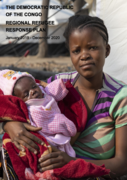
Looking forward, the 2019-2020 Regional Refugee Response Plan (RRRP) for the DRC situation aims at addressing the needs of new arrivals of Congolese refugees in the region, and those in protracted situations. By supporting livelihoods opportunities and through a resilience-based approach, refugees w
...
National Report
A Guidance and Resource Package for Country Offices for Coordination, Planning, Key Messages and Actions
The goal of this course is to provide participants with the foundational skills needed to begin the development, implementation and ongoing improvement of a congenital anomalies surveillance programme, in particular for countries with limited resources. It focuses on the methodology needed to devel
...
This guideline provides global, evidence-informed recommendations on daily iron supplementation in infants and children, as a public-health intervention for the prevention of anaemia and iron deficiency. It includes recommendations for iron supplementation in countries where malaria is prevalent.
Sphere for Monitoring and Evaluation
recommended
Sphere Unpacked
This Training module on malaria elimination has been developed by WHO to support health professionals in planning, managing, monitoring and evaluating malaria elimination programmes.
Supporting exercises: These files are necessary for participants to complete a number of exercises listed in the man
...
Conducting simulations and drills is the most effective way to evaluate and test disaster preparedness plans; these exercises are used widely by organizations and institutions working in development and in disaster response. Drills and simulations are also excellent tools for training, and for asses
...

This Indicator-Based Pharmacovigilance Assessment Tool (IPAT) was developed as a comprehensive performance metric for pharmacovigilance and medicine safety systems.
