
Filter
1372
Text search:
resilient
development
Featured
118
332
Language
Document type
506
435
146
128
99
23
17
8
6
2
1
Countries
132
49
45
44
29
25
25
24
21
19
18
17
17
17
17
17
16
16
15
14
13
12
12
11
11
10
10
9
8
8
8
8
8
7
6
6
6
6
5
5
5
5
5
4
4
4
4
4
4
4
4
4
4
3
3
3
3
3
3
3
2
2
2
2
2
2
2
2
2
2
2
1
1
1
1
1
1
1
1
1
1
1
1
1
1
1
1
1
1
1
1
1
1
1
1
1
1
Authors & Publishers
Publication Years
Category
404
168
89
52
35
13
6
Toolboxes
208
139
96
73
59
59
55
54
52
52
45
42
27
21
21
19
16
15
15
7
7
6
4
3
2
1

Thirty years ago, the United Nations General Assembly adopted the Convention on the Rights of the Child at a moment of rapid global change marked by the end of apartheid, the fall of the Berlin Wall and the birth of the World Wide Web. These developments and more brought momentous and lasting evolut
...

How we respond both now and going forward will help mitigate the impact of COVID-19, and to the extent possible preserve children’s rights to Survive, Learn, and Be Protected. We will focus our efforts on the most critical work essential to maintaining these commitments to the extent possible.
This paper was developed to support AMR coordination committees and others tasked with addressing AMR at country level to do just that. Drawing on the published literature and the operational experience and expertise of different LMICs, the paper points to six key strategies for success and offers a
...
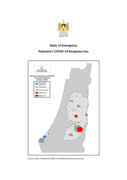
The purpose of this plan is to:
Present the GoP’s strategy and actions;
Propose an aid coordination approach;
Identify the critical support needs, including for: public health response to COVID-19; budget support to maintain government services; and diplomatic engagement with region
...

Nearly 800 women die every day from preventable maternal causes, and in 2022 alone, an estimated 2.3 million newborns died. For every maternal death, countless more women endure life-altering injuries, infections, and disabilities related to childbirth.
Maternal deaths are concentrated in the poo
...
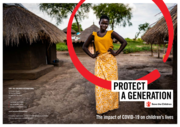
An estimated 99% of children worldwide – or more than 2.3 billion children – live in one of the 186 countries that have implemented some form of restrictions due to COVID-191. Although children are not at a high risk of direct harm from the virus, they are disproportionately affected by its hid
...
In response to COVID-19, countries around the world have implemented several public health and social measures (PHSM), such as movement restrictions, closure of schools and businesses, and international travel restrictions.1 As the local epidemiology of the disease changes, countries will adjust (i.
...
The arrival of COVID-19 in Afghanistan has brought heartache to millions of people who are now battling a deadly pandemic while simultaneously fighting for their survival amid poverty, disaster and war. Over my three years as Humanitarian Coordinator, I have marvelled at the resilience of the people
...
Strategic Advice
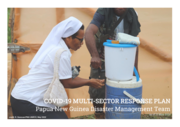
This revision to the Disaster Management Team’s (DMT) multi-sector response plan for COVID-19 is meant to align the multi-sector plan with the Department of Health’s COVID-19 Emergency Response Plan issued on 24 April 2020.
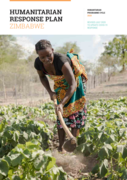
Across Zimbabwe, 7 million people in urban and rural areas are in urgent need of humanitarian assistance, compared to 5.5 million in August 2019. Since the launch of the Revised Humanitarian Appeal in August 2019, circumstances for millions of Zimbabweans have worsened. Drought and crop failure, exa
...
It is often observed that educated women have lower birth rates than do the less educated, inviting a causal interpretation. However, educated women also differ from those who have never attended school in a
variety of other ways: the two factors are multiply related. This article analyzes the rela
...

Just about everyone has experienced the joy that a healthy newborn child brings to parents, families and communities. But the arrival of a newborn who is small or sick often results in immediate worry and sadness. When the infant is at high risk of death or disability, these concerns can be a tremen
...
The COVID-19 pandemic has exposed the inadequacy of investments in public health, the persistence of profound economic and social inequalities and the fragility of many key global systems and approaches.

Conflict, climate crisis and COVID-19 pose great threats to the health of women and children.
he statistics in this report are from the Emergency Events Database (EM-DAT) maintained by the Centre for Research on the Epidemiology of Disasters (CRED) which records disasters which have killed ten or more people; affected 100 or more people; resulted in a declared state of emergency; or a call f
...
A module from the suite of health service capacity assessments in the context of the COVID-19 pandemic, Interim guidance 20 October 2020. This assessment tool covers the following aspects:
area distribution;
surface availability versus foreseen occupancy rate;
patient and staff flow
...
