
Filter
2726
Text search:
World
Health
Organization
WHO,
Regional
Office
for
Africa
Featured
Recommendations
292
New Publications
680
Language
Document type
No document type
1375
Studies & Reports
535
Guidelines
372
Manuals
172
Strategic & Response Plan
137
Training Material
53
Fact sheets
38
Situation Updates
29
Resource Platforms
6
Infographics
5
Brochures
2
App
1
Online Courses
1
Countries / Regions
Global
147
Ethiopia
93
Sierra Leone
85
Africa
82
Kenya
81
Liberia
75
Uganda
64
Tanzania
50
Zambia
48
Nigeria
47
Ghana
47
Malawi
42
South Africa
41
India
35
Guinea
34
Western and Central Europe
34
Rwanda
33
Mozambique
31
Namibia
31
West and Central Africa
30
South Sudan
28
East and Southern Africa
27
Congo, Democratic Republic of
26
Syria
25
Middle East and North Africa
25
Senegal
24
Asia
23
Nepal
22
South–East Asia Region
20
Latin America and the Carribbean
18
Ukraine
17
Lesotho
17
Yemen
17
Zimbabwe
15
Bangladesh
14
Cameroon
13
Central African Republic
13
Angola
13
Eastern Europe
13
Somalia
11
Botswana
10
Myanmar / Burma
10
Burkina Faso
9
Mali
9
Guinea-Bissau
9
Sudan
9
Eswatini/ Swaziland
9
Russia
9
Pakistan
8
Afghanistan
8
Cambodia
8
China
8
Madagascar
8
Haiti
7
Philippines
7
Thailand
7
Brazil
7
Côte d’Ivoire / Ivory Coast
6
Chad
6
Gambia
6
Eastern Europe and Central Asia
6
Togo
5
Benin
5
Colombia
5
Sri Lanka
5
Venezuela
5
Jordan
4
Lebanon
4
Indonesia
4
Burundi
4
Western Pacific Region
4
North Macedonia
3
Laos
3
Iran
3
Georgia
3
Mauritius
3
Morocco
2
Saudi Arabia
2
Iraq
2
Papua New Guinea
2
Peru
2
Mexico
2
Albania
2
Djibouti
2
Southern Africa
2
Kyrgyzstan
2
Kazakhstan
2
Portugal
2
Bosnia and Herzegovina
2
USA
1
Niger
1
Germany
1
Turkey
1
Mauritania
1
Argentina
1
Hungary
1
Ecuador
1
Greece
1
Libya
1
Palestine
1
Armenia
1
Timor Leste/ East Timor
1
Tajikistan
1
Qatar
1
Bulgaria
1
Estonia
1
Moldova
1
Vietnam
1
North America
1
Turkmenistan
1
Jamaica
1
Japan
1
Belgium
1
Tunisia
1
United Kingdom
1
Norway
1
Spain
1
Belarus
1
Israel
1
Authors & Publishers
Publication Years
Category
Countries
860
Clinical Guidelines
218
Key Resources
188
Public Health
167
Women & Child Health
156
Capacity Building
54
Pharmacy & Technologies
33
Toolboxes
HIV
257
COVID-19
212
Mental Health
173
TB
137
Planetary Health
127
Ebola & Marburg
120
Disability
105
Rapid Response
87
NTDs
87
AMR
83
Global Health Education
70
Caregiver
68
Conflict
64
2.0 Rapid Response
61
Refugee
54
Pharmacy
50
Health Financing Toolbox
44
NCDs
42
Malaria
40
Natural Hazards
21
Zika
20
Cholera
16
Polio
14
Specific Hazards
7
Social Ethics
6
Typhoon
3
South Sudan
1
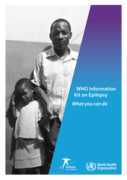
What you can do
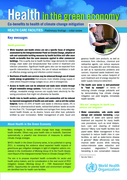
WHO's Health in the Green Economy sector briefings examine the health impacts of climate change mitigation strategies considered by the Intergovern
...
Основная цель этого Руководства состоит в том, чтобы очертить рамки методов, используемых для оценки распространенности ВИЧ-инфекции среди больных туберкулезом и
...
Tobacco control legislation: an introductory guide
Undernutrition increases the risk of tuberculosis (TB) and in turn TB can lead to malnutrition. Undernutrition is therefore highly prevalent among people with TB. It has been demonstrated that undernutrition is a risk factor for progression from TB
...
The report identifies major global gaps in WASH services: one third of health care facilities do not have what is needed to clean hands where care is provided; one in four facilities have no water services, and 10% have no sanitation services. This
...

Cholera is a major health risk in many parts of the world, affecting millions of people every year. Since mid-2021, the world has been facing an ac
...

Non-Communicable Diseases (NCDs) have emerged as conditions of great public health concern in Kenya accounting for 39% of deaths annually. The Ministry of
...

It is impossible to address the many complex needs of respiratory virus surveillance with a single surveillance system. Multiple systems, investigations and studies must each be fit-for-purpose to specific priority surveillance objectives, and only
...

No education system is effective unless it promotes the health and well-being of its students, staff and community. These strong links have never been more visible and compelling than in the context of the COVID-19 pandemic. Towards making every sch
...
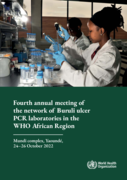
n October 2019, WHO convened the first meeting of the Buruli ulcer laboratory network (BU-LABNET) in Yaoundé, Cameroon, bringing together 11 laboratories from nine countries at the Pasteur Centre of Cameroon (CPC), the network’s Coordinating
...
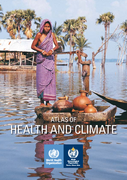
The Atlas of health and climate is a product of this unique collaboration between the meteorological and public health communities. It provides sound scientific information on the connections betwee
...
The main objective of these guidelines is to provide guidance on up-to-date, uniform, evidence-informed practices for suspecting, diagnosing and managing various forms of extra-pulmonary tuberculosis (EPTB) at all levels of healthcare delivery. They
...
The global burden of disease associated with air pollution exposure exacts a massive toll on human health worldwide: exposure to air pollution is estimated to cause millions of deaths and lost years of healthy life annually. The burden of disease at
...
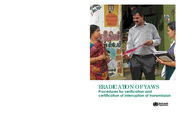
This document sets out the criteria and procedures to be followed by countries in verifying the interruption of yaws transmission. It is intended for use by international verification teams, national yaws eradication programmes and
...

The Global Burden of Disease (GBD) study, a collaborative endeavour of the World
Health Organization (
...

This version of the glossary is substantially changed from the original. Some terms have been omitted, many have been modified in light of practical experiences and the evolution in concepts, and new terms have been added. The list of terms is not intended to be either exhaustive or exclusive, and d
...
