Filter
1053
Text search:
prevalence
of
tobacco
use
Featured
81
299
Language
Document type
594
240
99
56
24
20
8
6
3
2
1
Countries / Regions
83
80
45
30
25
23
23
20
20
20
19
19
19
19
18
18
17
16
16
15
15
14
14
11
10
10
10
10
8
6
6
6
5
5
5
4
3
3
3
3
3
3
3
3
3
2
2
2
2
2
2
2
2
2
2
2
2
2
2
2
2
2
2
2
2
2
1
1
1
1
1
1
1
1
1
1
1
1
1
1
1
1
1
1
1
1
1
1
1
1
1
1
1
1
1
Authors & Publishers
Publication Years
Category
513
131
84
34
8
7
2
Toolboxes
145
127
90
33
30
23
23
18
15
12
9
6
5
5
5
3
3
3
2
2
1
1
1


An Evidence-Based Treatment Guide for Clinicians
This guide can be used to train medical officers to ensure BP is measured for all adults visiting the OPD, treat all patients with high BP, initiate treatment as per protocol, counsel patients for follow-up, refer patients to local care, and report data.
Manual for Training in Cancer Control
информационный листок о курении табака через кальян и последствиях для здоровья
Diabetes is an increasingly prevalent yet under-recognised health crisis in Africa, driven by demographic and socioeconomic transitions. In 2021, 24 million adults in the region were living with diabetes, and this figure is expected to increase by 129% by 2045.
A handy desk reference tool for primary level health workers. The Adolescent Job Aid is a handy desk reference tool for health workers (trained and registered doctors, nurses and clinical officers) who provide services to children, adolescents and adults. It aims to help these health workers respond
...
First WHO Global Ministerial Conference
Ending TB in the Sustainable Development Era: A Multisectoral Response
Moscow, Russian Federation, 16-17 November 2017
Strategic Overview
Accessed: 28.03.2019
This revision covers the main non-communicable diseases in Mozambique as well as the National Strategic Plan's aim to create a positive environment to minimize or eliminate the exposure to risk factors and guarantee access to care.
BMJ 2019;365:l1807 doi: 10.1136/bmj.l1807 (Published 8 May 2019)
Public Health Action
vol 5 no 3 published 21 september 2015
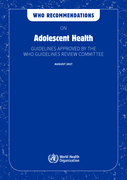
WHO recommendations on adolescent health: guidelines approved by the WHO Guidelines Review Committee
This document is meant to respond to the questions:
■ What health interventions should the adolescent receive and when should s/he receive it?
■ What health behaviours should the adolescent practise (or not practise)?
■ What health interventions should the adolescent receive and when should s/he receive it?
■ What health behaviours should the adolescent practise (or not practise)?