
Filter
2675
Text search:
humanitarian
crisis
Featured
244
787
Language
Document type
1271
529
233
183
146
144
80
35
23
11
10
5
4
1
Countries
170
149
118
115
105
88
88
83
73
72
70
69
60
48
39
39
37
37
35
34
32
32
31
28
25
23
22
22
22
22
20
18
18
18
16
16
16
15
15
14
14
13
13
13
12
12
11
10
10
10
10
8
8
8
7
7
7
6
6
6
6
6
5
5
5
5
4
4
4
4
4
4
4
4
4
3
3
3
3
3
3
3
3
2
2
2
2
2
2
2
2
2
2
2
1
1
1
1
1
1
1
1
1
1
1
1
1
1
1
1
1
1
1
1
1
1
1
1
1
1
1
1
1
1
1
Authors & Publishers
Publication Years
Category
1166
370
129
79
61
37
3
2
Toolboxes
403
367
180
165
150
148
99
82
72
53
35
35
30
30
20
19
12
11
10
7
7
6
6
6
4
4
2

Conflicts and disasters, including pandemics, affect women and men in all their diversity differently, and women and girls often suffer the most. Crisis-related hardships combine and compound pre-existing disadvantages, for example, they often cause
...
The document focuses on integrating epidemic risk into the INFORM Global Risk Index, a tool used to assess and compare crisis and disaster risks across countries. It explains how epidemics can significantly impact vulnerability and hazard exposure,
...
The 2026 outlook remains concerning. Without sustained support, health needs will remain acute. Disease outbreak risks persist amid degraded surveillance. Interagency planning indicates 10.8 million people may be in need, with 4.1 million requiring health assistance. The burden of noncommunicable di
...
Hundreds of thousands of refugees are at risk of being pushed to return to Syria in 2018, despite ongoing violence, bombing and shelling that are endangering the lives of civilians, leading humanitarian agencies warn in a report released today. The
...
This guidance has been developed in line with the WHO corporate risk management framework, the WHO business continuity and contingency plans, as well as the Inter-Agency Emergency Response Preparedness Framework. It is based on a common organiza-tional approach and procedures for managing including
...
This document aims to define a practical plan of action for the IFRC Secretariat to effectively integrate child protection, as a minimum standard, within its organizational systems and development, protracted crisis and emergency operations. The tim
...
The Call to Action on Protection from GBV in Emergencies, formally launched in 2013 by the United Kingdom and Sweden, aims to fundamentally transform the way GBV is addressed in humanitarian operations via the collective action of numerous partners,
...
Research Paper.
As the fighting in Syria winds down, international humanitarian organisations (IHOs) operating from Damascus are hopeful that the Syrian government’s interference in their work will decrease. However, the government is attempting
...
The Coronavirus is spreading globally. How can individuals, communities and humanitarian actors best respond to the COVID-19 outbreak? How can the Sphere Handbook guide our response?
These guidelines are available in different languages
The risk of increasing rates of acute malnutrition during the COVID-19 pandemic demonstrates the urgent need to adapt, and expand access to, acute malnutrition diagnosis and treatment services in humanitarian and fragile contexts.
In Israel, as in other countries, the COVID-19 outbreak highlights existing structural inequities,which compromise the health of some migrant groups. The Israeli case also demonstrate show strong NGOs successfully advocate for the protection of migrants‘health amidst the
...
This brief document compiles existing material related to mental health and psychosocial support (MHPSS) for the COVID-19 crisis, as well as other resources that can be applicable to the context. Documents are divided into different sections, based
...
The COVID-19 pandemic’s immediate costs, measured in lives lost and damaged, have been appalling and continue to rise. In addition, its effects on individuals’ livelihoods and economies around the world have been deep and are likely to be long lasting. While saving lives was the near-exclusive f
...
This document, endorsed by the WHO Strategic Advisory Group of Experts on Immunization, provides guiding principles to support countries in their decision-making regarding provision or resumption of immunization services during severe disruptive events such as COVID-19, natural disasters or
...

Every year, nearly 250 million people move across borders temporarily or permanently for a job opportunity, studying, to flee a crisis back home, or for other reasons. Another 750 million move for similar reasons within the borders of their countrie
...
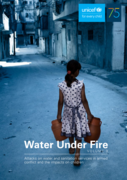
In many conflicts around the world, more children die from diseases linked to unsafe water than from direct violence. UNICEF is releasing Water Under Fire volume 3, a report that highlights the issues children face in accessing water in times of war. The report demonstrates the
...
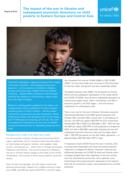
Data from 22 countries across the region featured in the study shows children are bearing the heaviest burden of the economic crisis caused by the war in Ukraine. While children make up 25 per cent of the population, they account for nearly 40 per c
...
The* Facilitator manual on community-based psychosocial support *and the* Volunteers manual on community-based psychosocial support* provides resources for trainers and participants in key aspects of psychosocial support, including understanding the impact of
...
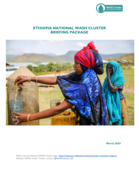
The document is part of the briefing package for Ethiopia's Water, Sanitation, and Hygiene (WASH) Cluster, which consists of resources that provide greater clarity and guidance to the cluster partners and other humanitarian actors.
The document i
...
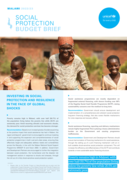
Based on an increasing body of evidence pointing at the positive impact that social assistance has had in Malawi, the region and beyond, government is encouraged to continue investing in and supporting the expansion and comprehensiveness of social protection programmes in both rural and urban areas,
...
