
Filter
1776
Text search:
environmental
agenda
Featured
143
462
Language
Document type
817
474
192
144
97
25
14
7
4
1
1
Countries
137
59
43
39
39
32
32
31
31
31
31
30
29
29
28
27
27
24
21
20
19
16
14
14
11
11
11
11
11
10
10
10
10
10
9
8
8
8
8
7
7
7
7
7
7
6
6
6
6
5
5
5
5
5
5
4
4
4
4
4
3
3
3
3
3
3
3
3
2
2
2
2
2
2
2
2
2
2
2
1
1
1
1
1
1
1
1
1
1
1
1
1
1
1
1
1
1
1
1
1
1
1
1
1
1
1
1
1
1
1
1
Authors & Publishers
Publication Years
Category
648
168
149
69
53
25
10
Toolboxes
228
115
112
90
78
74
57
56
53
51
47
37
36
30
26
24
23
22
21
16
12
11
9
8
7

Key stakeholders must be involved in the planning, implementation, monitoring and evaluation of NCD plans and programmes. Within a ministry of health there will be different types of stakeholders, such as programme managers and senior managers in departments of prevention, health promotion, and hosp
...

World Health Organization. (2022). Toolkit for developing a multisectoral action plan for noncommunicable diseases: module 4: developing an implementation plan.

A framework for action provides a guide for those involved in the development of the multisectoral action plan. It starts with a wide-ranging vision and, through a series of increasingly specific intentions, brings into focus actions with measurable outcomes that can be taken to achieve that vision.
...

One of the first steps in developing a multisectoral action plan (MSAP) is to use a situation analysis to provide a comprehensive assessment of the health needs, prevailing risks and the context of the area to which the plan will apply. This will help countries, regions, provinces or cities intendi
...
This toolkit is a "how to" guide for developing, implementing and evaluating a multisectoral action plan for prevention and control of NCDs. It is targeted at policy-makers, planners and programme managers, and is intended to help countries, provinces and cities meet the requirements for achieving g
...

This review examines high-quality research evidence that synthesises the efects of extreme heat on human health in tropical
Africa. Web of Science (WoS) was used to identify research articles on the efects extreme heat, humidity, Wet-bulb Globe
Temperature (WBGT), apparent temperature, wind, Heat
...

Non-Communicable Diseases (NCDs), including mental disorders, currently pose one of the biggest threats to health and development globally, particularly in low and middle income countries2. It is predicted that unless proven interventions are rapidly implemented in countries, in the short to medium
...

Medical devices are used for the prevention, diagnosis and treatment of illness and diseases and for rehabilitation. WHO developed guidance on medical device donation in 2011, which has been now reviewed, with new evidence, new references on considerations for medical device solicitation and provisi
...

Health Statistics in the Western Pacific Region 2023: Monitoring health for the SDGs is the third biennial report providing an overview of the progress of the World Health Organization (WHO) Western Pacific Region towards the health-related Sustainable Development Goal (SDG) targets. Thi
...

As our world changes, so too does the burden of disease. Globalisation, evolving trade and consumption patterns, and increased access to life-saving medical care are just some of the factors that have transformed the global health landscape.
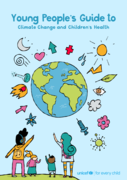
“We must not forget that no matter where we are or how old we are, we can all work for life and take action.” Francisco Vera, 15, UNICEF Child Advocate
The Young Climate Activists toolkit was created by advocates of all ages who, like you, are deeply concerned about our planet's future. Havin
...

In the initial chapters, you will find different approaches that describe how to support job creation for entrepreneurs or employees who live with disabilities. The interventions are often initiated by the readiness to find and pick the right opportunities, such as an engaged entrepreneur or an open
...

The Ministry of Health and Social Services has the mandate to fulfil one of the aspirations in Namibia’s Vision 2030 to “transform Namibia into a healthy and food-secure nation”. Namibia strives to provide quality health and social welfare services efficiently and effectively to the population
...
An interdisciplinary approach to address global health challenges such as the Covid-19 pandemic, climate change, loss of biodiversity, human migration has been framed by the One Health approach. This approach is promoted at global level by the Tripartite of the World Health Organisation, the World A
...
PLoS Negl TropDis14(10): e0008837. https://doi.org/ 10.1371/journal.pntd.0008837.
We conducted alandscape analysis on parasitic and vector-borne disease elimination approaches with the aim toidentify evidence-based strategies, core components and key concepts for achieving and sustaining schistosom
...
The effective vaccine management (EVM) workshop, jointly organized by WHO and UNICEF, was attended by participants from 13 countries, who reviewed the various EVM benchmarks, identified the gaps in policies, guidelines, SOPs and job aids, and developed respective country action plans to fill these g
...

ICTC’s 2022-2030 strategic plan spans the critical period running to the end of 2030, the year by which we are striving to achieve the elimination of trachoma as a public health problem. This strategic plan is in alignment with the NTD road map, Ending the neglect to attain the Sustainable Develop
...

The second edition of the Women and Trachoma: Achieving Gender Equity in the Implementation of SAFE manual provides an updated resource for realistically increasing, improving, and supporting gender representation within trachoma elimination efforts at all levels. From the trachoma workforce to the
...

Insufficient funding is hindering the achievement of malaria elimination targets in Africa, despite the pressing need for increased investment in malaria control. While Western donors attribute their inaction to financial constraints, the global health community has limited knowledge of China’s ex
...

Africa’s health sector is facing an unprecedented financing crisis, driven by a sharp decline of 70% in Official Development Assistance (ODA) from 2021 to 2025 and deep-rooted structural vulnerabilities. This collapse is placing immense pressure on Africa’s already fragile health systems as ODA
...
