
Filter
8675
Text search:
rights
Featured
Recommendations
786
New Publications
1940
Language
Document type
No document type
4487
Studies & Reports
1524
Guidelines
1130
Manuals
530
Strategic & Response Plan
329
Fact sheets
284
Training Material
171
Situation Updates
85
Infographics
49
Brochures
35
Resource Platforms
31
Online Courses
9
Dashboards/Maps
5
Videos
4
App
1
Countries / Regions
Global
432
India
215
Kenya
202
Western and Central Europe
154
Syria
147
Latin America and the Carribbean
146
Myanmar / Burma
141
Nigeria
132
South Africa
131
Nepal
130
Sierra Leone
126
Ukraine
123
Ethiopia
122
Uganda
113
Liberia
111
Bangladesh
108
Africa
103
Zambia
99
Ghana
87
Malawi
87
Rwanda
81
Congo, Democratic Republic of
77
South Sudan
72
Tanzania
70
Germany
69
South–East Asia Region
66
Eastern Europe
65
Philippines
64
Indonesia
64
Namibia
63
Venezuela
63
Yemen
56
Asia
52
Russia
52
Cambodia
49
Lesotho
48
Eastern Europe and Central Asia
44
Guinea
42
Mozambique
42
Middle East and North Africa
41
Zimbabwe
39
East and Southern Africa
37
West and Central Africa
35
Senegal
34
Haiti
34
Lebanon
34
Brazil
34
Central African Republic
30
Burkina Faso
29
Afghanistan
29
Colombia
28
Pakistan
26
Cameroon
24
Iraq
24
Botswana
24
Western Pacific Region
24
Jordan
23
Sudan
22
Vietnam
21
Thailand
20
Somalia
19
Paraguay
19
Mali
17
Tajikistan
16
China
15
Eswatini/ Swaziland
15
Moldova
15
Côte d’Ivoire / Ivory Coast
13
Albania
13
Laos
13
Georgia
12
North America
12
Niger
11
Guinea-Bissau
10
Turkey
10
Peru
10
Sri Lanka
10
Palestine
10
Iran
10
Papua New Guinea
9
Greece
9
Kyrgyzstan
9
Kazakhstan
9
Benin
8
North Macedonia
8
Libya
8
Angola
8
Togo
7
Egypt
7
Poland
7
Romania
7
Uzbekistan
7
Chad
6
Argentina
6
Serbia
6
Hungary
6
Chile
6
Armenia
6
Timor Leste/ East Timor
6
Ecuador
5
El Salvador
5
Bolivia
5
Madagascar
5
Mexico
5
Bhutan
5
Southern Africa
5
Turkmenistan
5
Jamaica
5
Portugal
5
Spain
5
Saudi Arabia
4
Gambia
4
Malaysia
4
Burundi
4
Italy
4
Belarus
4
Switzerland
3
Guatemala
3
North Korea
3
Mongolia
3
Canada
3
Japan
3
United Kingdom
3
Bosnia and Herzegovina
3
Morocco
2
Mauritania
2
Singapore
2
Croatia
2
Honduras
2
Djibouti
2
Bulgaria
2
Estonia
2
Lithuania
2
Slovakia
2
Australia
2
Tunisia
2
Azerbaijan
2
Israel
2
USA
1
Ireland
1
Vanuatu
1
Austria
1
Nicaragua
1
Other region
1
Fiji
1
Solomon Islands
1
Qatar
1
Denmark
1
Belgium
1
Mauritius
1
Norway
1
South Korea
1
Authors & Publishers
Publication Years
Category
Countries
2618
Clinical Guidelines
619
Women & Child Health
581
Key Resources
543
Public Health
461
Capacity Building
184
Pharmacy & Technologies
96
Annual Report MEDBOX
3
Toolboxes
COVID-19
846
HIV
764
Mental Health
760
Disability
592
TB
374
Conflict
348
Refugee
303
Planetary Health
302
Caregiver
242
NTDs
215
Ebola & Marburg
194
Global Health Education
181
AMR
147
Rapid Response
137
Natural Hazards
117
Pharmacy
115
NCDs
114
Malaria
101
Health Financing Toolbox
96
2.0 Rapid Response
93
Social Ethics
84
Zika
52
Cholera
35
Specific Hazards
35
Polio
29
Typhoon
5
South Sudan
2
The Gaza Strip is experiencing one of the most severe food security crises globally, with the entire population of approximately 2.1 million people now facing crisis-level food insecurity or worse (IPC Phase 3+). As of May 2025, more than one in five Gazans—about
470,000 people—are at risk of s
...

The Compendium of Solid Waste Management in Humanitarian Contexts is a comprehensive, structured and userfriendly manual and planning guide that provides a systematic overview of existing Solid Waste Management (SWM) technologies and approaches appropriate for use in humanitarian contexts.
The Training Toolkit for Community Early Warning Systems is an operational manual that aims to strengthen early warning systems in a developing country context. It accompanies and should put into practice the guiding strategic principles found in the Community Early Warning Systems: Guiding Principl
...
The World Health Organization recently redefined leprosy elimination as a phased process, with the first milestone being the
interruption of transmission, achieved when no new child cases (defined as younger than 15 years) are reported for five consecutive years.
In Pakistan, the well-functioning
...
More than a quarter of the global population still cook meals over open fires and/or on simple stoves fuelled by firewood, agricultural waste, dried dung, charcoal, and coal. This practice results in the emission of harmful and dangerously high levels of household air pollution.
Exposure to this h
...

Exposure to air pollution has significant adverse health effects, leading to nearly 1 in every 8 deaths globally. Air pollution affects all age groups, from unborn children to older people, in both high- and low-income nations.
The brief on key findings from the 2025 edition of the WHO anaemia estimates provides a snapshot of the current status of anaemia among women aged 15–49 years at the country, regional, and global levels, along with progress toward achieving the global anaemia target by 2030, in alignment with the
...
The Mekong Malaria Elimination (MME) programme is an initiative aimed at supporting Greater Mekong Subregion (GMS) countries – Cambodia, Lao People's Democratic Republic, Myanmar, Thailand, Viet Nam, and Yunnan (China) – in achieving the goal of malaria elimination by 2030. Data for this epidemi
...
The 2024 World Malaria Report shows that the malaria burden remains overwhelmingly concentrated in Africa. The continent accounted for 94% of global cases and 95% of malaria-related deaths in 2023. Although the number of malaria cases increased globally from 204 million in 2000 to 246 million in 202
...

This guidance synthesizes current evidence on dengue laboratory testing and diagnostics and provides practical recommendations for laboratories, clinicians, public health officials, and programme managers involved in dengue diagnosis, surveillance, and control, in the context of the global emergency
...

Non-Communicable Diseases (NCDs) have emerged as conditions of great public health concern in Kenya accounting for 39% of deaths annually. The Ministry of Health through the Department of Non-Communicable Diseases has adopted the vision of achieving a nation free from preventable burden of NCDs. Fur
...

The African Palliative Care Association is pleased to publish the first edition of Palliative Care Standards for Africa. The development of these standards was achieved through wide consultation with service beneficiaries and providers, and they have been developed to suit different levels of
...
The global cholera statistics for 2024, showing an increase in both the number of people who fell sick and died from the disease.
Reported cholera cases rose by 5% and deaths by 50% in 2024 compared to 2023, with more than 6000 people dying from a disease that is both preventable and treatable. Whi
...
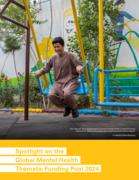
Promoting and protecting the mental health and psychosocial wellbeing of children, adolescents, and their caregivers remains undamental to achieving the Sustainable Development Goals (SDGs), with a direct contribution to SDG 3 (Good Health and Well- eing). In 2024, UNICEF accelerated the scale-up o
...

The health impacts of climate change are no longer a distant threat. They are being felt here and now and becoming more extreme.
To address these threats, the WHO Asia-Pacific Centre for Environment and Health in the Western Pacific Region (ACE) was established in 2019 through a partnership with
...

On Global Handwashing Day, WHO and UNICEF have released the first-ever global Guidelines on Hand Hygiene in Community Settings to support governments and practitioners in promoting effective hand hygiene outside health care – across households, public spaces and institutions. Framing hand hygiene
...

This Climate terminology bank provides key definitions and facts related to climate and resilience for Uganda’s refugee response. Its goal is to build a common understanding among stakeholders and support the integration of climate-smart practices in humanitarian efforts.

On 4 September 2025, the Ministry of Health of the Democratic Republic of the Congo (DRC) declared an outbreak of Ebola Virus Disease (EVD) in Kasai Province, following confirmation of Zaire ebolavirus by the National Institute of Biomedical Research (INRB) in Bulape and Mweka Health Zones. As of 19
...


Program Considerations
