
Filter
1657
Filtered Results: 1657
Text search:
Ministry
of
Health,
Republic
of
South
Africa
Featured
Recommendations
135
New Publications
453
Language
Document type
No document type
915
Studies & Reports
376
Guidelines
167
Strategic & Response Plan
78
Manuals
75
Training Material
17
Situation Updates
16
Fact sheets
8
Infographics
3
App
1
Resource Platforms
1
Countries / Regions
Global
90
Kenya
63
Nigeria
58
Uganda
55
Ethiopia
52
Africa
46
Liberia
46
Congo, Democratic Republic of
43
Namibia
42
Rwanda
41
Zambia
40
Sierra Leone
39
Tanzania
35
South Sudan
35
Malawi
32
South Africa
32
Ghana
27
Lesotho
19
Guinea
18
Mozambique
18
Cameroon
17
East and Southern Africa
17
Syria
16
Asia
16
Western and Central Europe
15
Myanmar / Burma
15
Central African Republic
14
Latin America and the Carribbean
13
India
13
Bangladesh
12
Botswana
12
Zimbabwe
11
West and Central Africa
11
Senegal
10
Yemen
9
Benin
7
Afghanistan
7
Somalia
7
Eswatini/ Swaziland
7
Nepal
6
Burkina Faso
6
Sudan
6
Indonesia
6
Ukraine
5
Burundi
5
Middle East and North Africa
5
Mali
5
Angola
5
Colombia
4
Gambia
4
Togo
4
Haiti
4
Cambodia
4
Jordan
4
South–East Asia Region
4
Eastern Europe and Central Asia
4
Côte d’Ivoire / Ivory Coast
4
Iraq
4
China
3
Iran
3
Albania
3
Philippines
3
Guinea-Bissau
3
Mauritius
3
Vietnam
3
Brazil
3
Sri Lanka
3
Chad
3
Madagascar
3
Pakistan
3
Thailand
2
Mexico
2
Venezuela
2
Germany
2
Jamaica
2
Southern Africa
2
Lebanon
2
Eastern Europe
2
Russia
2
Greece
2
Palestine
2
Libya
2
North Macedonia
1
Tajikistan
1
North Korea
1
Timor Leste/ East Timor
1
Kazakhstan
1
Chile
1
Laos
1
Kyrgyzstan
1
Niger
1
Peru
1
Vanuatu
1
Morocco
1
Italy
1
Armenia
1
Saudi Arabia
1
Western Pacific Region
1
North America
1
Gabon
1
Turkmenistan
1
Japan
1
France
1
Tunisia
1
Bosnia and Herzegovina
1
Papua New Guinea
1
Moldova
1
Djibouti
1
Egypt
1
Georgia
1
Ecuador
1
Solomon Islands
1
Authors & Publishers
Publication Years
Category
Countries
626
Clinical Guidelines
103
Women & Child Health
99
Public Health
93
Key Resources
86
Capacity Building
29
Pharmacy & Technologies
17
Toolboxes
HIV
163
Mental Health
115
COVID-19
106
TB
96
Ebola & Marburg
64
Disability
63
NTDs
58
Planetary Health
56
Conflict
49
Rapid Response
38
Caregiver
37
Refugee
35
Health Financing Toolbox
35
Global Health Education
33
Malaria
26
AMR
26
Pharmacy
24
Cholera
17
NCDs
17
2.0 Rapid Response
17
Natural Hazards
10
Zika
10
Polio
9
Specific Hazards
4
Social Ethics
3
South Sudan
2
Progress towards targets of the Global action plan on dementia
Taking a multisectoral, One Health approach is necessary to address complex health threats at the human-animal-environment interface, such as rabies, zoonotic influenza, anthrax, and Rift Valley fever. Such zoonotic diseases continue to have major impacts on health, livelihoods, and economies, and c...
Family planning: a global handbook for providers
recommended
4th edition 2022 of the Handbook includes new WHO recommendations that expand contraceptive choices. Also, guidance on starting ongoing contraception following emergency contraception is provided.
Drawing on lessons from recent outbreaks, this new edition details tangible me...
Amphetamine-type stimulants, new psychoactive substances
-4-
World Drug Report 2017
Accessed: 14.03.2019

National-scale databases and reliability issue
Background report
Tuberculosis (TB) is, and should be, a curable disease; however, each year significant numbers of patients acquire or develop drug-resistant TB, which has a much lower cure rate. Patients with drug-resistant TB have a high prevalence of symptoms; hence, staff caring for these patients should h...
Working towards better COVID-19 outcomes in the WHO European Region.From the first COVID-19 cases in Europe reported on
24 January 2020, the pandemic reached 1 million cases
within 3 months, 10 million cases within 8 months, and
100 million cases in Europe alone within 2 years. Over
the course o...
This toolkit aims to provide you with a brief introduction of what SA and its core principles are, and how you as a student can apply several of the existing tools for your own school to really make a difference.
French, Spanish and Arabic Version available: https://ifmsa.org/social-acc...

This article examines the activities of national and international actors in Pharmaceutical Services (PS) in Mozambique from 2007 to 2012, focusing on the public provision of HIV/Aids, malaria and tuberculosis medicines. It describes how PS functions in the country, what actors are involved in this ...
The International Pharmaceutical Federation (FIP) is a global federation of national associations of pharmacists and
pharmaceutical scientists. In order to support these associations in their fight against AMR, FIP has prepared this
briefing document. It is an overview of the different activities ...
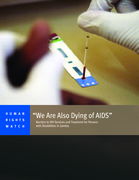
Barriers to HIV Services and Treatment for Persons with Disabilities in Zambia
The 80-page report documents the obstacles faced by people with disabilities in both the community and healthcare settings. These include pervasive stigma and discrimination, lack of access to inclusive HIV prevention ed...
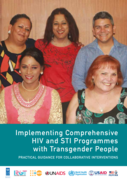
This publication offers practical advice on implementing HIV and STI programmes for transgender people, with a focus on transgender women, aligned with the 2011 Recommendations and the 2014 Key Populations Consolidated Guidelines. It contains examples of good practice from around the world that may ...

(August 28 – October 10, 2017)
A nutrition and mortality assessment using SMART methodology was applied and the survey covered 15 statistical (14 districts plus 1) domains countrywide. The main objective of the survey was to assess the current nutrition status of the population, especially ch...
A nutrition and mortality assessment using SMART methodology was applied and the survey covered 15 statistical (14 districts plus 1) domains countrywide. The main objective of the survey was to assess the current nutrition status of the population, especially ch...
