Filter
1006
Text search:
WHO
Regional
Office
for
South-East
Asia
Featured
Recommendations
121
New Publications
268
Language
Document type
No document type
470
Studies & Reports
208
Guidelines
173
Manuals
57
Strategic & Response Plan
48
Training Material
14
Situation Updates
10
Fact sheets
10
Resource Platforms
8
Infographics
4
Brochures
2
Online Courses
2
Countries / Regions
Global
72
South–East Asia Region
70
India
51
Asia
42
Myanmar / Burma
38
Nepal
31
Bangladesh
20
Indonesia
16
Philippines
15
Western and Central Europe
12
Africa
12
Cambodia
11
Thailand
11
Western Pacific Region
11
Eastern Europe
7
Ethiopia
6
Sri Lanka
6
Afghanistan
5
South Africa
5
Laos
5
Vietnam
5
Uganda
4
Pakistan
4
Kenya
4
China
4
Middle East and North Africa
4
Russia
4
Nigeria
3
Ghana
3
Syria
3
Tanzania
3
East and Southern Africa
3
West and Central Africa
3
Latin America and the Carribbean
3
Venezuela
3
Timor Leste/ East Timor
3
Burkina Faso
2
Liberia
2
Senegal
2
Congo, Democratic Republic of
2
Haiti
2
South Sudan
2
Rwanda
2
Mozambique
2
Sudan
2
Yemen
2
Albania
2
Iran
2
Sierra Leone
1
Morocco
1
USA
1
Saudi Arabia
1
Cameroon
1
Somalia
1
Iraq
1
Jordan
1
Lebanon
1
Zambia
1
Turkey
1
Malaysia
1
Singapore
1
Papua New Guinea
1
Central African Republic
1
Namibia
1
Eswatini/ Swaziland
1
Brazil
1
Croatia
1
Ukraine
1
Ecuador
1
Greece
1
Mexico
1
Eastern Europe and Central Asia
1
Other region
1
Paraguay
1
Bhutan
1
Palestine
1
North Korea
1
Mongolia
1
Tajikistan
1
Kazakhstan
1
Georgia
1
Gabon
1
Maldives
1
Tunisia
1
Bosnia and Herzegovina
1
Authors & Publishers
Publication Years
Category
Countries
227
Clinical Guidelines
133
Public Health
81
Women & Child Health
77
Key Resources
56
Capacity Building
21
Pharmacy & Technologies
16
Toolboxes
HIV
101
Mental Health
97
TB
63
COVID-19
63
NTDs
54
Planetary Health
49
AMR
39
Global Health Education
33
Caregiver
32
Rapid Response
29
Disability
23
NCDs
23
Malaria
22
2.0 Rapid Response
18
Pharmacy
16
Natural Hazards
14
Zika
14
Refugee
11
Health Financing Toolbox
11
Conflict
8
Cholera
7
Ebola & Marburg
6
Specific Hazards
6
Polio
5
Typhoon
1
Social Ethics
1
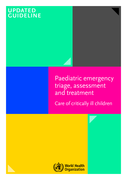
Updated Guideline.
The Emergency Triage Assessment and Treatment (ETAT) guidelines provide guidance on the most common emergency conditions in children presenting at the health facility. These include but are not limited to airway obstruction and other breathing problems; circulatory impairment or
...
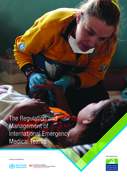
The purpose of this report is to provide an overview of the issues in regulating and managing international emergency in a selection of large and small-scale sudden onset disasters (SODs). In doing so, it aims to contribute to several key international commitments as well as its objective in disaste
...
The Atlas of health and climate is a product of this unique collaboration between the meteorological and public health communities. It provides sound scientific information on the connections between weather and climate and major health challenges. These range from diseases of poverty to emergencies
...
Preliminary overview of refugees and migrants self-reported impact of COVID-19
The study surveyed over 30,000 refugees and migrants living in 170 countries. Many of the respondents had fled war or dire economic conditions in their home country only to be faced with the additional challenges posed b
...

This version of the glossary is substantially changed from the original. Some terms have been omitted, many have been modified in light of practical experiences and the evolution in concepts, and new terms have been added. The list of terms is not intended to be either exhaustive or exclusive, and d
...
The results of a WHO survey conducted to assess the impact of the COVID-19 pandemic on up to 25 essential health services in countries show disruptions of essential health services in nearly all countries, and more so in lower-income than higher-inc
...
Taking a multisectoral, One Health approach is necessary to address complex health threats at the human-animal-environment interface, such as rabies, zoonotic influenza, anthrax, and Rift Valley fever. Such zoonotic diseases continue to have major impacts on health, livelihoods, and economies, and c
...

Growing emergencies and displacements across the world demand increasingly complex interventions and responses. The World Health Organization (WHO) has developed Malaria control in emergencies: a field manual to provide technical guidance to help pa
...
Against this background of nearly 20 years of experience of research, development and
improvement in patient safety, the role of incident and adverse event reporting, as well as the
benefits that derive from it, is still a work in progress.This document has two main purposes:
• to provide an up
...
Recently, Sri Lanka has been impacted by multiple natural disasters. Sri Lanka experienced a landslide in October 2014, and flooding in December 2014.8 Sri Lanka withstood the worst drought conditions witnessed in four decades in 2016; the extreme drought conditions extended into 2017 and produced s
...

The main message emerging from this new comprehensive global assessment is that premature death and disease can be prevented through healthier environments – and to a significant degree. Analysing the latest data on the environment-disease nexus and the devastating impact of environmental hazards
...
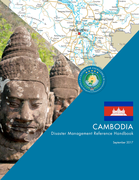
Cambodia drafted and adopted the National Action Plan for Disaster Risk Reduction 2014-2018 in 2014. This plan finalized the required policies and legal processes to strengthen DRM in Cambodia. It also focused on capacity building at national and su
...
orientations provisoires, 25 juin 2021. Des tests de diagnostic rapides et précis sont un outil essentiel pour prévenir et contrôler la propagation du COVID-19. Ce document décrit les recommandations relatives aux stratégies nationales de dépistage et à l'utilisation de la PCR et des tests an
...
International Journal of Infectious Diseases 80 (2019) 10–15
journal homepage: www.elsevier.com/locate/ijid