
Filter
1953
Text search:
WHO
Regional
Office
for
Europe
Featured
Recommendations
183
New Publications
300
Language
Document type
No document type
850
Studies & Reports
491
Guidelines
271
Manuals
133
Strategic & Response Plan
69
Fact sheets
49
Training Material
40
Situation Updates
28
Infographics
9
Brochures
6
Resource Platforms
6
App
1
Countries / Regions
Western and Central Europe
158
Global
118
Ukraine
99
Eastern Europe
75
Russia
53
Eastern Europe and Central Asia
32
Syria
27
Germany
23
India
22
Latin America and the Carribbean
21
Sierra Leone
20
Ethiopia
19
Liberia
18
Africa
17
South Africa
14
Asia
14
Moldova
14
Nepal
13
Uganda
12
Kenya
12
Myanmar / Burma
12
Tajikistan
12
Ghana
11
Tanzania
11
South–East Asia Region
11
Nigeria
10
Zambia
10
Rwanda
10
Albania
9
Guinea
8
Congo, Democratic Republic of
8
Pakistan
8
North Macedonia
8
Middle East and North Africa
8
Venezuela
8
South Sudan
7
Bangladesh
7
East and Southern Africa
7
Kyrgyzstan
7
Georgia
7
Afghanistan
6
Lebanon
6
China
6
Malawi
6
Mozambique
6
West and Central Africa
6
Armenia
6
Romania
6
Somalia
5
Jordan
5
Turkey
5
Namibia
5
Brazil
5
Yemen
5
Poland
5
Kazakhstan
5
USA
4
Zimbabwe
4
Philippines
4
Cambodia
4
Thailand
4
Indonesia
4
Colombia
4
Western Pacific Region
4
Estonia
4
Iran
4
Belarus
4
Burkina Faso
3
Haiti
3
Iraq
3
Peru
3
Serbia
3
Hungary
3
Botswana
3
Greece
3
Sri Lanka
3
Vietnam
3
Guinea-Bissau
2
Cameroon
2
Niger
2
Sudan
2
Central African Republic
2
Eswatini/ Swaziland
2
Croatia
2
Libya
2
Mexico
2
Palestine
2
Laos
2
Bulgaria
2
Slovakia
2
Uzbekistan
2
Turkmenistan
2
United Kingdom
2
Azerbaijan
2
Bosnia and Herzegovina
2
Senegal
1
Morocco
1
Saudi Arabia
1
Chad
1
Papua New Guinea
1
Argentina
1
Burundi
1
Bolivia
1
Angola
1
Lesotho
1
Chile
1
Canada
1
Lithuania
1
Belgium
1
Mauritius
1
Tunisia
1
Portugal
1
Spain
1
Israel
1
Latvia
1
Authors & Publishers
Publication Years
Category
Countries
379
Clinical Guidelines
146
Key Resources
123
Public Health
107
Women & Child Health
105
Capacity Building
25
Pharmacy & Technologies
15
Toolboxes
HIV
236
Mental Health
222
COVID-19
216
TB
157
Planetary Health
128
Conflict
96
Refugee
92
AMR
71
Disability
70
Global Health Education
67
Caregiver
57
Rapid Response
55
Ebola & Marburg
36
Pharmacy
33
NCDs
32
2.0 Rapid Response
32
NTDs
30
Health Financing Toolbox
28
Zika
13
Specific Hazards
13
Natural Hazards
11
Polio
9
Malaria
6
Cholera
5
Social Ethics
4
Typhoon
2
Health, Rights and Drugs
recommended
Harm Reducation, Decriminalization and Zero Discrimination for People who use Drugs
The pandemic presents tough choices for governments, local communities, health and school systems, as well as families and businesses: How to re-open safely? How to safeguard people’s lives and protect their livelihoods? Where to allocate scarce r
...
Background paper for the Oslo Summit on Education for Development.
This paper covers the four topics of the Oslo Summit: investment in education, quality of learning, education in emergencies and
...
Research in Brief.
The international community’s predominant response to the Venezuelan migration crisis remains focused on humanitarian relief. This is important, for two populations: a) the over 50,000 ‘pendular’ migrants
...

Indicators for monitoring the 2016 United Nations Political Declaration on Ending AIDS
UNAIDS supports countries to collect information on their national HIV responses through the Global AIDS Monitoring (GAM) framework—an annual collection of ...
UNAIDS supports countries to collect information on their national HIV responses through the Global AIDS Monitoring (GAM) framework—an annual collection of ...
A survey was conducted in countries in all six WHO regions and focused on the building blocks that are considered prerequisites to combat antimicrobial resistance: a comprehensive national plan, laboratory capacity to undertake surveillance
...
“Because we struggle to survive” Child Labour among Refugees of the Syrian Conflict | This study provides pertinent first-hand information on the reality facing Syrian children who are working either in their homeland, the neighbouring countries
...
The European Commission against Racism and Intolerance (ECRI) was established by the Council of Europe. It is an independent body which ensures respect for human rights in the fight against racism,
...
This report presents, for the first time, a global assessment of the extent to which health care facilities provide essential water, sanitation and hygiene (WASH) services. Drawing on data from 54 low- and middle-income countries, the report conclud
...
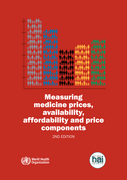
2nd edition - Published in 2003, the first WHO/HAI medicine prices manual Medicine Prices – A
New Approach to Measurement Draft for field-testing provides a draft methodology and tools to conduc
...
The guidance in this publication consists of generic definitions and methodologies for the characterization of extreme weather and climate events. This publication contribute to ensuring consistent exchange of information that underpins the WMO Stat
...
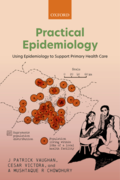
Using Epidemiology to Support Primary Health Care. Updated version of the WHO handbook published in the early 1990's entitled: Manual of Epidemiology for District Health Management or those with an
...
This publication marks the 25th anniversary of the Beijing Declaration and Platform for Action. It is dedicated to the women leaders and allied community mobilizers who have devoted their lives to a
...
The report “Dementia: a public health priority” has been jointly developed by WHO and Alzheimer's Disease International. The purpose of this report is to raise awareness of dementia as a public health priority, to articulate a public health app
...

The main objective of this mission was to assess the level of preparedness of Guinea-Bissau in respect of the WHO consolidated checklist. The checklist helps countries to assess and test their level of readiness it is being used to identify concrete
...
In 2005, the World Health Organization (WHO) Member States adopted the revised International
Health Regulations (IHR) (2005). The Regulations provide a unique public health framework in the
form of obligations and reco
...

nt. J. Environ. Res. Public Health 2014, 11(12), 13097-13116; https://doi.org/10.3390/ijerph111213097
Climate change will increase the frequency and magnitude of extreme weather events and create risks that will impact health care facilities. Health care facilities will need to assess climate chang
...

To support the achievement of health equity in the Region, the regional inter-agency movement Every Woman Every Child Latin America and the Caribbean (EWEC-LAC) advocates for and supports the use of
...
Promoting and protecting health is essential to human welfare and sustained economic and social development. This was recognized more than 30 years ago by the Alma-Ata Declaration signatories, who noted that Health
...
