
Filter
9808
Text search:
ET
al.
Featured
Recommendations
750
New Publications
1908
Language
Document type
No document type
4702
Studies & Reports
2240
Guidelines
1428
Manuals
482
Strategic & Response Plan
270
Fact sheets
270
Training Material
185
Infographics
77
Situation Updates
49
Resource Platforms
46
Brochures
34
Online Courses
10
Videos
7
Dashboards/Maps
5
App
2
Countries / Regions
Global
482
Latin America and the Carribbean
295
India
217
Western and Central Europe
194
Kenya
186
South Africa
184
Russia
179
Germany
169
Africa
166
Ethiopia
145
Brazil
133
Paraguay
124
Ukraine
119
Malawi
117
Nigeria
115
Venezuela
115
Sierra Leone
112
Nepal
111
Uganda
105
Zambia
105
Tanzania
102
Eastern Europe
99
Congo, Democratic Republic of
98
Senegal
96
Syria
92
Bangladesh
92
Liberia
91
Colombia
88
Myanmar / Burma
84
Argentina
80
Mozambique
72
Ghana
71
Haiti
67
Rwanda
67
Burkina Faso
63
Indonesia
62
Peru
59
Middle East and North Africa
58
Guinea
55
Eastern Europe and Central Asia
55
Namibia
51
Asia
51
Zimbabwe
50
West and Central Africa
49
South–East Asia Region
47
Philippines
45
Benin
45
Chile
44
Yemen
42
East and Southern Africa
42
Cameroon
39
Ecuador
39
Bolivia
34
South Sudan
31
Lesotho
31
Cambodia
28
Angola
27
Mali
25
El Salvador
24
Spain
24
Pakistan
21
Madagascar
21
China
20
Botswana
20
Sudan
19
Guinea-Bissau
17
Côte d’Ivoire / Ivory Coast
17
Somalia
17
Mexico
17
Jordan
16
Lebanon
16
Central African Republic
16
Tajikistan
16
USA
15
Niger
15
Afghanistan
15
Thailand
15
Western Pacific Region
15
Vietnam
15
Chad
14
Iraq
12
Sri Lanka
12
Eswatini/ Swaziland
11
Guatemala
11
Albania
11
Palestine
10
Italy
10
North America
10
Egypt
9
Kyrgyzstan
9
Kazakhstan
9
Portugal
9
Honduras
8
Southern Africa
8
France
8
Saudi Arabia
7
Dominican Republic
7
Libya
7
Laos
7
Georgia
7
Belarus
7
Togo
6
Turkey
6
Switzerland
6
Burundi
6
Nicaragua
6
Canada
6
Iran
6
United Kingdom
6
Morocco
5
Papua New Guinea
5
North Macedonia
5
Armenia
5
Timor Leste/ East Timor
5
Estonia
5
Moldova
5
Uruguay
5
Greece
4
Congo-Brazzaville
4
Tunisia
4
Malaysia
3
Singapore
3
Poland
3
Djibouti
3
Qatar
3
Gabon
3
Turkmenistan
3
Jamaica
3
Japan
3
Israel
3
Mauritania
2
Austria
2
Hungary
2
Fiji
2
Romania
2
Uzbekistan
2
Denmark
2
Belgium
2
Bosnia and Herzegovina
2
Ireland
1
Serbia
1
Croatia
1
Cuba
1
Other region
1
Luxembourg
1
Solomon Islands
1
Bhutan
1
North Korea
1
Mongolia
1
Bulgaria
1
Lithuania
1
Slovakia
1
Mauritius
1
Morocco
1
French Guyana
1
Latvia
1
Belize
1
Costa Rica
1
Panama
1
Authors & Publishers
Publication Years
Category
Countries
3353
Clinical Guidelines
702
Public Health
513
Women & Child Health
469
Key Resources
449
Capacity Building
175
Pharmacy & Technologies
82
Toolboxes
COVID-19
1145
Mental Health
975
HIV
764
TB
655
Planetary Health
455
NTDs
361
NCDs
299
Disability
297
Caregiver
270
Refugee
242
AMR
238
Ebola & Marburg
209
Health Financing Toolbox
188
Conflict
175
Global Health Education
154
Malaria
141
Rapid Response
122
Pharmacy
116
Zika
90
Natural Hazards
78
Cholera
59
2.0 Rapid Response
58
Social Ethics
44
Specific Hazards
40
Polio
38
South Sudan
1
Typhoon
1
Nutrition training of health and agriculture workers can help to reduce child undernutrition. Specifically, trained health extension workers cancontribute through frequent nutrition counselling of caregivers. Evidence from systematic reviews has showed that providing nutrition training targeting hea
...
This catalogue provides tools and information resources to support EU/EEA countries in addressing the challenging issue of vaccine hesitancy. The catalogue provides examples of practices that can serve as a resource for other countries. The project was developed in the context of ECDC’s support fo
...
1 March 2021 This roadmap aims to define the key questions users should consider to assess indoor ventilation and the major steps needed to reach recommended ventilation levels or simply improve indoor air quality (IAQ) in order to reduce the risk of spread of COVID-19.
It also includes recommendat
...
Enabling young children to achieve their full developmental potential is a human right and an essential requisite for sustainable development. Given the critical importance of enabling children to make the best start in life, the health sector, among other sectors, has an important role and responsi
...
This National Health Policy has 5 objectives, namely
i. To strengthen the healthcare delivery system to be resilient
ii. To encourage the adoption of healthy lifestyles
iii. To improve the physical environment
iv. To improve the socio-economic status of the population
v. To ensure sustainable f
...
The WHO COVID-19 LENS (Living Evidence Synthesis) working group consolidated available evidence, based on rapid reviews of the literature and results of a living systematic review on pregnancy and COVID-19 (up to October 7, 2020), on potential mechanisms of vertical transmission of infectious pathog
...

This document synthesizes key elements of the World Health Organization (WHO) normative guidance on health policy and system support for community health worker (CHW) programmes and their application for HIV programmes. Building on relevant elements of HIV guidelines, tools and evidence identified b
...
In der von medica mondiale e. V. veröffentlichten Handreichung "Stärkende Gruppenangebote" wird vorgestellt, wie stärkende Gruppenangebote für geflüchtete Frauen* stress- und traumasensibel gestaltet werden können. Auf Grundlage langjähriger Erfahrungen und in Kooperation mit einem Referent:i
...
March 2022. This report on good practices to combat AMR focuses on activities across human, animal, and environmental health in European countries. The report provides a description of practices, how they were implemented, achievements, and why the practice was unique.

In 2015, 5.9 million children under age five died (1). The major causes of child deaths globally are pneumonia, prematurity, intrapartum-related complications, neonatal sepsis, congenital anomalies, diarrhoea, injuries and malaria (2). Most of these diseases and conditions are at least partially cau
...
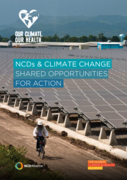
The policy brief focuses on four key areas for intervention - air pollution, energy, transport and food systems. Air pollution causes 7 million deaths annually, and is a leading cause of both NCDs and climate change, thus all interventions to reduce air pollution have a positive impact on both human
...
The goal of the global outbreak response for monkeypox is to stop human-to-human transmission of monkeypox, with a priority focus on communities at high risk of exposure which may differ according to context, and to effectively use strong public health measures to prevent onward spread of the diseas
...
Advocacy report March 2011
303100 03/2011 E 1,000
This thematic brief accompanies the Working for Health 2022–2030 Action Plan, serving as a rationale to the related actions of the Working for Health progression model (see Annex). The brief aims to inform Member States, non-state actors and other users of the Action Plan to guide action on inves
...

While there has been real progress in addressing the burden of disease in the WHO African region, the COVID-19 pandemic has highlighted the link between health, economics and security, as the region saw decades of progress threatened, including positive trends in decreasing inequality. In the Africa
...
Report of the Office of the United Nations High Commissioner for Human Rights | The present study focuses on inclusive education as a means to realize the universal right to education, including for persons with disabilities. It analyses the relevant provisions of the Convention on the Rights of Per
...
This Tailoring Antimicrobial Resistance Programmes (TAP) process assists Member States in initiating and undertaking projects to address the spread of antimicrobial resistance (AMR) in their countries. AMR is a complex problem requiring unique, context-specific solutions. This TAP Toolbo
...
Air pollution is one of the leading causes of health complications and mortality worldwide, especially affecting lower-income groups, who tend to be more exposed and vulnerable. This study documents the relationship between ambient air pollution exposure and poverty in 211 countries and territories.
...
The ICMR type 1 diabetes guidelines come at a time when the SARS-CoV-2 pandemic
has disproportionately affected people with diabetes population, exposing them to a
high risk for severe illness and mortality. Globally, diabetes was responsible for over fourmillion deaths in the year 2019. It was th
...
