
Filter
2130
Text search:
nutritional
status
Featured
196
755
Language
2078
26
25
20
10
9
4
3
3
2
2
2
2
2
2
2
1
1
1
1
1
1
1
1
1
1
1
1
1
1
1
1
Document type
1341
315
224
90
73
49
18
11
5
3
Countries
154
88
77
76
73
57
51
51
50
45
45
44
43
42
41
37
34
23
23
22
22
21
21
20
20
19
19
18
17
17
17
16
14
12
11
10
10
9
9
8
8
8
7
6
6
6
6
6
5
5
5
5
4
4
4
4
3
3
3
3
2
2
2
2
2
2
2
2
2
2
2
2
2
2
2
1
1
1
1
1
1
1
1
1
1
1
1
1
1
1
1
1
1
1
1
1
1
1
1
1
1
1
1
1
1
Authors & Publishers
201
97
75
75
60
46
45
40
24
20
17
15
14
13
13
12
12
12
11
11
10
10
10
9
9
9
9
9
9
9
8
8
8
8
8
8
8
7
7
7
7
7
7
7
7
6
6
6
6
6
6
6
6
5
5
5
5
5
5
5
5
5
5
5
5
5
5
5
4
4
4
4
4
4
4
4
4
4
4
4
4
4
4
4
4
4
4
4
4
4
4
4
4
4
4
4
4
4
4
4
4
4
4
4
3
3
3
3
3
3
3
3
3
3
3
3
3
3
3
3
3
3
3
3
3
3
3
3
3
3
3
3
3
3
3
3
3
3
3
3
3
3
3
3
3
3
3
3
3
3
3
3
3
3
3
3
3
3
3
2
2
2
2
2
2
2
2
2
2
2
2
2
2
2
2
2
2
2
2
2
2
2
2
2
2
2
2
2
2
2
2
2
2
2
2
2
2
2
2
2
2
2
2
2
2
2
2
2
2
2
2
2
2
2
2
2
2
2
2
2
2
2
2
2
2
2
2
2
2
2
2
2
2
2
2
2
2
2
2
2
2
2
2
2
2
2
2
2
2
2
2
2
2
2
2
2
2
2
2
2
2
2
2
2
2
2
2
2
2
2
2
2
2
2
2
2
2
2
2
1
1
1
1
1
1
1
1
1
1
1
1
1
1
1
1
1
1
1
1
1
1
1
1
1
1
1
1
1
1
1
1
1
1
1
1
1
1
1
1
1
1
1
1
1
1
1
1
1
1
1
1
1
1
1
1
1
1
1
1
1
1
1
1
1
1
1
1
1
1
1
1
1
1
1
1
1
1
1
1
1
1
1
1
1
1
1
1
1
1
1
1
1
1
1
1
1
1
1
1
1
1
1
1
1
1
1
1
1
1
1
1
1
1
1
1
1
1
1
1
1
1
1
1
1
1
1
1
1
1
1
1
1
1
1
1
1
1
1
1
1
1
1
1
1
1
1
1
1
1
1
1
1
1
1
1
1
1
1
1
1
1
1
1
1
1
1
1
1
1
1
1
1
1
1
1
1
1
1
1
1
1
1
1
1
1
1
1
1
1
1
1
1
1
1
1
1
1
1
1
1
1
1
1
1
1
1
1
1
1
1
1
1
1
1
1
1
1
1
1
1
1
1
1
1
1
1
1
1
1
1
1
1
1
1
1
1
1
1
1
1
1
1
1
1
1
1
1
1
1
1
1
1
1
1
1
1
1
1
1
1
1
1
1
1
1
1
1
1
1
1
1
1
1
1
1
1
1
1
1
1
1
1
1
1
1
1
1
1
1
1
1
1
1
1
1
1
1
1
1
1
1
1
1
1
1
1
1
1
1
1
1
1
1
1
1
1
1
1
1
1
1
1
1
1
1
1
1
1
1
1
1
1
1
1
1
1
1
1
1
1
1
1
1
1
1
1
1
1
1
1
1
1
1
1
1
1
1
1
1
1
1
1
1
1
1
1
1
1
1
1
1
1
1
1
1
1
1
1
1
1
1
1
1
1
1
1
1
1
1
1
1
1
1
1
1
1
1
1
1
1
1
1
1
1
1
1
1
1
1
1
1
1
1
1
1
1
1
1
1
1
1
1
1
1
1
1
1
1
1
1
1
1
1
1
1
1
1
1
1
1
1
1
1
1
1
1
1
1
1
1
1
1
1
1
1
1
1
1
1
1
1
1
1
1
1
1
1
1
1
1
1
1
1
1
1
1
1
1
1
1
1
1
1
1
1
1
1
1
1
1
1
1
1
1
1
1
1
1
1
1
1
1
1
1
1
1
1
1
1
1
1
1
1
1
1
1
1
1
1
1
1
1
1
1
1
1
1
1
1
1
1
1
1
1
1
1
1
1
1
1
1
1
1
1
1
1
1
1
1
1
1
1
1
1
1
1
1
1
1
1
1
1
1
1
1
1
1
1
1
1
1
1
1
1
1
1
1
1
1
1
1
1
1
1
1
1
1
1
1
1
1
1
1
1
1
1
1
1
1
1
1
1
1
1
1
1
1
1
1
1
1
1
1
1
1
1
1
1
1
1
1
1
1
1
1
1
1
1
1
1
1
1
1
1
1
1
1
1
1
1
1
1
1
1
1
1
1
1
1
1
1
1
1
1
1
1
1
1
1
1
1
1
1
1
1
1
1
1
1
1
1
1
1
1
1
1
1
1
1
1
1
1
1
1
1
1
1
1
1
1
1
1
1
1
1
1
1
1
1
1
1
1
1
1
1
1
1
1
1
1
1
1
1
1
1
1
1
1
1
1
1
1
1
1
1
1
1
1
1
1
1
1
1
1
1
1
1
1
1
1
1
1
1
1
1
1
1
1
1
1
1
1
1
1
1
1
1
1
1
1
1
1
1
1
1
1
1
1
1
1
1
1
1
1
1
1
1
1
1
1
1
1
1
1
1
1
1
1
1
1
1
1
1
1
1
1
1
1
1
1
1
1
1
1
1
1
1
1
1
1
1
1
1
1
1
1
1
1
1
1
1
1
1
1
1
1
1
1
1
1
1
1
1
1
1
1
1
1
1
1
1
1
1
1
1
1
1
1
1
1
1
1
1
1
1
1
1
1
1
1
1
1
1
1
1
1
1
1
1
1
1
1
1
1
1
1
1
1
1
1
1
1
1
1
1
1
1
1
1
1
1
1
1
1
1
1
1
1
1
1
1
1
1
1
1
1
1
1
1
1
1
1
1
1
1
1
1
1
1
1
1
1
1
1
1
1
1
1
1
1
1
1
1
1
1
1
1
1
1
1
1
1
1
1
1
1
1
1
1
1
1
1
1
1
1
1
1
1
1
1
1
1
1
1
1
1
1
1
1
1
1
1
1
1
1
1
1
1
1
1
1
1
1
1
1
1
1
1
1
1
1
1
1
1
1
1
1
1
1
1
1
1
1
1
1
1
1
1
1
1
1
1
1
1
1
1
1
1
1
1
1
1
1
1
1
1
1
1
1
1
1
1
1
1
1
1
1
1
1
1
1
1
1
1
1
1
1
1
1
1
1
1
1
1
1
1
1
1
1
1
1
1
1
1
1
1
1
1
1
1
1
1
1
1
1
1
1
1
1
1
1
1
1
1
1
1
1
1
1
1
1
1
1
1
1
1
1
1
1
1
1
1
1
1
1
1
1
1
1
1
1
1
1
1
1
1
1
1
1
1
1
1
1
1
1
1
1
1
1
1
1
1
1
1
1
1
1
1
1
1
1
1
1
1
1
1
1
1
1
1
1
1
1
1
1
1
1
1
1
1
1
1
1
1
1
1
1
1
1
1
1
1
1
1
1
1
1
1
1
1
1
1
1
1
1
1
1
1
1
1
1
1
1
1
1
1
1
1
1
1
1
1
1
1
1
1
1
1
1
1
1
1
1
1
1
1
1
1
1
1
1
1
1
1
1
1
1
1
1
1
1
1
1
1
1
1
1
1
1
1
1
1
1
1
1
1
1
1
1
1
1
1
1
1
1
1
1
1
1
1
1
1
1
1
1
1
1
1
1
1
1
1
1
1
1
1
1
1
1
1
1
1
1
1
1
1
1
1
1
1
1
1
1
1
1
1
1
1
1
1
1
1
1
1
1
1
1
1
1
1
1
1
1
1
1
1
1
1
1
1
1
1
1
1
1
1
1
1
1
1
1
1
1
1
1
1
1
1
1
1
1
1
1
1
1
1
1
1
1
1
1
1
1
1
1
1
1
1
1
1
1
1
1
1
1
1
1
1
1
1
1
1
1
1
1
1
1
1
1
1
1
1
1
1
1
1
1
1
1
1
1
1
1
1
1
1
1
1
1
1
1
1
1
Publication Years
471
1396
251
11
1
Category
1103
205
172
136
126
56
5
Toolboxes
118
92
70
68
66
63
54
47
45
36
34
33
32
27
23
16
16
15
14
12
8
7
7
4
1
1

Community-Based Management of Acute Malnutrition (CMAM) is a decentralised community-based approach to treating acute malnutrition. Treatment is matched to the nutritional and clinical needs of the child, with the majority children receiving treatme
...
nt at home using ready-to-use foods. In-patient care is provided only for complicated cases of acute malnutrition. CMAM consists of four components: (1) stabilisation care for acute malnutrition with complications, (2) out-patient therapeutic care for severe acute malnutrition without complications, (3) supplementary feeding for moderate acute malnutrition and (4) community mobilisation.
more
This technical report presents results from the FEEDcities Project – eastern Europe and central Asia. This cross-sectional survey was conducted in Ashgabat, Turkmenistan in October 2016 to evaluate the local urban food environment. It characterized the vending sites, the food offered and the
...
nutritional composition of the industrial and homemade street foods available in these settings. It also described the nutritional composition of ready-to-eat foods sold in supermarkets and at vending sites in food courts. The policy implications of the findings are outlined.
more
This technical report describes the results of a cross-sectional survey conducted in Dushanbe, Tajikistan, between April and May 2016, as part of the FEEDcities Project – Eastern Europe and Central Asia. The aim was to describe the local street food environment: the characteristics of the vending
...
sites, the food offered and the nutritional composition of the industrial and homemade foods usually consumed in these settings.
The study was part of a bilateral partnership between WHO and the Institute of Public Health of the University of Porto, Portugal, in collaboration with the Faculty of Medicine, the Faculty of Nutrition and Food Sciences and the Faculty of Pharmacy of the University of Porto (WHO registration numbers 2015/591370 and 2017/698514).
more

This document provides an overview of strategic purchasing of nutrition services within primary health care. It introduces key terms and payment methods for countries to use in preparing to transform their health financial systems to scale up nutrition services. It does so by introducing
...
nutritional perspectives to strategic health purchasing core areas: What to buy, From whom to buy and How to buy.
more
The brief on key findings from the 2025 edition of the WHO anaemia estimates provides a snapshot of the current status of anaemia among women aged 15–49 years at the country, regional, and global levels, along with progress toward achieving the gl
...
obal anaemia target by 2030, in alignment with the Sustainable Development Goals.
more

Available in Russian
A detailed overview is provided of the implementation of alcohol policies described in the 10 action areas of the European Action Plan to Reduce the Harmful Use of Alcohol 2012–2020 (EAPA), including the current status of imp
...
lementation of the five action areas of the WHO-led SAFER initiative:
Strengthen restrictions on alcohol availability;
Advance and enforce drink–driving countermeasures;
Facilitate access to screening, brief interventions and treatment;
Enforce bans or comprehensive restrictions on alcohol advertising, sponsorship and promotion; and
Raise prices on alcohol through excise taxes and pricing policies.
more
Healthy communities rely on well-functioning ecosystems. They provide clean air, fresh water, medicines and food security. They also limit disease and stabilize the climate. But biodiversity loss is happening at unprecedented rates, impacting human health worldwide, according to a new state of knowl
...
edge review of the Convention on Biological Diversity (CBD) and WHO.
The report synthesizes the available information on the most important inter-linkages between biodiversity, ecosystem stability, and epidemic infectious diseases such as the Ebola virus; and the connection between biodiversity, nutritional diversity and health. It also covers the potential benefits of closer partnerships between conservation and health, from improved surveillance of infectious diseases in wildlife and human populations, to promoting access to green spaces to promote physical activity and mental health. It also highlights the many areas in which further research is needed.
The Joint report hopes to provide a useful reference for the Sustainable Development Goals and post-2015 development agenda, which represents an unique opportunity to promote integrated approaches to biodiversity and health by highlighting that biodiversity contributes to human well-being, and highlighting that biodiversity needs protection for development to be sustainable.
more
The Lancet. 13 March 2022. doi: 10.1016/S0140-6736(21)02868-3. Previous Global Burden of Diseases, Injuries, and Risk Factors Study (GBD) studies have reported
national health estimates for Ethiopia. Substantial regional variations in socioeconomic statu
...
s, population, demography, and access to health care within Ethiopia require comparable estimates at the subnational level. The GBD 2019 Ethiopia subnational analysis aimed to measure the progress and disparities in health across nine regions and two chartered cities.
more
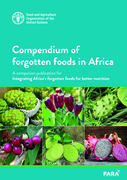
The Food and Agriculture Organization of the United Nations has launched a new Compendium of forgotten foods in Africa which is a first-of-its-kind comprehensive collection of 100 African forgotten food crops.
Also referred to as neglected, underutilized or orphan crops, these species offer valua
...
ble benefits, including nutrition and diet diversification, while supporting resilient, climate-smart agriculture but they are at risk of being lost as foods such as maize, rice and wheat dominate African diets.
The compendium list includes details on each crop's botanical classification, agroecological suitability, agronomic requirements, traditional and medicinal uses, value-added prospects and nutritional content. Among the entries are: African locust beans, African nightshade, baobab, Bambara nut, bush mango, cassava, fonio, marula, moringa, teff and tigernut.
Produced by the Food and Agriculture Organization (FAO)'s Regional Office for Africa with the Forum for Agricultural Research in Africa (FARA), the Compendium is a direct response to the UN Food Systems Summit and the Call for Collective Action in the Global Manifesto on Forgotten Foods.
Embracing both agricultural heritage and innovation can transform agrifood systems across Africa. By cataloguing these forgotten or underutilized crops, traditional knowledge is being honoured in the push to unlock the potential for better nutrition, sustainable agriculture, and resilience against the climate crisis.
In a joint foreword to the publication, FAO Assistant Director-General and Regional Representative for Africa Abebe Haile-Gabriel and FARA Executive Director Aggrey Agumya urged the mainstreaming of forgotten foods into African agrifood systems.
more
The strategic plan reflects shared commitments to enhance collaboration between environmental, animal (wildlife and domestic) and human health, and building new One Health workforce capacity through higher institutions of learning. The strategy also outlines interventions to be undertaken by governm
...
ent institutions and other partners to enhance existing structures and pool together additional resources to prevent and control zoonotic diseases and other events of public health importance. Successful implementation of the strategy will contribute to the realization of vision 2020 by improving public health, food safety and security, and hence significantly improve the socioeconomic status of the people of Rwanda. It is in this regard that we call upon implementing institutions, bilateral and multilateral partners, civil society and the private sector to join us in implementing the One Health strategy in Rwanda.
more
The objective of the evaluation is to understand whether the CHW program has achieved its intended objectives, thus contributing to the overarching objectives defined in the HSSP III of improving the health status of the population by “Ensuring un
...
iversal accessibility of quality health services for all Rwandans”.
This evaluation has focused on CHWs, who are selected, trained and deployed by the MoH to deliver a defined set of tasks at community level. CHWs are the central element of the Community Health Policy and of the community health strategy plan (CHSP) of the MoH.
more
The purpose of this Operational Guideline is to support state health authorities, programme managers and health care professionals with recommendations on appropriate management of children with SAM in the health facilities. Facility based management includes setting up and managing within the healt
...
h facility premises, a functional space where these children are cared for. This Facility Based Unit is referred to as Nutritional Rehabilitation Centre or NRC in the document. While the scale and design may vary in a given situation, it is intended that the document provide the basis for a consistent set of principles that can be used by all states for facility based management of children with SAM. The Operational Guideline focuses on the Facility/Hospital based approach for the management of SAM children under 5 years of age based on the WHO and revised IAP protocols.
more
Review of Community-Based Management of Acute Malnutrition Implementation in Burkina Faso
Deconinck H., S. Diene, P. Bahwere
Food and Nutrition Technical Assistance II Project (FANTA-2)
(2010)
C2
The United States Agency for International Development (USAID) Bureau for Democracy, Conflict, and Humanitarian Assistance Office of U.S. Foreign Disaster Assistance (DCHA/OFDA) requested Food and Nutrition Technical Assistance II Project (FANTA-2) assistance to review Community-Based Management of
...
Acute Malnutrition (CMAM) in four West African countries—Burkina Faso, Mali, Mauritania, and Niger—to help identify DCHA/OFDA 2010 and 2011 program priorities, including where DCHA/OFDA investment should be directed to support CMAM. The goal was to review CMAM program implementation and its integration into national health systems to provide DCHA/OFDA a status report for each country; draw lessons learned; and make recommendations on challenges, promising practices, gaps, and priority areas for DCHA/OFDA support during 2010 and 2011. The review was intended for DCHA/OFDA program planning purposes and also potentially as an advocacy tool to guide other donors in planning CMAM support in the region. After all four countries have been reviewed, FANTA-2 will develop a synthesis report. The current document presents a summary report on CMAM in Burkina Faso only.
more
This technical report contains the results from the FEEDcities Project – Eastern Europe and Central Asia, a cross-sectional survey of the local urban food environment conducted in Chișinău, Republic of Moldova between June and August 2016. It characterizes the vending sites, the food offered and
...
the nutritional composition of both industrial and homemade street foods. It also describes the nutritional composition of foods sold in supermarkets and fast-food outlets.
The study was conducted within a bilateral partnership between the World Health Organization and the Institute of Public Health of the University of Porto, in collaboration with the Faculty of Medicine, the Faculty of Nutrition and Food Sciences and the Faculty of Pharmacy of the University of Porto (WHO registration 2015/591370 and 2017/698514). The study was funded through a voluntary contribution of the Ministry of Health of the Russian Federation.
more
This technical report presents the results of a cross-sectional survey conducted in Bishkek, Kyrgyzstan, between June and July 2016, as part of the FEEDcities Project – Eastern Europe and Central Asia. The aim was to describe the local street food environment: the characteristics of the vending si
...
tes, the food offered and the nutritional composition of the industrial and homemade foods often available in these settings. The report also provides guidance for policies to translate the findings into action.
more
Nutrition training of health and agriculture workers can help to reduce child undernutrition. Specifically, trained health extension workers cancontribute through frequent nutrition counselling of caregivers. Evidence from systematic reviews has showed that providing nutrition training targeting hea
...
lth workers can improve feeding frequency, energy intake, and dietary diversity of children aged six months to two years. Scaling up of nutrition training for health and agriculture workers presents a potential entry point to improve nutrition status among childrenFood insecurity and nutrition deficiency are a common phenomenon in Ethiopia.
more
The Policy Guidelines and Service Standards for National Sexual and Reproductive Health Programme document outlines the steps on how to offer and deliver services. Improving quality of care is critical to improving clients' health status as well as
...
increasing access to, and utilization of Sexual and Reproductive Health services. Service Standards and Guidelines are intended to be used by programme managers, implementers, trainers, surpervisors, and service providers as a tool for delivering quality care measures.
more
Punjab Province Report: Nutrition Political Economy, Pakistan
Zaidi, Shehla; Bhutta, Zulfiqar et al.
Institute of Development Studies, Aga Khan University
(2015)
C1
In this report a nutrition governance framework was applied to research and analyse the provincial experience with nutrition policy in Pakistan, looking both at chronic and acute malnutrition. Twenty-one in-depth interviews with key stakeholders were also conducted along with a review of published a
...
nd grey literature. Findings were validated and supplemented by consultative provincial roundtable meetings. Punjab’s nutritional puzzle is that it has high levels of chronic malnutrition and micro-nutrient deficiencies despite a surplus production of food and a low poverty level. Under-nutrition is mainly linked to insufficient attention to preventive health strategies and to a lack of connection between relevant sectors such as Education, Health, Poverty, Safe Water and Sanitation, and Food. Strategic opportunities are recommended which include cross-party political support and ownership for nutrition, with steering by executive leadership; multi-sectoral action and functional integration of various departments and programmes with the creation of a central convening structure for effective cross-sectoral coordination; broadening of nutritional activities beyond salt iodization and vitamin A coverage; central co-ordination of monitoring and evaluation and effective partnerships between the state and non-state sector around data production, awareness, advocacy, and monitoring.
more

The Republic of the Union of Myanmar is at a historic moment, with a new civilian government assuming power in 2016. The country graduated to lower-middle-income status in 2015, and has made significant progress in reducing poverty, improving food s
...
ecurity and addressing malnutrition.
The remaining challenges to food and nutrition security and achievement of Sustainable Development Goal 2 targets include continued population displacements resulting from conflict, vulnerability to extreme weather events, poverty, limited social protection coverage, high malnutrition and persistent gender inequalities. more
The remaining challenges to food and nutrition security and achievement of Sustainable Development Goal 2 targets include continued population displacements resulting from conflict, vulnerability to extreme weather events, poverty, limited social protection coverage, high malnutrition and persistent gender inequalities. more
Survey report
Four health surveys were performed in Kutupalong Makeshift Settlment (KMS), Balukhali Makeshift Settlement (BMS), Kutupalong Makeshift Settlement Extension (KMS Extension) and Balukhali Makeshift Settlement Extension (BMS Extension). These sites were chosen to ensure that the health ... status and conditions were measured in both the new settlements and the pre-existing settlements. The surveys measured current and retrospective mortality, the main morbidities affecting the population, global and severe acute malnutrition rates, vaccination coverage rates for key antigens and health-seeking behaviour. Simple random sampling was used with a recall period from 25th February 2017 until the date of interview (30th October to 12th November): approximately 260 days. more
Four health surveys were performed in Kutupalong Makeshift Settlment (KMS), Balukhali Makeshift Settlement (BMS), Kutupalong Makeshift Settlement Extension (KMS Extension) and Balukhali Makeshift Settlement Extension (BMS Extension). These sites were chosen to ensure that the health ... status and conditions were measured in both the new settlements and the pre-existing settlements. The surveys measured current and retrospective mortality, the main morbidities affecting the population, global and severe acute malnutrition rates, vaccination coverage rates for key antigens and health-seeking behaviour. Simple random sampling was used with a recall period from 25th February 2017 until the date of interview (30th October to 12th November): approximately 260 days. more
