
Filter
1111
Text search:
injection
safety
Featured
182
306
Language
Document type
553
263
103
85
39
27
24
5
4
3
3
1
1
Countries
69
40
37
33
32
30
30
25
24
22
20
17
16
16
14
12
11
11
11
9
7
7
7
7
7
7
7
6
6
5
5
5
4
4
4
4
4
4
4
3
3
3
3
3
2
2
2
2
2
2
2
2
2
2
2
1
1
1
1
1
1
1
1
1
1
1
1
1
1
1
1
1
1
1
1
1
1
Authors & Publishers
Publication Years
Category
419
176
73
73
55
21
18
Toolboxes
118
80
57
53
50
49
45
37
33
20
17
16
16
15
13
12
10
9
7
7
7
6
5
4
1
1
Despite a historical association with poor tolerability, a comprehensive review on safety of antileishmanial chemotherapies is lacking. We carried out an update of a previous systematic review of all published clinical trials in visceral leishmanias
...
Health care waste management (HCWM) and infection prevention and control (IPC) represent serious concerns for HIV programs. Improperly handled infectious health care waste poses risks to health workers, their clients, the community, and the environment. Improper
...
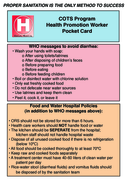
COTS (Cholera Outbreak Training and Shigellosis) Program Health Promotion Worker Pocket Card
recommended
The COTS Cholera Outbreak Training and Shigellosis Program Pocket Card provides essential guidelines for health promotion workers to prevent and manage cholera and shigellosis outbreaks. It emphasizes proper sanitation, hygiene practices, safe water handling, and food
...

Essential Medicines are those that satisfy the priority health care needs of the population. They are selected with due regard to public health relevance, evidence on efficacy, safety and comparative cost-effectiveness. This edition of the Essential
...
For the first time in almost 50 years there are two new drugs for the treatment of drug-resistant TB (DR-TB): bedaquiline and delamanid. There has also been increased attention given to the safety and efficacy of “re-purposed” drugs that have be
...
This guideline is intended to provide recommendations to applicants wishing to submit applications for the registration of medicines. It represents the Medicines Control Council’s current thinking on the safety, quality and efficacy of medicines.
...
Q5.SCOPING QUESTION: In individuals with psychotic disorders (including schizophrenia) who require long-term antipsychotic treatment, what is the safety and role of depot antipsychotic medication?
Essential medicines are those that satisfy the priority health care needs of a population. They are selected with due regard to disease prevalence and public health relevance, evidence of efficacy and safety and comparative cost-effectiveness. They
...
Pregnancy often results in exclusion from clinical trials of antiretroviral (ARV) drugs, resulting in limited data on pharmacokinetics (PK), drug safety, and the efficacy of new ARV drugs in pregnancy and lactation. However, pregnancy, lactation, or
...

According to WHO, infection prevention and control (IPC) is a scientific approach and practical solution designed to prevent harm caused by infection to patients and health workers. It is grounded in infectious diseases, epidemiology, social science and health system strengthening. IPC occupies a un
...
These guidelines are based on the 3rd Edition of the WHO Guidelines (Published 2015) World Health Organization’s Guidelines for the treatment of malaria. Additional literature surveys have been undertaken. Factors that were considered in the choice of therapeutic options included effectiveness,
...

The five hepatitis viruses have different epidemiological profiles, and their impact, duration, and transmission route also vary. The most common transmission routes contributing to the spread of hepatitis are exposure to infected blood via blood transfusion or unsafe
...

The purpose of this document is to present and promote the minimum requirements for IPC programmes at the national and health care facility level, identified by expert consensus according to available evidence and in the context of the WHO core components.
The minimum requirements are defined as: I
...
Laboratory biosafety manual
recommended
4th edition
The WHO Laboratory Biosafety Manual (LBM) has been in broad use at all levels of clinical and public health laboratories, and other biomedical sectors globally, serving as a de facto global standard that presents best practices and sets trends in biosafety.
LBM encouraged countries t
...
Clinical guideline, Methods, Evidence and Recommendations
In this guideline the following is covered: information needs of people with chronic hep
titis B and their carers; where children, young people and adults with chronic hepatitis B a-
should be assessed; assessment of liver disease, includi
...
Selection and Use of Essential Medicines 2021
recommended
The 23rd meeting of the WHO Expert Committee on Selection and Use of Essential Medicines was coordinated from Geneva, Switzerland, and held virtually from 21 June to 2 July 2021. The Committee considered 88 applications proposing additions, changes and deletions of medicines, medicine classes and fo
...
Detonation of a nuclear weapon or activation of a radiological dispersal device could cause radioactively contaminated decedents. These guidelines are designed to address both of these scenarios. They could also be applicable in other instances where decedents’ bodies are contaminated with radioa
...
This guide is intended for people involved in the management and operation of small- to mediumsized organized water supply systems. The content has been developed with particular consideration for operational-level personnel with responsibility for chlorination (for example, water treatment plant op
...
In view of the ongoing political, peace and reconciliation, administrative and economic reforms as well as plans to establish the United Nations Development Assistance Framework (UNDAF) in 2018, WFP extended the current Protracted Relief and Recovery Operation (PRRO 200299), launched in January 2
...
. To echo this extension and provide a more appropriate response to the country's rapid and multi-pronged transition, WFP adopted a transition strategy with gradually reduced emphasis on humanitarian assistance and greater focus on early recovery and development interventions. WFP's strategic engagement in-country was driven by the overarching goal to assist Myanmar to achieve the national Zero Hunger Challenge by 2025, and was guided by three priorities: emergency preparedness and response; nutrition; and provision of social safety nets.
Report of the 23rd WHO Expert Committee on the selection and use of essential medicines
This executive summary reports the recommendations made by the Expert Committee for the 2021 update of the WHO Model List of Essential Medicines (EML) and the Model List of Essential Medicine for Children (EMLc)
...
