
Filter
607
Text search:
epilepsy
treatment
Featured
83
120
Language
Document type
413
64
53
39
16
13
5
3
1
Countries
34
26
19
16
15
14
14
12
11
11
11
9
8
8
7
6
6
5
5
5
5
5
5
4
4
4
4
4
4
4
3
3
3
3
3
2
2
2
2
2
2
2
2
2
2
2
1
1
1
1
1
1
1
1
1
1
1
1
1
1
1
1
1
1
1
1
Authors & Publishers
Publication Years
Category
213
43
31
20
12
7
2
Toolboxes
201
91
23
23
14
11
9
8
7
7
6
6
6
6
4
4
4
4
3
3
1
Olashore et al.
Child Adolesc Psychiatry Ment Health (2017) 11:8 DOI 10.1186/s13034-017-0144-9

In line with the Defeating meningitis by 2030: a global road map, the WHO guidelines on meningitis diagnosis, treatment and care Executive Summary provides a summary of the evidence-based recommendations for the clinical management of children and a
...
Q4: Can convulsive epilepsy be diagnosed at first level care by a non-specialist health care provider in low and middle income country settings?

Arq Neuropsiquiatr 2011;69(2-B):342-348
SCOPING QUESTION: For adults and children with medication-resistant convulsive epilepsy, which anti-epileptic medications produce benefits and/or harm in the specified outcomes when compared to a placebo or a comparator?
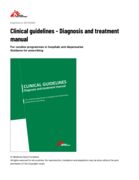
This diagnostic and treatment manual is designed for use by medical professionals involved in curative care at the dispensary and hospital levels. We have tried to respond in the simplest and most practical way possible to the questions and problems
...

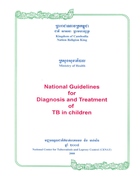
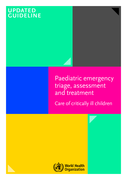
Updated Guideline.
The Emergency Triage Assessment and Treatment (ETAT) guidelines provide guidance on the most common emergency conditions in children presenting at the health facility. These include but are not limited to airway obstruction and o
...
Q 10: In adults and children with epilepsy, which psychological interventions used as adjunctive therapies with antiepileptic drugs when compared to placebo/comparator produce benefits/harm in specified outcomes?
Q11: 11a). In women with epilepsy, should antiepileptic therapy be prescribed as monotherapy or polytherapy to decrease the risk of fetal malformations?
11b). Does the use of folic acid preconceptually decrease the risk of foetal malformations in w
...

Epilepsia, 55(4):475–482, 2014
doi: 10.1111/epi.12550

Q6: What is the added advantage of doing neuroimaging in people with convulsive epilepsy in non-specialist settings in low and middle income countries?

Neurology Asia 2008; 13 : 41 – 48
Q7. SCOPING QUESTION: In adults with moderate-severe depressive disorder, what is the effectiveness and safety of antidepressant medication (ADM) in comparison with psychological treatment?
The WHO mhGAP programme’s existing guidelines recommen
...

The guidelines are primarily intended for health-care professionals working in first- or second-level health-care facilities, including emergency, inpatient and outpatient services. They are also directed at policy-makers, health-care planners and programme managers, academic institutions, non-gover
...


The guidelines are primarily intended for health-care professionals working in first- or second-level health-care facilities, including emergency, inpatient and outpatient services. They are also directed at policy-makers, health-care planners and programme managers, academic institutions, non-gover
...
