
Filter
302
Text search:
World
Vision
Sénégal
Featured
Recommendations
26
New Publications
70
Language
Document type
No document type
172
Studies & Reports
73
Guidelines
23
Strategic & Response Plan
18
Manuals
10
Fact sheets
4
Training Material
1
Situation Updates
1
Countries / Regions
Senegal
27
Global
22
Africa
17
Liberia
15
Sierra Leone
14
Kenya
12
Guinea
11
Rwanda
10
Ethiopia
9
West and Central Africa
9
Nigeria
7
Uganda
7
South Africa
7
East and Southern Africa
7
Ghana
6
Tanzania
6
Middle East and North Africa
6
Cameroon
5
Zambia
5
Mali
4
Haiti
4
India
4
Nepal
4
Cambodia
4
Gambia
4
Bangladesh
4
Mozambique
4
Benin
4
Burkina Faso
3
Congo, Democratic Republic of
3
Côte d’Ivoire / Ivory Coast
3
Togo
3
Zimbabwe
3
Afghanistan
3
Indonesia
3
Malawi
3
Namibia
3
Lebanon
2
Syria
2
Chad
2
Thailand
2
Central African Republic
2
Brazil
2
Guinea-Bissau
1
Morocco
1
Philippines
1
South Sudan
1
Iraq
1
Jordan
1
China
1
Sudan
1
Argentina
1
North Macedonia
1
Hungary
1
Burundi
1
Colombia
1
Ecuador
1
Botswana
1
Madagascar
1
Mexico
1
Myanmar / Burma
1
South–East Asia Region
1
Latin America and the Carribbean
1
Eastern Europe and Central Asia
1
Western and Central Europe
1
Venezuela
1
Mongolia
1
Russia
1
Kyrgyzstan
1
Georgia
1
Jamaica
1
Norway
1
Portugal
1
Authors & Publishers
Publication Years
Category
Countries
85
Women & Child Health
28
Clinical Guidelines
27
Public Health
24
Key Resources
21
Pharmacy & Technologies
3
Capacity Building
2
Toolboxes
Ebola & Marburg
31
Disability
27
HIV
20
NTDs
20
Mental Health
16
COVID-19
16
Global Health Education
11
Planetary Health
9
Malaria
8
Refugee
6
Health Financing Toolbox
6
Caregiver
5
NCDs
5
Conflict
4
Specific Hazards
4
2.0 Rapid Response
4
Rapid Response
3
AMR
3
TB
2
Pharmacy
2
Cholera
1
Polio
1
Natural Hazards
1
Zika
1
Fact Book on WHO Level I and Level II monitoring indicators - To monitor the progress of efforts to improve the global medicines situation, WHO has developed a system of indicators that measure important aspects of a country’s pharmaceutical situation. Level 1 indicators measure the existence and
...
The EYE strategy is a comprehensive and long-term strategy built on lessons learned that aims at ending yellow fever epidemics by 2026, and consists of three strategic objectives:
protect at-risk populations;
prevent international spread; and
contain outbreaks rapidly.

Data on the essential building blocks of mental health systems, including mental health
governance, financing, service delivery, human resources and information, are reported. For
mental health planning, it is important to know not only the level of resources in these six areas,
but also how thos
...

Report of a virtual meeting 21–23 June 2022

Small drinking-water supplies commonly experience operational, managerial, technical and resourcing challenges that impact their ability to deliver safe and reliable services. The needs and opportunities associated with these supplies therefore warrant explicit consideration in policies and regulati
...

WHO guideline on health policy and system support to optimize community health worker programmes
recommended
The guideline uses state-of-the-art evidence to identify effective policy options to strengthen community health worker (CHW) programme performance through their proper integration in health systems and communities.
Successful delivery of services through CHWs requires evidence-based models for edu
...
The African Regional Convening of the Global Initiative to Support Parents (GISP) stimulated the interest or engagement of almost 1500 individuals from 742 unique organizations in the fields of health, education, social welfare, women’s affairs, early childhood, water and sanitation, mental health
...
Objectives and scope of the document
This document was developed to provide recommended management strategies for problems and disorders that are specifically related to the occurrence of a major stressful event. The recommended strategies will form the basis of a new module to be added to the WHO
...
To complement the Global Strategy progress reporting, this report provides a detailed look at country leadership and action toward the Every Newborn National Milestones by 2020. Countries have taken the initiative to show the way forward and have demonstrated significant progress. As part of monitor
...
A guide for developing a hygiene promotion program to increase handwashing with soap
Rabies is entirely preventable, and vaccines, medicines, tools and technologies have long
been available to prevent people from dying of dog-mediated rabies. Nevertheless, rabies still
kills about 60 000 people a year, of whom over 40% are children under 15, mainly in rural areas
of economically
...

An estimated 1.3 billion people – or 16% of global population worldwide – experience a significant disability today. Persons with disabilities have the right to the highest attainable standard of health as those without disabilities. However, the WHO Global report on health equity for persons w
...

The World Health Organization (WHO) and the global community of countries, partners, donors, technical experts, scientists and field implementation teams continue to work towards the ultimate goal of a wor
...

Laboratory manual for yellow fever
recommended
This WHO laboratory manual provides the most up to date methods and procedures for the laboratory identification of yellow fever virus infection in humans. It provides guidance on the establishment and maintenance of an effective laboratory providing routine surveillance testing for yellow fever, wh
...

WHO today released its first roadmap to tackle postpartum haemorrhage (PPH) – defined as excessive bleeding after childbirth - which affects millions of women annually and is the world’s leading cause of maternal deaths.
Despite being prevent
...
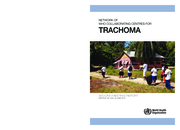
International commitment to eliminate trachoma as a public health problem worldwide is supported by resolution WHA51.11 of the World Health Assembly .1 Important progress towards this goal has been made by harnessing the mostly informal relationship
...
