
Filter
680
Text search:
World
Health
Organization,
Regional
Office
for
Africa.
Ministry
of
Health,
Botswana
Featured
Recommendations
58
New Publications
186
Language
Document type
No document type
369
Studies & Reports
124
Guidelines
84
Strategic & Response Plan
38
Manuals
34
Training Material
14
Situation Updates
10
Fact sheets
3
Resource Platforms
2
App
1
Online Courses
1
Countries / Regions
Kenya
34
Global
28
Sierra Leone
26
Ethiopia
23
Uganda
22
Liberia
19
Tanzania
19
Malawi
16
Zambia
15
Africa
15
India
11
Nigeria
10
Congo, Democratic Republic of
10
Rwanda
10
Ghana
9
Guinea
8
Latin America and the Carribbean
8
South Sudan
7
Western and Central Europe
7
Asia
7
Senegal
6
Zimbabwe
6
South Africa
6
Cameroon
5
Syria
5
Namibia
5
Ukraine
5
Lesotho
5
East and Southern Africa
5
West and Central Africa
5
Yemen
4
Middle East and North Africa
4
South–East Asia Region
4
Mali
3
Togo
3
Sudan
3
Central African Republic
3
Eswatini/ Swaziland
3
Brazil
3
Botswana
3
Myanmar / Burma
3
Somalia
2
Nepal
2
Chad
2
Bangladesh
2
Mozambique
2
Benin
2
Madagascar
2
Sri Lanka
2
Kazakhstan
2
Niger
1
Haiti
1
Philippines
1
Pakistan
1
Jordan
1
Afghanistan
1
Lebanon
1
Cambodia
1
Thailand
1
China
1
Peru
1
North Macedonia
1
Burundi
1
Colombia
1
Venezuela
1
Eastern Europe
1
Laos
1
Tajikistan
1
Estonia
1
Moldova
1
Iran
1
Mauritius
1
Authors & Publishers
Publication Years
Category
Countries
243
Clinical Guidelines
47
Public Health
44
Key Resources
41
Women & Child Health
36
Capacity Building
12
Pharmacy & Technologies
8
Toolboxes
HIV
73
COVID-19
46
Planetary Health
34
Mental Health
32
Ebola & Marburg
31
AMR
31
TB
29
Disability
25
Rapid Response
20
Caregiver
20
2.0 Rapid Response
19
Conflict
17
Refugee
16
Pharmacy
13
NTDs
11
Health Financing Toolbox
10
Global Health Education
9
NCDs
7
Natural Hazards
5
Cholera
4
Polio
4
Zika
3
Malaria
3
Specific Hazards
2
Social Ethics
2
Typhoon
1
The standards of care cover the routine care and management of complications occurring for women and their babies during labour, childbirth and the
...

The World Health Organization (WHO) is releasing the second edition of its Global Accelerated Ac
...
This report describes the work done by WHO from January 2015 up to the end of December 2016 to address the long-term issues of survivor care, health
...

This technical guidance outlines current evidence, knowledge and best practice relating to incidences of violence and injuries among refugees and migrants in the WHO European Region. It highlights key principles, summarizes priority actions and chal
...
The Polio Transition1
Monitoring and Evaluation (M&E) Framework was designed to monitor progress towards achieving the strategic and operational outcomes of the post-2023 Strategic Action Plan on Polio Transition (2018– 2023), as outlined in the
...
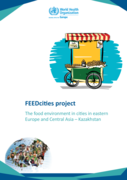
This technical report presents results from the FEEDcities Project – Eastern Europe and Central Asia, a cross-sectional survey conducted in Almaty, Aktau and Kyzylorda, Kazakhstan, between July and August 2017, to evaluate the local street food environment. It characterized the vending sites, the
...

Bioethics 519 (online) doi:10.1111/bioe.12145 Volume 29 Number 8 2015 pp. 488–596;
Pandemic plans recommend phases of response to an emergent infectious disease (EID) outbreak, and are primarily aimed at preventing and mitigating human-to-human
...
Training in monitoring and epidemiological assessment of mass drug administration for eliminating lymphatic filariasis: learners’ guide. World
...
The "Assessing National Capacity for the Prevention and Control of Noncommunicable Diseases: Report of the 2021 Global Survey" by WHO examines the
...
The document covers: introduction on contact tracing in the Ebola response; general considerations for contact tracing; case definition; planning and preparation; personnel; implementation, and tools for
...

In 2016, the risk of premature mortality1 from noncommunicable diseases (NCDs) in Ethiopia was 18.3%. The economic costs of NCDs are significant and are due principally to their impact on the non-
...
This document synthesizes key elements of the World Health Organization (WHO) normative guidance
...
External quality assessment (EQA) is an important component of quality systems for blood transfusion services. Establishing external quality assessment programmes
...
This report reviews the current situation in relation to national capacity to address NCDs and the progress made at country level over the past decade. It highlights that, while progress is being made, there is still much work to be done to create the infrastructure, policies, surveillance and
...
