Filter
140
Text search:
Wet
markets
Featured
23
27
Language
Document type
57
33
22
10
8
4
3
3
Countries
6
5
5
5
5
4
4
3
3
3
3
3
3
3
3
2
2
2
2
2
2
2
2
1
1
1
1
1
1
1
1
1
1
1
1
1
1
1
1
1
1
1
1
1
1
1
1
1
1
1
1
Authors & Publishers
Publication Years
Category
49
27
11
7
4
2
1
Toolboxes
18
17
11
7
6
5
5
5
4
4
4
4
3
2
2
1
1
1
1
1
This paper is Oxfam’s essential guide for WASH staff and partners. It describes the processes and standards that Oxfam WASH programmes should follow if they are to be carried out effectively, consistently and in a way which treats affected communities with respect.
All WASH staff members are expe
...
Water security, or having the right amount and quality of water in the right place at the right time, fosters social and economic progress. Where water is sufficient to meet demand, it can promote economy wide growth and enable countries to reach their food security, energy security, and human devel
...

Epidemic diarrhoeal disease preparedness and response. Training and practice. Participant's manual
recommended
Accessed November 2014

This paper has been commissioned by RedR to identify gaps in skills, technology, and knowledge in urban humanitarian response in order to inform RedR’s project Ready to Respond which is looking to address these gaps in two specific areas:
Water supply, sanitation, and hygiene; Shelter res
...
Safe excreta disposal is a top priority in an emergency, but one that takes time and extensive resources to implement. This Technical Briefing Note examines the use of poo bags for safe excreta containment and disposal in urban emergency settings. The Brief also explores ways of building more comple
...
The document provides detailed guidelines for managing cholera outbreaks, focusing on prevention, diagnosis, treatment, and control strategies. It emphasizes the importance of setting up Cholera Treatment Centers (CTCs), ensuring access to clean water, promoting hygiene, and utilizing oral rehydrati
...
Technology landscape
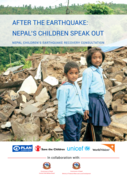
NEPAL CHILDREN’S EARTHQUAKE RECOVERY CONSULTATION - To better understand the consequences of the Nepal Earthquake for children, four child-centred agencies, in coordination with the Ministry of Federal Affairs and Local Development (MoFALD) and the Central Child Welfare Board (CCWB), conducted a C
...