
Filter
154
Text search:
German
Institute
for
Medical
Mission
Featured
Recommendations
15
New Publications
32
Language
Document type
No document type
82
Studies & Reports
36
Guidelines
11
Manuals
8
Resource Platforms
5
Strategic & Response Plan
5
Fact sheets
4
Situation Updates
2
Training Material
1
Countries / Regions
Tanzania
10
Western and Central Europe
10
Liberia
9
Global
8
India
6
Nepal
6
Sierra Leone
5
Malawi
5
Ethiopia
4
Syria
4
Namibia
4
Guinea
3
Zambia
3
South Africa
3
Burkina Faso
2
Nigeria
2
Ghana
2
Iraq
2
Germany
2
Ukraine
2
Lesotho
2
West and Central Africa
2
Eastern Europe
2
Vietnam
2
France
2
Spain
2
USA
1
Cameroon
1
Uganda
1
Turkey
1
Kenya
1
Cambodia
1
Rwanda
1
Mozambique
1
Eswatini/ Swaziland
1
Brazil
1
Libya
1
Yemen
1
East and Southern Africa
1
Latin America and the Carribbean
1
Italy
1
Tajikistan
1
United Kingdom
1
Portugal
1
Authors & Publishers
Publication Years
Category
Countries
58
Key Resources
16
Public Health
15
Clinical Guidelines
7
Annual Report MEDBOX
2
Capacity Building
1
Women & Child Health
1
Toolboxes
NTDs
18
Disability
14
COVID-19
9
HIV
8
TB
8
Conflict
7
Mental Health
7
Global Health Education
7
Ebola & Marburg
6
Refugee
6
Pharmacy
5
Specific Hazards
3
AMR
3
Social Ethics
3
Health Financing Toolbox
3
Polio
1
Rapid Response
1
Zika
1
Caregiver
1
Planetary Health
1
NCDs
1
2.0 Rapid Response
1
Regional situation analysis, practices, experiences, lessons learned and ways forward.
The availability, prices and affordability of essential medicines in Malawi: A cross-sectional study
The Malawian government recently introduced cost-covering consultation fees for self-referral patients in tertiary public hospitals. Previously, patients received medicines free of charge in government-owned health facilities, but must pay elsewhere
...

Antibiotic resistance is no longer a concern for the distant future but is a pressing issue, both globally and in Nepal. As part of global effort to preserve the effectiveness of antibiotics, the Global Antibiotic Resistance P
...
PLoS ONE 13(8): e0202499. https://doi.org/10.1371/journal.pone.0202499
This was a school-based cross-sectional study conducted in 2015 among 305 school children aged 7–16 years from two primary schools located in Ilemela and Magu Districts, north-western Tanzania. Single stool and urine samples w
...

Early Identification and Early Intervention Services for Young Children with Developmental Delays and Disabilities in Namibia Republic of Namibia Namibia
Regional Consultations Report
Embracing Diversity: Toolkit for Creating Inclusive, Learning-Friendly Environments Specialized Booklet 3
Has the world worked together to tackle the coronavirus? July 2021. This research paper assesses how the global community has responded to calls for greater solidarity in tackling the COVID-19 pandemic, and presents the insights of key stakeholders
...
The World Health Organization Regional Office for Africa (WHO AFRO), in accordance with recommendations from various WHO committees, has developed three flagship programmes to support Member States in the African region to prepare
...

WHO Ghana 2022 annual report
recommended
“2022 was an eventful year for the WHO Country Office in Ghana,” says Dr Francis Kasolo, WHO Representative to Ghana.
In 2022, WHO Ghana collaborated with partners to deliver interventions in support of the Government of Ghana's health sector
...
Summary of research into the consequences of the Ebola outbreak for children and communities in Liberia and Sierra Leone
This study describes the range of impacts that Ebola has had on children and families in Liberia and Sierra Leone, looking beyo
...
UNICEF Annual Report 2017 - Burkina Faso
- Healthcare policy for children
- Food insecurity
- Community health strategy
- National child protection system
etc.
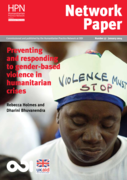
The aim of this paper is to map and critically analyse evidence of good practice in prevention and response to gender-based violence (GBV) in humanitarian contexts which can support humanitarian practitioners and policy makers to improve the quality of GBV programming in the field. The paper is stru
...
Building on previous guidelines, the People In Aid Code seeks to offer agencies an effective framework for human resources management, helping them assess and raise their performance.
The intent of these guidelines is to develop a holistic, coordinated, proactive and technology driven strategy for management of biological disasters through a culture of prevention, mitigation and preparedness to generate a prompt and effectiv
...
Infect Dis Poverty (2021) 10:15.
Real-time polymerase chain reaction (PCR) is a sensitive and specific method for diagnosing schistoso-
miasis. However, this method should be performed in a laboratory, usually located distant from the sample colle
...
Special Issue: Special Education in Sub-Saharan Africa | This special issue of our Communication*Support*World*Network*Newsletter attempts to share practical ideas and information about special education for children with disabilities in sub-Saharan
...

COP24 special report: health and climate change
recommended
Exposure to air pollution causes 7 million deaths worldwide every year and costs an estimated US$ 5.11 trillion in welfare losses globally. In the 15 countries that emit the most greenhouse gas emissions, the health impacts of air pollution are estimated to cost more than 4% of their GDP. Actions to
...
WHO needs US$2.54 billion to provide life-saving assistance to millions of people around the world facing health emergencies. WHO’s Health Emergency Appeal is a consolidation of WHO’s priorities and financial requirements for 2023 to carry out h
...
