
Filter
90
Text search:
Allergy
Foundation
South
Africa
Featured
Recommendations
9
New Publications
21
Language
Document type
No document type
41
Studies & Reports
16
Guidelines
14
Manuals
10
Training Material
4
Resource Platforms
2
Brochures
1
Strategic & Response Plan
1
Fact sheets
1
Countries / Regions
Africa
10
Global
10
South Africa
6
Kenya
2
Mozambique
2
Ethiopia
1
Ghana
1
Uganda
1
Philippines
1
India
1
Bangladesh
1
Malawi
1
Western Pacific Region
1
Asia
1
Russia
1
Authors & Publishers
Publication Years
Category
Public Health
17
Countries
16
Clinical Guidelines
16
Women & Child Health
6
Capacity Building
3
Key Resources
2
Pharmacy & Technologies
2
Toolboxes
NCDs
16
HIV
13
TB
13
AMR
5
COVID-19
5
Ebola & Marburg
4
Rapid Response
4
Health Financing Toolbox
4
2.0 Rapid Response
3
Global Health Education
2
NTDs
2
Disability
1
Natural Hazards
1
Mental Health
1
Caregiver
1
Planetary Health
1
Pharmacy
1
Malaria
1

Blue Book. The Medical Guide for our Projects
recommended
9th edition; 4th English edition 2020
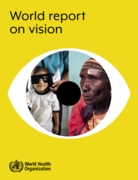
At present at least 2.2 billion people around the world have a vision impairment, of whom at least 1 billion have a vision impairment that could have been prevented or is yet to be addressed. The world faces considerable challenges in terms of eye care, including inequalities in the coverage and qua
...

Report of a virtual meeting 21–23 June 2022
Guidelines for national programmes and other stakeholders
Annexes for webposting and CD-Rom distribution with the policy guidelines

Due to high routine vaccination coverage, overall counts of diphtheria case have significantly declined in the Western Pacific Region recently. However, diphtheria is still prevalent in several countries and areas of the Region and remains a public health issue due to its high case fatality rate.
...
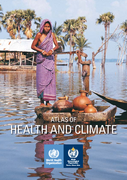
The Atlas of health and climate is a product of this unique collaboration between the meteorological and public health communities. It provides sound scientific information on the connections between weather and climate and major health challenges. These range from diseases of poverty to emergencies
...
This report - the largest of its kind to date - draws on the experiences of over 8,500 women and 300 health professionals across eight countries. It exposes the aggressive marketing practices used by the formula milk industry, and highlights impacts on families’ decisions about how to feed their b
...

Asthma is the most common chronic condition in children worldwide. It affects daytime activities, sleep and school attendance and causes anxiety to parents, families and other carers. The quality of asthma diagnosis and management globally still needs substantial improvement. From infancy to the tee
...
This report presents an analysis of antibacterial agents in preclinical (third annual review) and clinical (fifth annual review) development. The analysis covers traditional (direct-acting small molecules) and non-traditional antibacterial agents in development worldwide. It evaluates to what extent
...
Ensuring Access to Simple, Safe and Effective First-Line Medicines for Tuberculosis.
Accessed in November 2017.
Between 2012 and 2016, development assistance for HIV/AIDS decreased by 20·0%; domestic financing is therefore critical to sustaining the response to HIV/AIDS. To understand whether domestic resources could fill the financing gaps created by declines in development assistance, we aimed to track spe
...
This short paper aims to identify key evidence gaps in our knowledge of livestock- and fisheries-linked antimicrobial resistance in the developing world, and to document on-going or planned research initiatives on this topic by key stakeholders.
The antimicrobial resistant (AMR) infections in anima
...
The Global guidance framework for the responsible use of the life sciences: mitigating biorisks and governing dual-use research (the framework) aims to provide values and principles, tools and mechanisms to support Member States and key stakeholders to mitigate and prevent biorisks and govern dual-u
...
WHO has published the first-ever guidance on the clinical management of diphtheria. The only previously available guidance was an operational protocol. The new guidance followed the rigorous process for developing guidance at WHO.
It addresses the use of Diphtheria Antitoxin (DAT) in the treatmen
...
The revised guidelines present two major changes to existing guidelines: (A) there are now just 2 categories of pneumonia instead of 3 (“pneumonia” which is treated at home with oral amoxicillin and “severe pneumonia” which requires injectable antibiotics) and (B) oral amoxicillin replaces o
...
