
Filter
1301
Text search:
human
pathogens
Featured
193
279
Language
Document type
379
337
323
116
73
32
27
10
3
1
Countries
74
45
34
33
27
26
26
25
22
22
19
16
15
14
14
13
12
12
11
10
9
9
9
9
9
9
9
9
8
7
7
7
7
6
5
5
5
4
4
4
4
4
4
3
3
3
3
3
3
3
3
2
2
2
2
2
2
2
2
2
2
2
1
1
1
1
1
1
1
1
1
1
1
1
1
1
1
1
1
1
1
1
1
1
1
1
1
1
1
1
1
1
1
Authors & Publishers
Publication Years
Category
335
141
123
56
44
35
24
Toolboxes
236
159
124
83
73
70
56
43
40
31
23
20
19
19
18
16
14
14
12
10
7
5
5
3
1

2nd edition. The Event-based Surveillance Framework is intended to be used by authorities and agencies responsible for surveillance and response. This framework serves as an outline to guide stakeholders interested in implementing event-based surveillance (EBS) using a multisectoral, One Health appr
...

Skin-related neglected tropical diseases, or “skin NTDs”, are historically neglected because active case detection, individual case management, significant resources and intensive effort are required to control, eliminate and eradicate them. Integrated control and management of skin NTDs offers
...
Presentation on WASH in Malawi
https://doi.org/10.1371/journal.pntd.0002439
South Sudan has a high burden – among the highest in sub-Saharan Africa – of neglected tropical diseases (NTDs). This adversely affects the health and social and economic well-being of people in the country. The prevention, control and eventual elim
...
Vector-borne diseases are responsible for 17% of the global burden of communicable diseases and more than 500 000 deaths annually. The ambitious global targets for the control of vector-borne diseases come in the context of the (re-)emergence of diseases, increasing resistances to insecticides and u
...
Strengthening rehabilitation in health emergency preparedness, response, and resilience: policy brief outlines the evidence for rehabilitation in emergencies and the need for greater preparedness of rehabilitation services. It shows how existing guidelines support the integration of rehabilitation i
...

There is growing international consensus that food systems transformation is important to address the challenges of malnutrition in all its forms, the burden of noncommunicable diseases (NCDs), environmental sustainability, increasing inequality and ensuring the welfare of workers and animals. In li
...
CEPI is seeking to raise $3.5 billion to implement CEPI’s next 5-year plan. To mitigate the immediate threat of COVID-19 variants, it is activating key elements of this plan now—and seeking to mobilise a portion of this $3.5 billion in 2021. We have already launched R&D programmes to initiate de
...

While there has been real progress in addressing the burden of disease in the WHO African region, the COVID-19 pandemic has highlighted the link between health, economics and security, as the region saw decades of progress threatened, including positive trends in decreasing inequality. In the Africa
...
This document seeks to help health communication professionals working on the topic of immunization more effectively communicate about Events Supposedly Attributed to Vaccination and Immunization (ESAVI) by building trust in National Immunization Programs, understanding risk perceptions related to v
...

Vaccines are powerful weapons in the fight against pandemic viruses as shown by responses to both the 2009 H1N1 influenza and the COVID-19 pandemics. However, planning for accessing, allocating and deploying vaccines in a pandemic situation is a complex endeavour, beset with multiple challenges at a
...

This publication aims to provide updated guidance on the specific use of yellow fever laboratory assays in the context of surveillance to be used across the Global Yellow Fever Laboratory Network for disease surveillance. In the recent years, new commercial assays became available and are now recomm
...

Benchmarking is a strategic process often used by businesses and institutes to standardize performance in relation to the best practices of their sector. The World Health Organization (WHO) and partners have developed a tool with a list of benchmarks and corresponding suggested actions that can be a
...

Laboratory manual for yellow fever
recommended
This WHO laboratory manual provides the most up to date methods and procedures for the laboratory identification of yellow fever virus infection in humans. It provides guidance on the establishment and maintenance of an effective laboratory providing routine surveillance testing for yellow fever, wh
...

Small drinking-water supplies commonly experience operational, managerial, technical and resourcing challenges that impact their ability to deliver safe and reliable services. The needs and opportunities associated with these supplies therefore warrant explicit consideration in policies and regulati
...
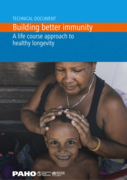
As the Americas undergo profound demographic change and there are more persons aged 65 years or older than children younger than 5 years, it is crucial to recognize that national immunization programs must be redesigned to ensure comprehensive protection for individuals across the lifespan. By adopt
...

The Infection Prevention and Control (IPC) Guidelines aim to support healthcare workers improve quality and safety health care. The Guidelines further aim to promote and facilitate the overall goal of IPC by providing evidence-based recommendations on the critical aspects of IPC, focusing on the fun
...

This report provides an overview of the operations and activities of the WHO Country Office in Ukraine in 2023. Despite the acute health impacts of the war in Ukraine, the Country Office continued its work according to its core mandate. WHO supported the Government of Ukraine in managing the health
...
Hey Facts about the disease
Preparedness planning is essential in order to respond effectively to outbreaks, including single case occurrences of highconsequence infectious diseases (HCID), such as the importation of a viral haemorrhagic fever (VHF) case
