
Filter
954
Filtered Results: 0
Text search:
WFP
Featured
Recommendations
68
New Publications
400
Language
Document type
No document type
574
Studies & Reports
153
Strategic & Response Plan
78
Situation Updates
43
Guidelines
42
Manuals
27
Fact sheets
19
Training Material
9
Infographics
4
Dashboards/Maps
2
Resource Platforms
2
Online Courses
1
Countries / Regions
Sierra Leone
54
Syria
46
South Sudan
41
Myanmar / Burma
41
Liberia
38
Nepal
36
Global
36
Congo, Democratic Republic of
34
Kenya
30
Mozambique
28
Yemen
28
Guinea
25
Ethiopia
24
Bangladesh
24
Haiti
23
Uganda
21
Venezuela
16
Nigeria
14
Rwanda
14
Namibia
13
Zambia
11
Central African Republic
11
Ukraine
11
Lesotho
11
Zimbabwe
10
Malawi
10
Sudan
10
Africa
10
West and Central Africa
9
Ghana
8
Jordan
8
Colombia
8
East and Southern Africa
8
Philippines
7
Afghanistan
7
Latin America and the Carribbean
7
Pakistan
6
Lebanon
6
Tanzania
6
Somalia
5
Cambodia
5
Burkina Faso
4
Indonesia
4
Burundi
4
Madagascar
4
Middle East and North Africa
4
Mali
3
Côte d’Ivoire / Ivory Coast
3
Cameroon
3
India
3
Iraq
3
Germany
3
Turkey
3
South Africa
3
Papua New Guinea
3
Eswatini/ Swaziland
3
Asia
3
Senegal
2
Niger
2
Togo
2
Benin
2
Vanuatu
2
Peru
2
South–East Asia Region
2
Paraguay
2
Palestine
2
Iran
2
Guinea-Bissau
1
Egypt
1
Chad
1
Gambia
1
Brazil
1
Ecuador
1
Botswana
1
Greece
1
Libya
1
Guatemala
1
Sri Lanka
1
Western Pacific Region
1
Eastern Europe and Central Asia
1
Western and Central Europe
1
Solomon Islands
1
Bhutan
1
Poland
1
Eastern Europe
1
North Korea
1
Djibouti
1
Laos
1
Timor Leste/ East Timor
1
Tajikistan
1
Romania
1
Moldova
1
Japan
1
Authors & Publishers
Publication Years
Category
Countries
445
Key Resources
115
Women & Child Health
40
Public Health
21
Clinical Guidelines
10
Capacity Building
7
Toolboxes
Conflict
114
COVID-19
105
Ebola & Marburg
90
Natural Hazards
67
HIV
38
Planetary Health
36
Global Health Education
25
Refugee
20
Rapid Response
17
2.0 Rapid Response
14
Mental Health
13
Health Financing Toolbox
12
Typhoon
11
TB
10
Disability
9
Caregiver
6
Cholera
3
NCDs
3
Zika
2
Specific Hazards
2
Polio
1
South Sudan
1
Pharmacy
1
NTDs
1

20-22 July 2015, Monrovia, Liberia
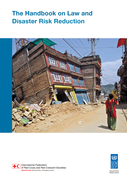
The Handbook on Law and Disaster Risk Reduction (the Handbook) has been developed to provide guidance on how to use the Checklist and conduct related legislative reviews and reform processes. While the methodology for using the Checklist needs to be tailored to each country’s context and respectiv...

The transformation of the humanitarian landscape has already made a significant impact on the operational security of INGOs and other humanitarian actors. This report serves to inform strategic policy priorities and approaches to security planning and coordination, and addresses three main questions...
The document presents an assessment developed by both institutions as a contribution to the prioritization of education in national response plans to the health emergency and future recovery strategies. "Countries have deployed various response and recovery plans in which education needs to be incor...

The Transformation Agenda (TA) ushered in an ambitious reform process intended to transform the World Health Organization (WHO) into an organization that is proactive, results-driven, accountable and which meets stakeholder expectations, towards transforming and improving public health services in t...
South Africa reported it fist case of COVID-19 on 5 March 2020. While the first cases were imported, local transmission has led to a rapid increase in the number of cases. As of 21 April 2020, more than 3,400 cases and 58 deaths had been confirmed. On 15 March, President Cyril Ramaphosa declared a n...
The arrival of COVID-19 in Afghanistan has brought heartache to millions of people who are now battling a deadly pandemic while simultaneously fighting for their survival amid poverty, disaster and war. Over my three years as Humanitarian Coordinator, I have marvelled at the resilience of the people...
English Analysis on World and 9 other countries about Food and Nutrition, Drought and Other; published on 13 Oct 2021 by ECHO, FAO and 3 other organizations
In 2007, WHO warned that infectious diseases are emerging and re-emerging at a rate that has not been seen before. The potential for infectious diseases to spread rapidly results in high morbidity and mortality, causing a potential global public health treat of major concern.
Several factors are ...
